KohomePraising the Baby
子ほめ(こほめ)
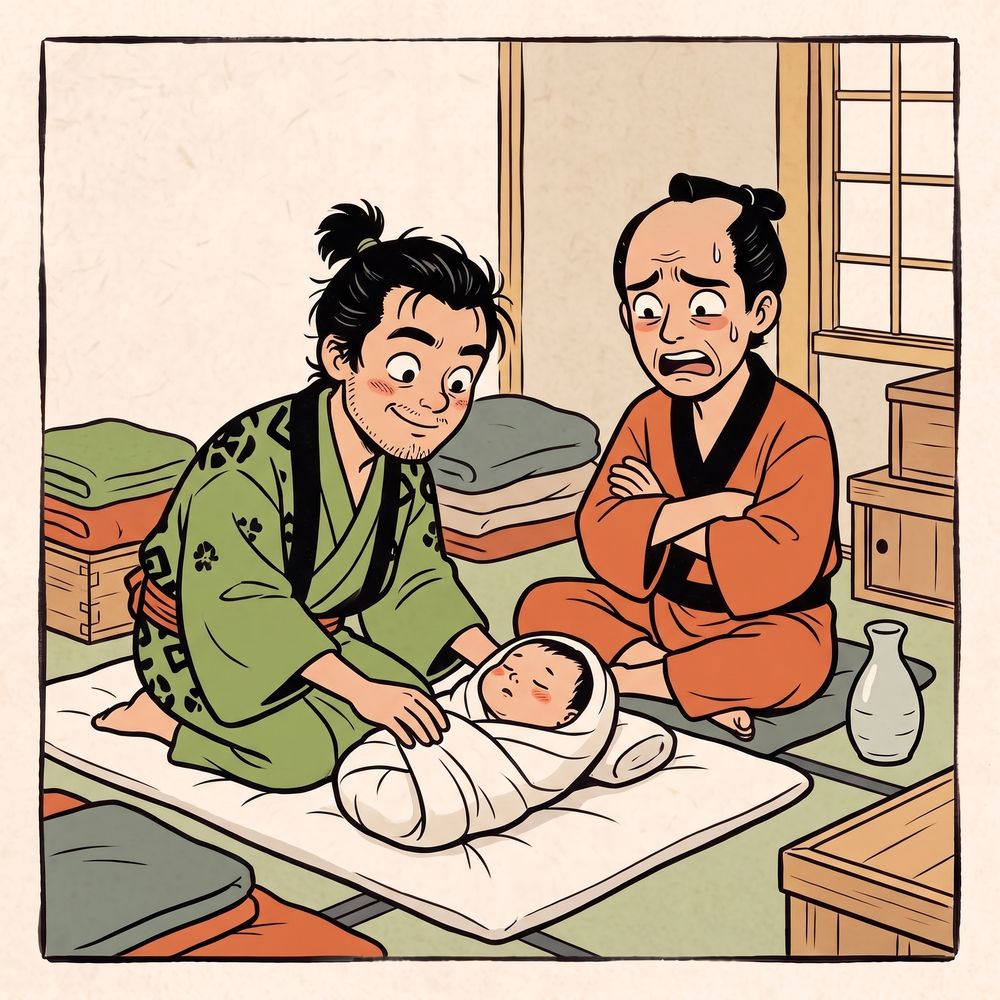
A man who wants to drink for free gets a lesson in flattery from the inkyo, the retired elder. Ask people their age and tell them they look younger, and they'll be delighted. And here's how you praise a baby. He heads out to try it, but wherever he goes, it all comes out wrong. In the end, he finds himself complimenting a newborn on its age.
The story Edo version
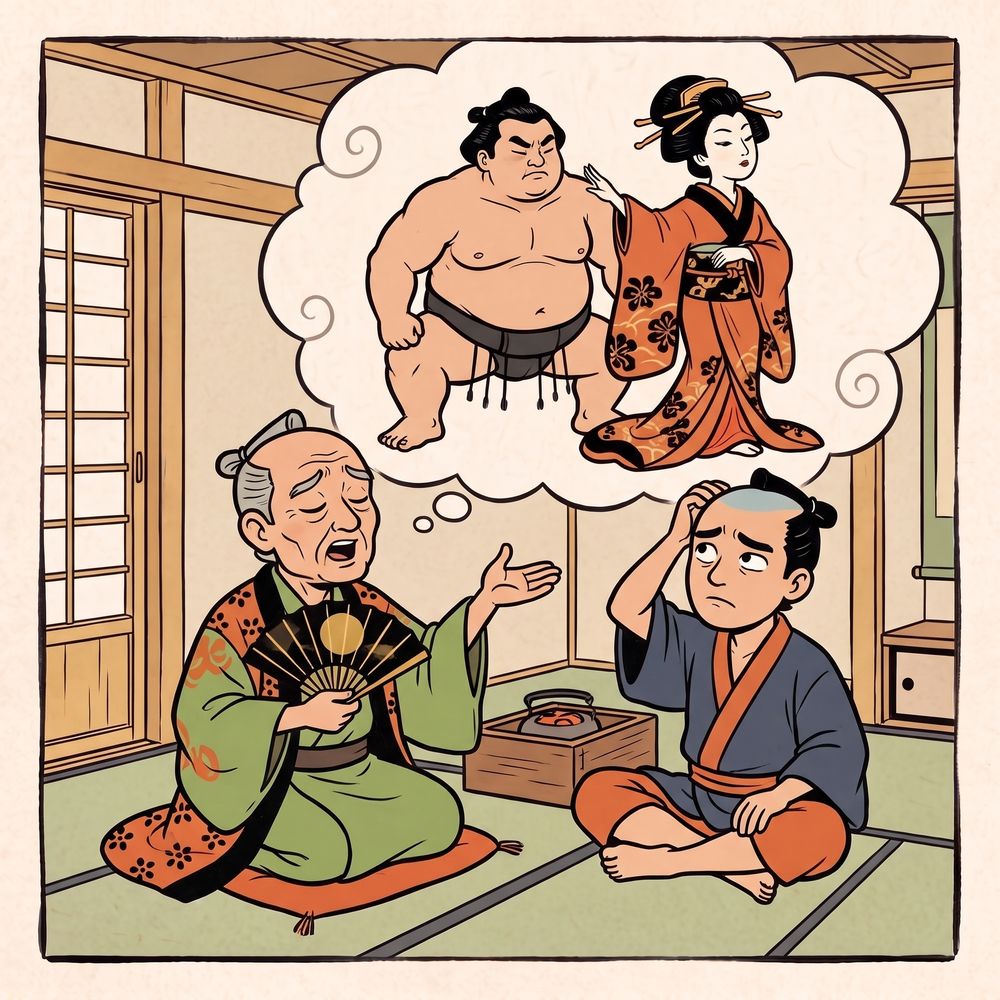
Hachigoro shows up at the inkyo's house and begs for a drink. The inkyo tells him that if he wants people to treat him, he'd better learn to pay a compliment or two: ask people their age, then tell them they look younger, and they'll be delighted.
Hearing that his pal Take has just had a baby, Hachigoro figures that if he goes to offer congratulations, he'll get a drink out of it, so he learns how to praise a baby, too. He tries his flattery out on a familiar face in town, the head clerk of Iseya, but the conversation goes nowhere, and no drink comes his way.
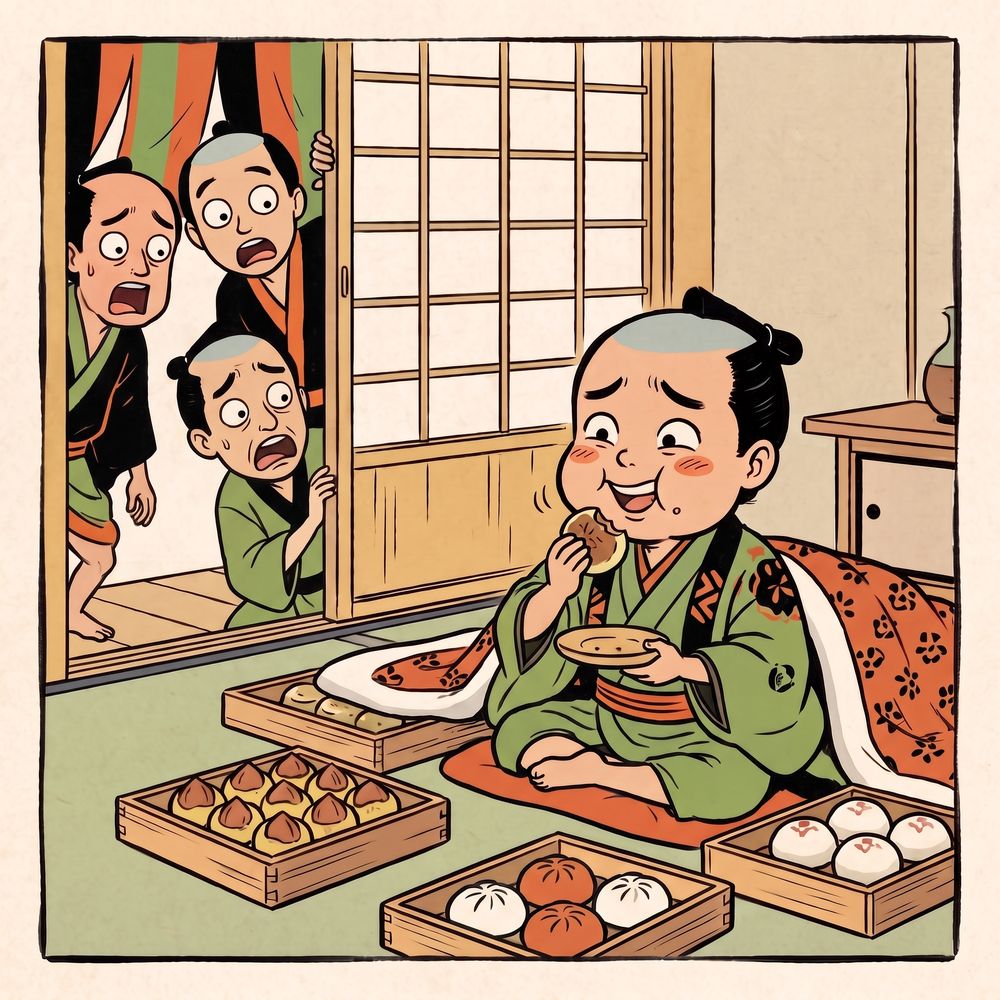
Next he goes to Take's house. But face to face with the baby, none of the compliments he learned will come out. In desperation, he falls back on asking the baby's age. When Take answers that it's one, by the traditional count...
The sage the punchline, contains spoilers
Tap to reveal the punchline
“One? Why, that's awfully young for one. I'd say you don't look a day over tada.”
The sage (the punchline) shows him blindly applying the “say they look younger” trick even to a baby who is only one. Under the traditional Japanese way of counting age, a baby is one at birth, so the only way to look younger is to look “tada,” which means zero, and also means free, as in the free sake he was after. In one Kamigata version, he hears the baby was born this morning and replies that it looks “more like the day after tomorrow,” an adjustment said to suit the present day, now that the traditional age count has become unfamiliar.
Edo and Kamigata versions
The story originally comes from Kamigata. Even there it has two forms: the line of Katsura Beicho uses the “day after tomorrow” sage, while Katsura Harudanji III used the same sage as Edo.
| Edo version | Kamigata version | |
|---|---|---|
| Main character | Hachigoro | A fool |
| How it starts | He begs the inkyo for a drink | He mishears “Nada no sake” (sake from the Nada region) as “tada no sake” (free sake) |
| At Take's house | He fumbles trying to praise the baby | Some versions have him praising the old grandfather napping in the back room by mistake |
| The baby's age | One, by the traditional count | Born just this morning |
| Sage | Doesn't look a day over tada | Looks more like the day after tomorrow (Beicho's line) |
Key scenes original dialogue written for this site
At the inkyo's house
- InkyoIf someone tells you they're forty-five, you say, ‘Why, you barely look past your unlucky year.’ Most people love that.
- HachigoroGot it. You just knock a few years off. Easy.
Catching the Iseya clerk
- HachigoroMister clerk, how old would you be?
- ClerkI'm forty.
- Hachigoro...Forty, huh. That's a problem. If you were forty-five, I had something to say.
At Take's house
- (He peers down at the baby on the futon and tilts his head for a long moment.)
- HachigoroWell, this is... uh... it's small.
- TakeOf course it's small, it was just born.
This is not a transcription of any storyteller's performance. The plot and the sage follow the classic version. The dialogue was written for this site.
Notable performers
- Sanyutei Kinba III1894–1964EdoOne of the performers whose recordings survive.
- Yanagiya Kosan V1915–2002EdoOne of the performers whose recordings survive.
- Katsura Beicho III1925–2015KamigataPassed down the version he inherited from Katsura Yonedanji IV, performing it with the sage about the baby born this morning.
- Katsura Harudanji III1930–2016KamigataUsed the version handed down from Tachibanaya Kakitsu II, with the same sage as Edo.
- Katsura Shijaku II1939–1999KamigataOne of the performers whose recordings survive.