JugemuThe Never-Ending Name
寿限無(じゅげむ)
Parents give their newborn every auspicious word that promises a long life, and now just calling his name is an ordeal. The classic first story a zenza (apprentice) learns, it is familiar even to Japanese children.
The story
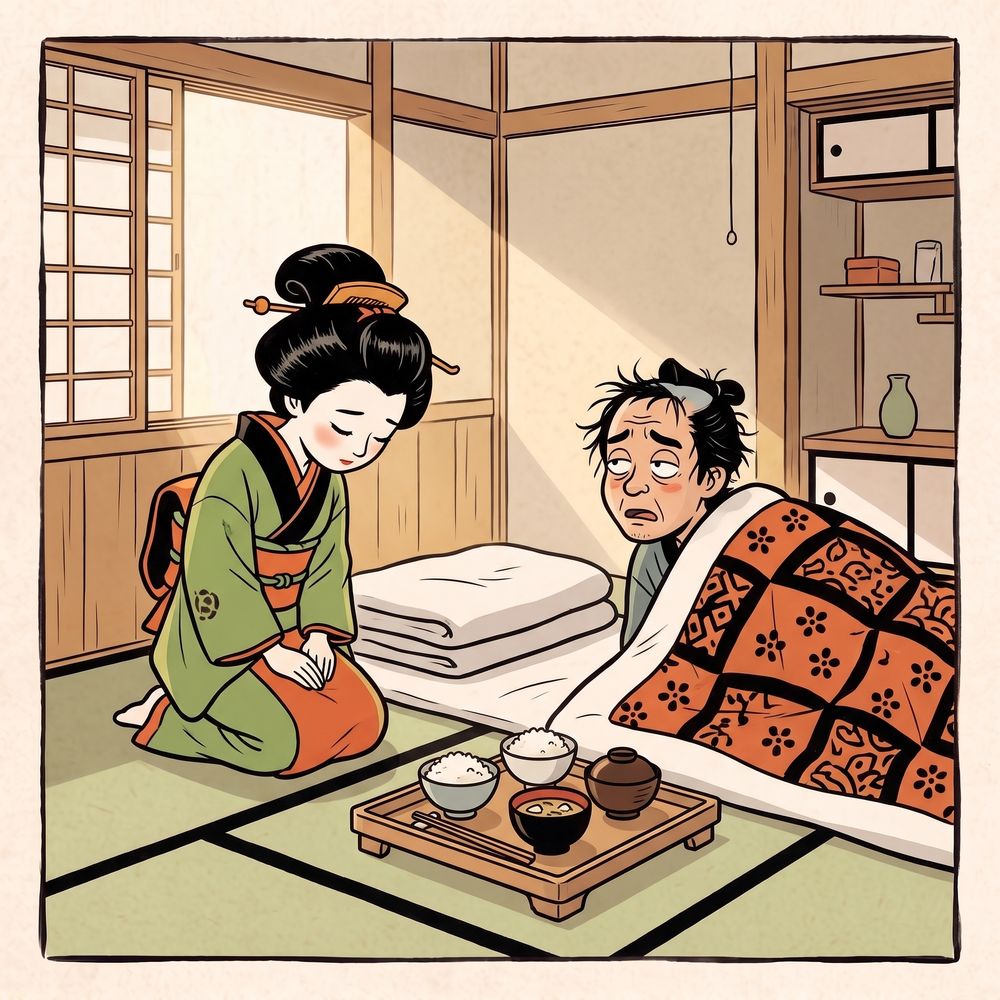
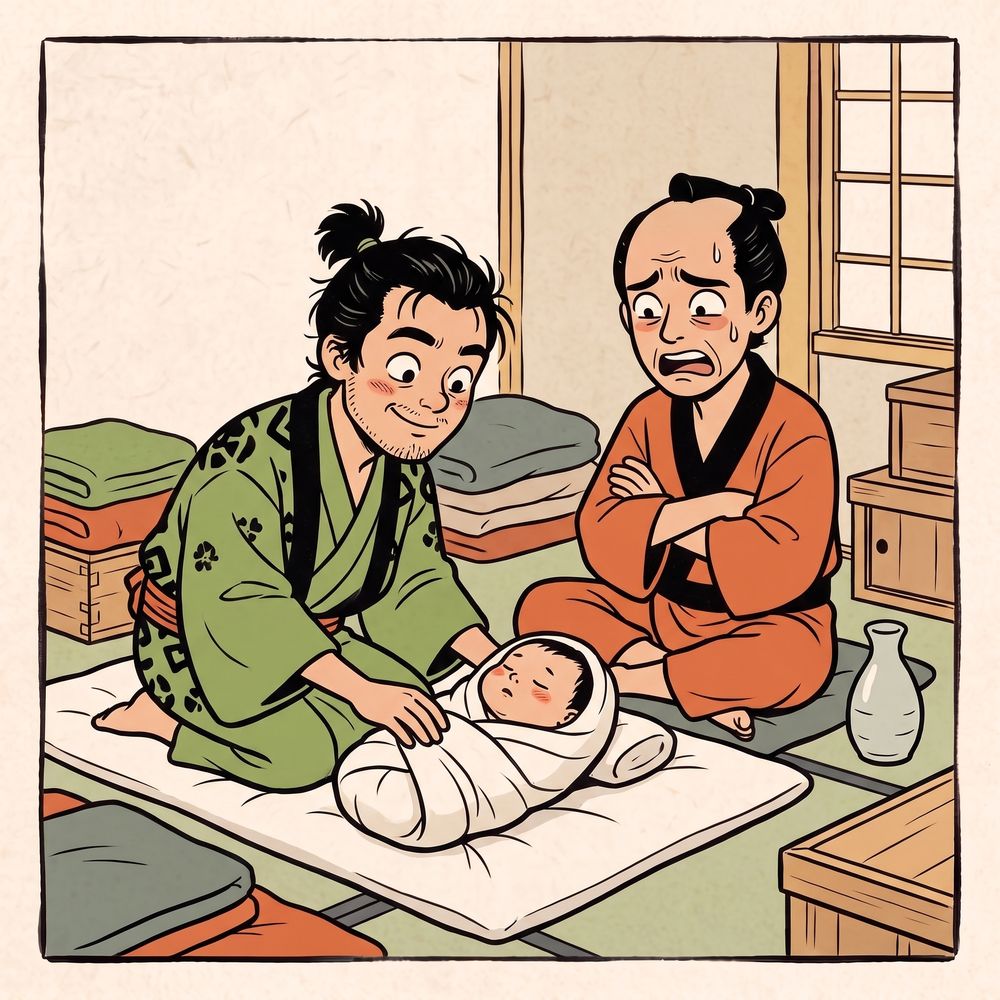
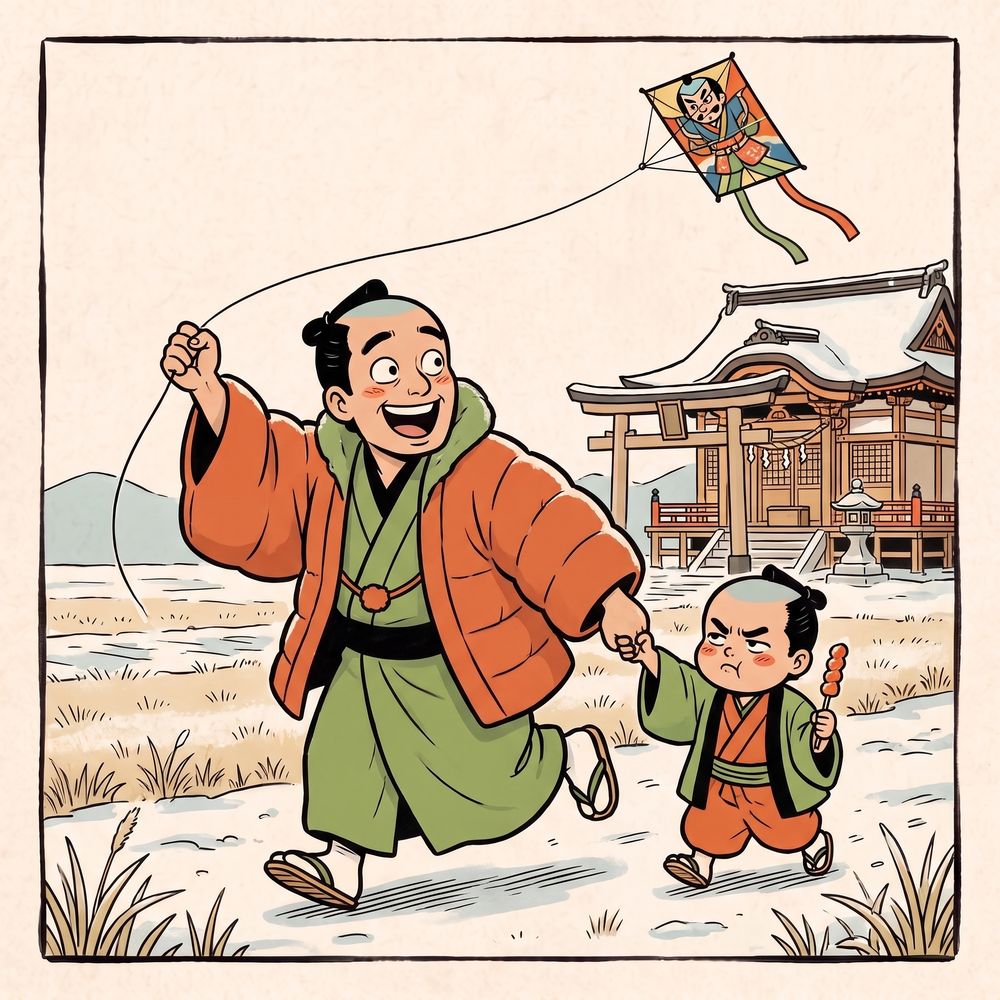
A couple living in a nagaya (row-house tenement) has a baby boy. Wanting "a name that will make him live long," the father goes to the temple priest for advice.
The priest lists one auspicious word after another from sutras and old legends. The father can't bear to give up any of them, and in the end strings them all together into one name.
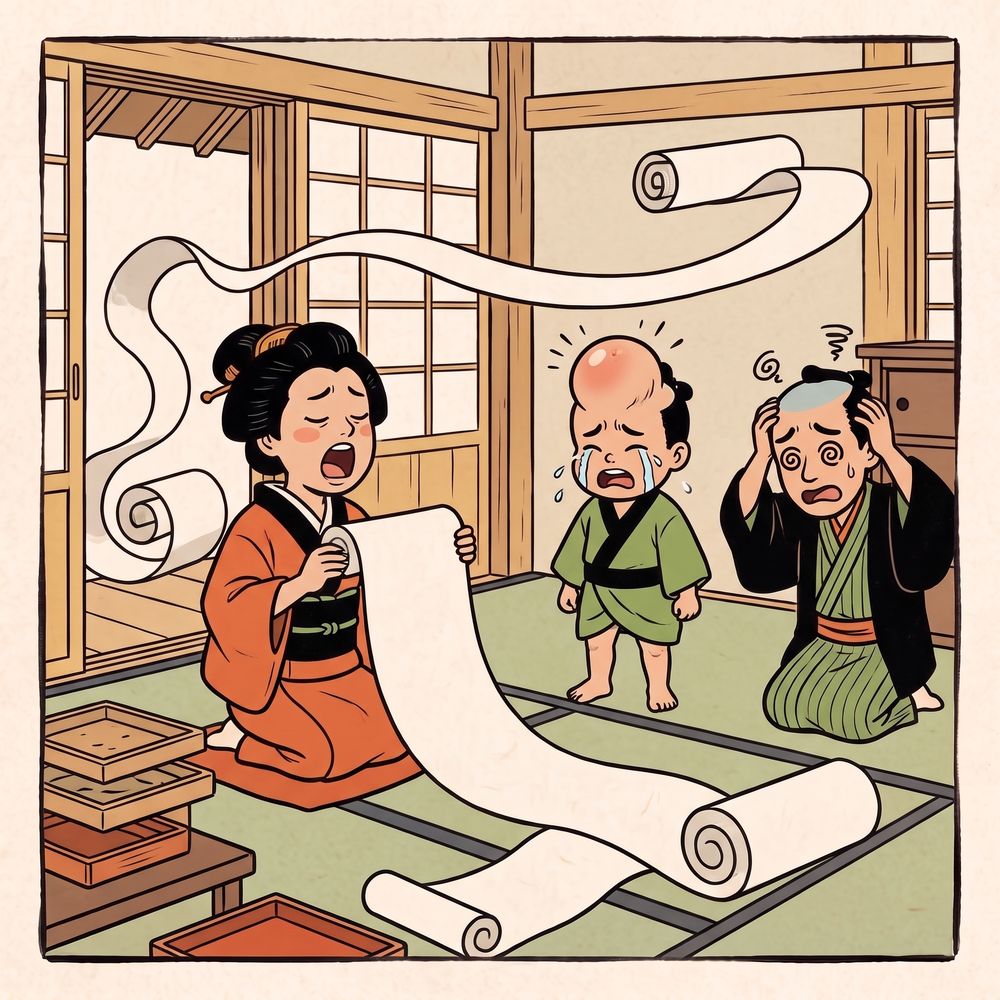
The boy grows up healthy, but his name is so long that calling him is a real chore. One day a neighbor's child comes crying with a bump on his head: "Your boy hit me!"
The mother tells the father, the father tells the boy, and every time, they recite the whole long name from start to finish...
The sage the punchline, contains spoilers
Tap to reveal the punchline
"His name's so long, my bump went down!"
In the sage (the punchline), the bump has healed by the time everyone finishes saying the name. The exact wording varies by performer.
Jugemu's full name and what it means
Jugemu's full name runs: Jugemu Jugemu Goko no Surikire Kaijarisuigyo no Suigyomatsu Unraimatsu Furaimatsu Kuuneru Tokoro ni Sumu Tokoro Yabura Koji no Bura Koji Paipo Paipo Paipo no Shuringan Shuringan no Gurindai Gurindai no Ponpokopi no Ponpokona no Chokyumei no Chosuke. In Japanese: 寿限無寿限無、五劫のすりきれ、海砂利水魚の水行末・雲来末・風来末、食う寝るところに住むところ、やぶらこうじのぶらこうじ、パイポ・パイポ・パイポのシューリンガン、シューリンガンのグーリンダイ、グーリンダイのポンポコピーのポンポコナの、長久命の長助. The exact words, readings and explanations vary a little by performer. Roughly, here is what the priest says each part means in the story.
| Words | Meaning (as explained in the story) |
|---|---|
| Jugemu | A life without limit |
| Goko no Surikire | An endlessly long time. One ko (kalpa) is as long as it takes a celestial maiden, brushing a rock with her robe, to wear it away, and goko is five of them |
| Kaijarisuigyo | Countless, like the gravel in the sea or the fish in the water |
| Suigyomatsu, Unraimatsu, Furaimatsu | Like water, clouds and wind, a future without end |
| Kuuneru Tokoro ni Sumu Tokoro | Never short of food or a place to live |
| Yabura Koji no Bura Koji | Growing up strong like the yabukoji (marlberry), a lucky plant |
| Paipo | A kingdom in old China |
| Shuringan | The king of Paipo |
| Gurindai | His queen |
| Ponpokopi, Ponpokona | Their daughters. All of them lived long lives |
| Chokyumei no Chosuke | A long and lasting life, and long help |
Key scenes original dialogue written for this site
Asking the priest
- PriestIf it's a lucky name you want, there's Jugemu. It means 'a life without limit.'
- FatherThat's great. Got any more?
- PriestThere's also Goko no Surikire.
- FatherI'll take that too. What else?
The child who came to tell on him
- Neighbor's childMa'am, Jugemu Jugemu Goko no Surikire... Chokyumei no Chosuke hit me on the head!
- MotherOh my, our Jugemu Jugemu Goko no Surikire... Chokyumei no Chosuke did?
- (Every time, the whole name is recited in a single breath.)
Sage
- Neighbor's child...His name's so long, my bump went down!
This is not a transcription of any storyteller's performance. The recitation of the name and the sage are traditional; the rest of the dialogue is written by this site.
Notable performers
Rather than a signature piece of any particular master, this is the classic practice story that a newly apprenticed zenza is taught first. It is often heard as the opening act at yose (rakugo theaters).