Nagaya no HanamiThe Tenement's Cherry Blossom Party
長屋の花見(ながやのはなみ)
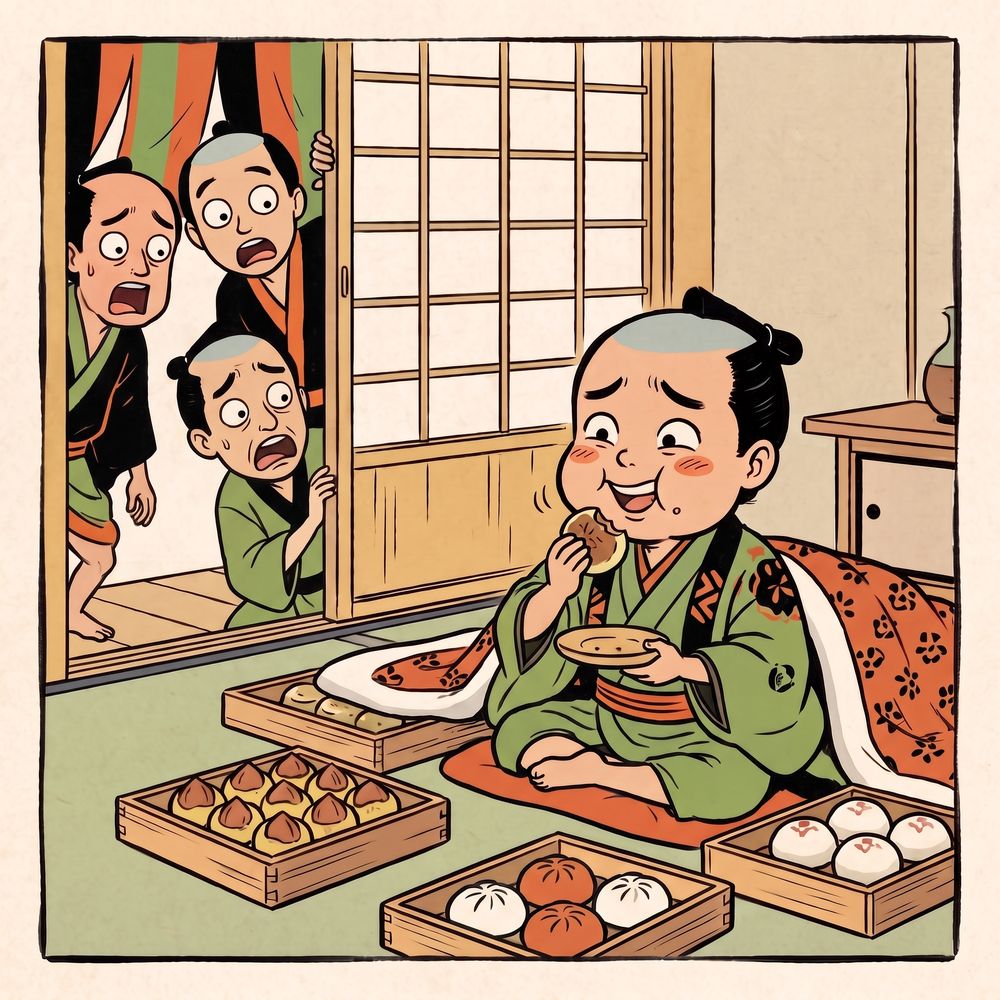
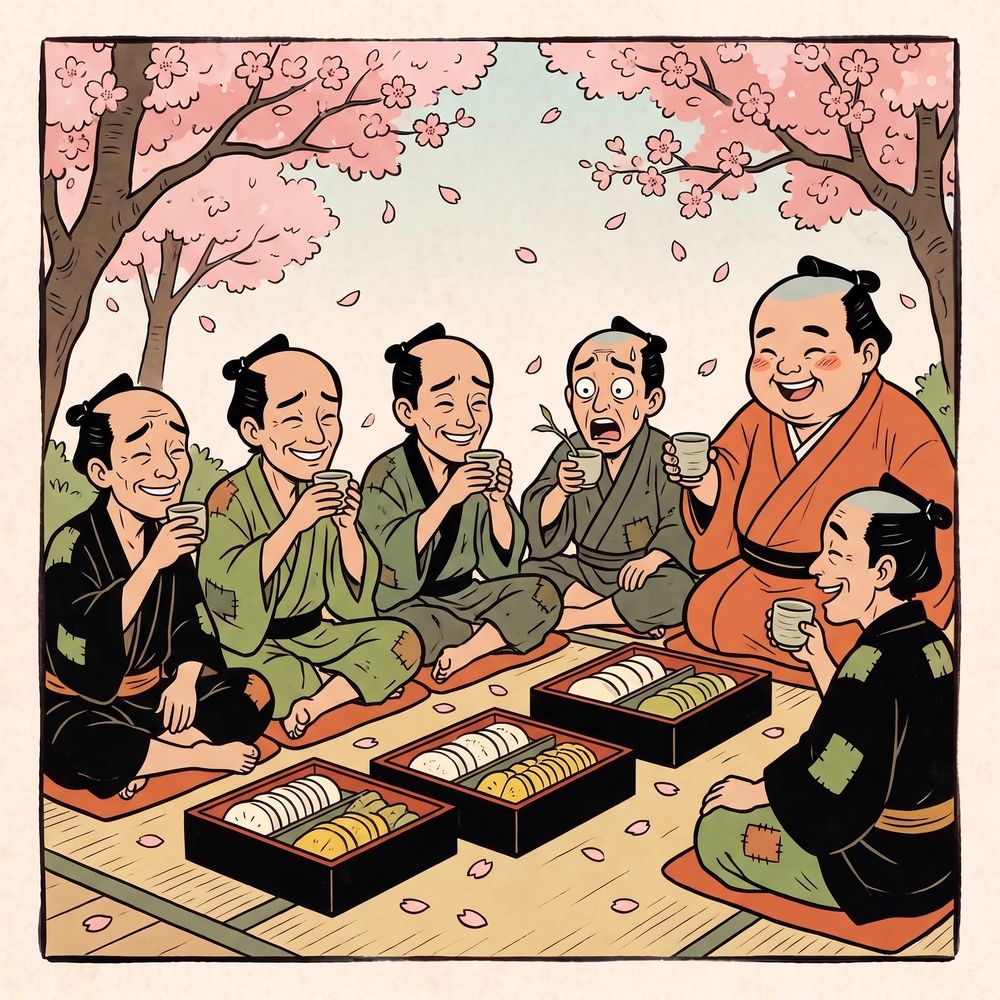
The tenants of a poor tenement, who can barely pay their rent, are summoned by their landlord. They're sure he wants the rent, but instead he invites everyone to go cherry blossom viewing. Hearing that the landlord is providing the sake and food, they're overjoyed, until they find out the sake is tea, the fish cake is daikon radish, and the omelet is pickled radish...
The story
Summoned by the landlord, the residents of the tenement (nagaya) are terrified he's going to demand the rent. Instead, the landlord suggests they all go to Ueno to see the cherry blossoms. When he says he has already prepared the sake and food, everyone is thrilled.
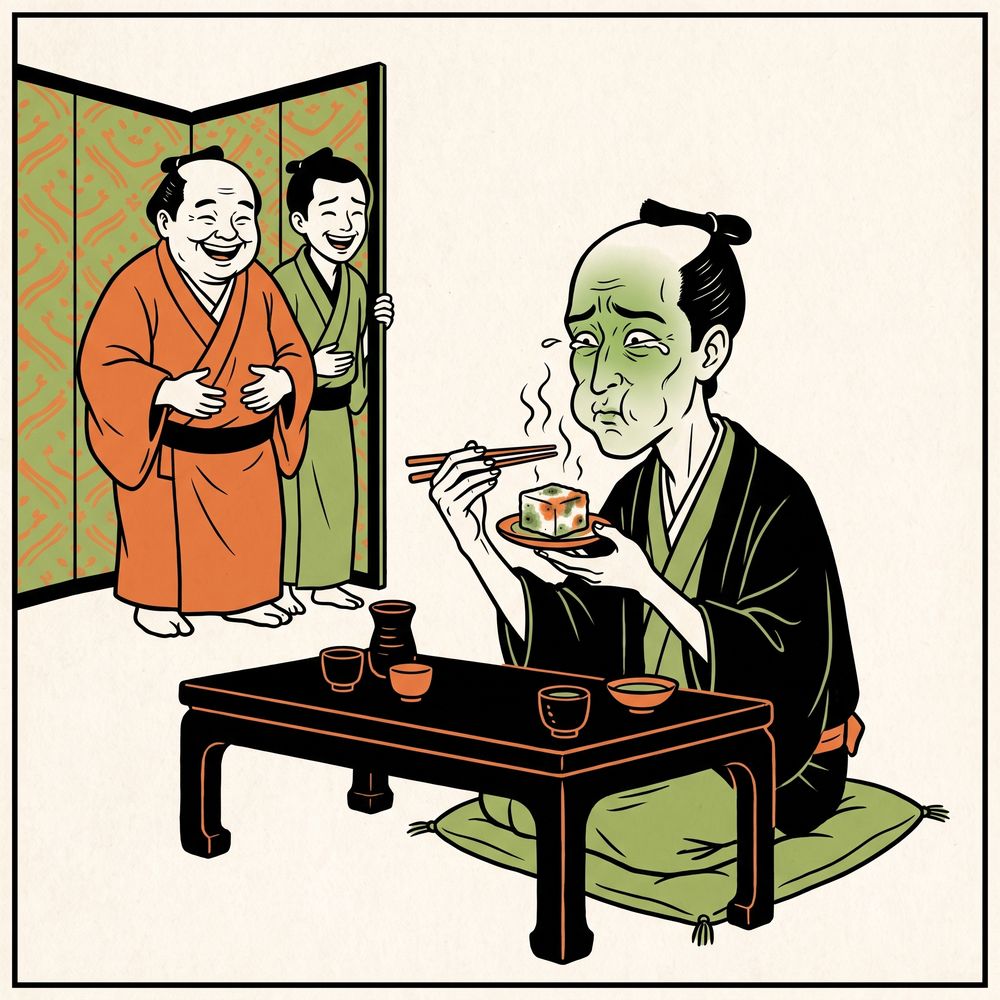
But the big sake bottle turns out to hold watered-down green tea, “ochake.” The fish cake (kamaboko) in the lunch boxes is sliced daikon radish, and the rolled omelet is yellow pickled radish (takuan).
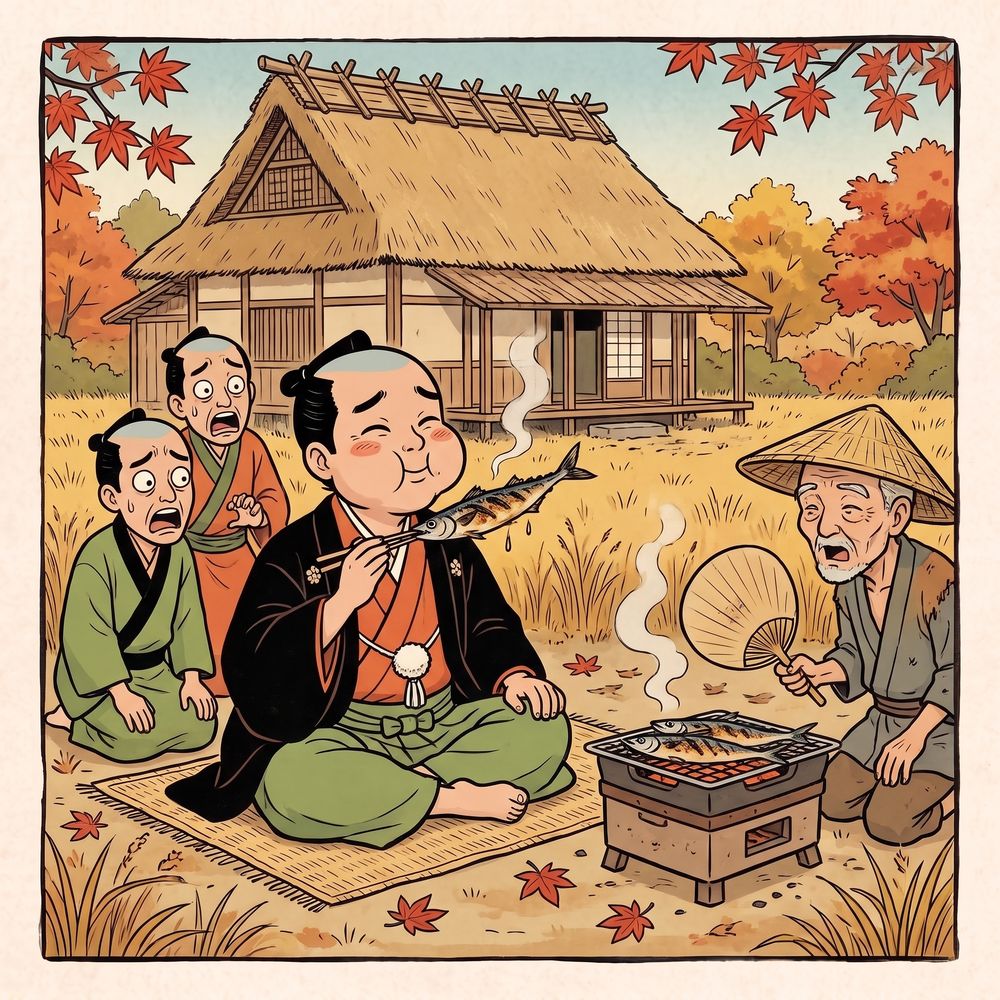
When they reach the hill at Ueno, the landlord orders them to act drunk: “We came for a blossom party, so liven up!” The tenants sip the tea and grimace, and bite into the daikon with desperate compliments like, “This fish cake has a nice crunch to it.”
Told to by the landlord, one tenant reluctantly starts acting drunk. Another, who has been peering into his teacup, turns to the landlord and says...
The sage the punchline, contains spoilers
Tap to reveal the punchline
“Landlord, something good is going to happen to the tenement soon. I've got a sake stalk standing up!”
In Japan, a tea stalk floating upright in your cup (chabashira) is a sign of good luck. The sage (the punchline) twists it into “sakebashira,” a sake stalk, with the irony that it can only stand up because the “sake” is really tea. Performers end the story in various ways; another version closes with a senryu, a comic verse: “The whole tenement / gritting its teeth together / at the blossom party,” where “gritting their teeth” means both enduring hardship and chewing hard radish.
Nagaya no Hanami and Binbo Hanami
The story began as the kamigata piece “Binbo Hanami” (Poor Folks' Blossom Viewing) and was brought to Tokyo by Chokaro Baraku III. The biggest difference between the two versions is who comes up with the idea of the blossom party.
| Nagaya no Hanami (Edo) | Binbo Hanami (Kamigata) | |
|---|---|---|
| Whose idea | The landlord gathers the tenants and invites them | The tenants think of it themselves; the landlord doesn't appear |
| The stand-ins | The landlord provides the sake and food | Everyone brings something, making do with stand-ins for everything from food to clothes and picnic mats |
| Flavor | Comedy in the exchanges between landlord and tenants | A stronger sense of everyday life in poverty |
Key scenes original dialogue written for this site
The Landlord's Summons
- TenantHey, the landlord wants to see us. It's about the rent, I bet.
- TenantMe, I haven't paid once since I moved in.
- TenantThere's always someone worse off. I've never even laid eyes on this thing called rent.
Inside the Lunch Boxes
- LandlordGo on, help yourselves. There's omelet and fish cake.
- TenantLandlord, this omelet goes crunch, crunch.
- LandlordThat's because I cut it from the tail end.
- (The performer makes the crisp sound of biting pickled radish with his mouth.)
Drunk on Tea
- LandlordCome on, cheer up. Let's see you get drunk.
- TenantYes, sir... Oh, I'm drunk, I'm drunk. First time in my life I ever got drunk on green tea.
This is not a transcription of any storyteller's performance. The plot and the sage are as handed down in the classical tradition; the dialogue was written for this site.
Notable performers
- Chokaro Baraku III1864–1914EdoIs said to have brought the kamigata “Binbo Hanami” to Tokyo.
- Yanagiya Kosan V1915–2002EdoOne of the performers whose recordings survive.
- Sanyutei Ensho VI1900–1979EdoOne of the performers whose recordings survive.
- Shofukutei Shokaku VI1918–1986KamigataMade the kamigata “Binbo Hanami” one of his specialties.
- Katsura Beicho III1925–2015KamigataOne of the performers whose transcripts and recordings of “Binbo Hanami” survive.