TarachineThe Overly Polite Bride
たらちね(たらちね)
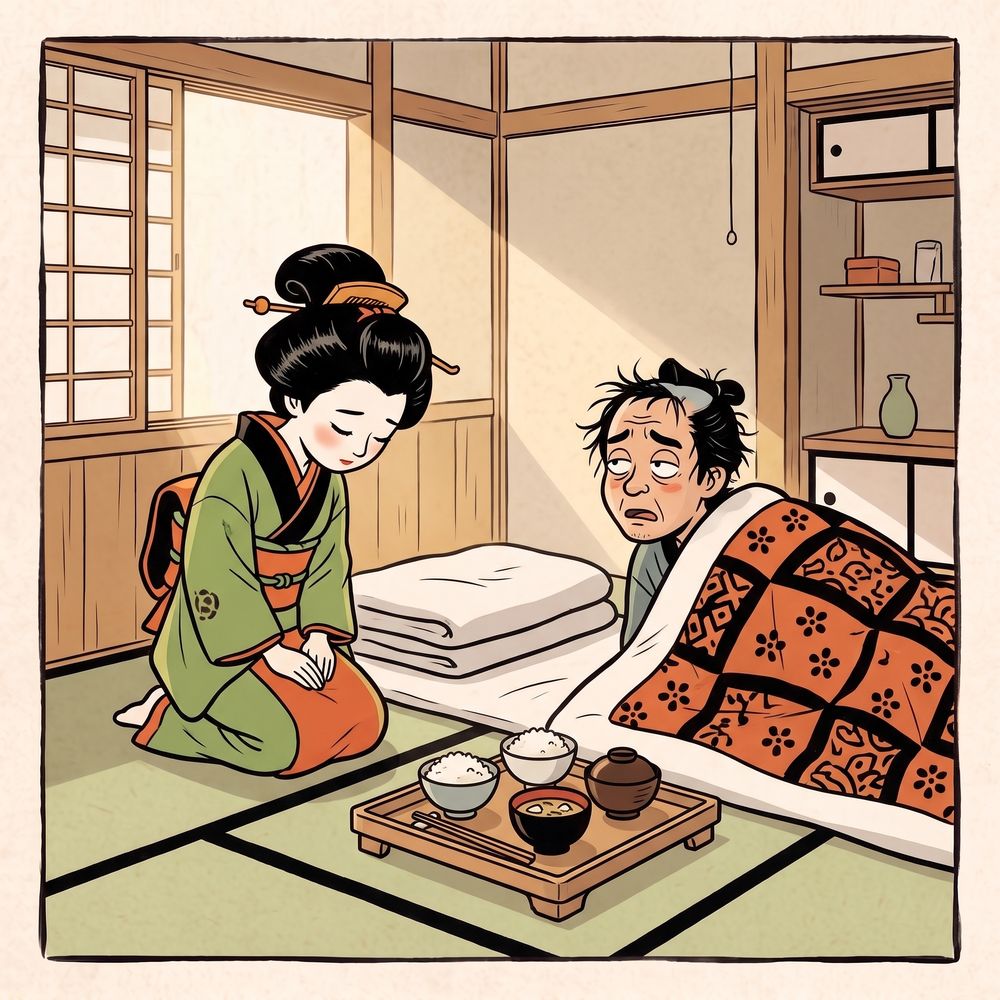
The landlord brings a marriage proposal to Hachigoro, who lives alone. The young woman is pretty and good-natured, with just one flaw: her way of speaking is old-fashioned and far too stiff. Hachigoro says he doesn't mind and marries her, but just asking her name turns into an ordeal...
The story
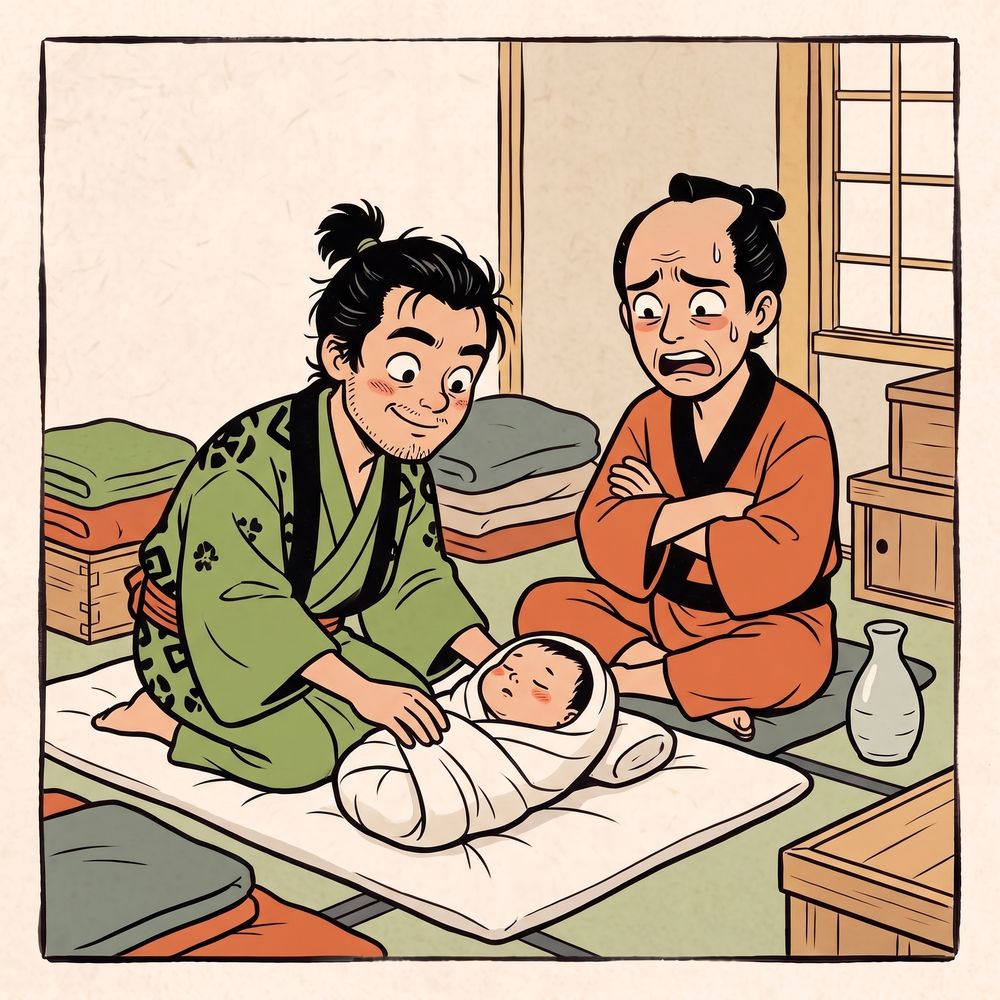
Hachigoro lives on his own in a nagaya (a row-house tenement), and the landlord has offered to find him a wife. She's a fine girl, the landlord warns him, but she speaks so politely that she can be hard to understand. Hachigoro doesn't mind in the least.
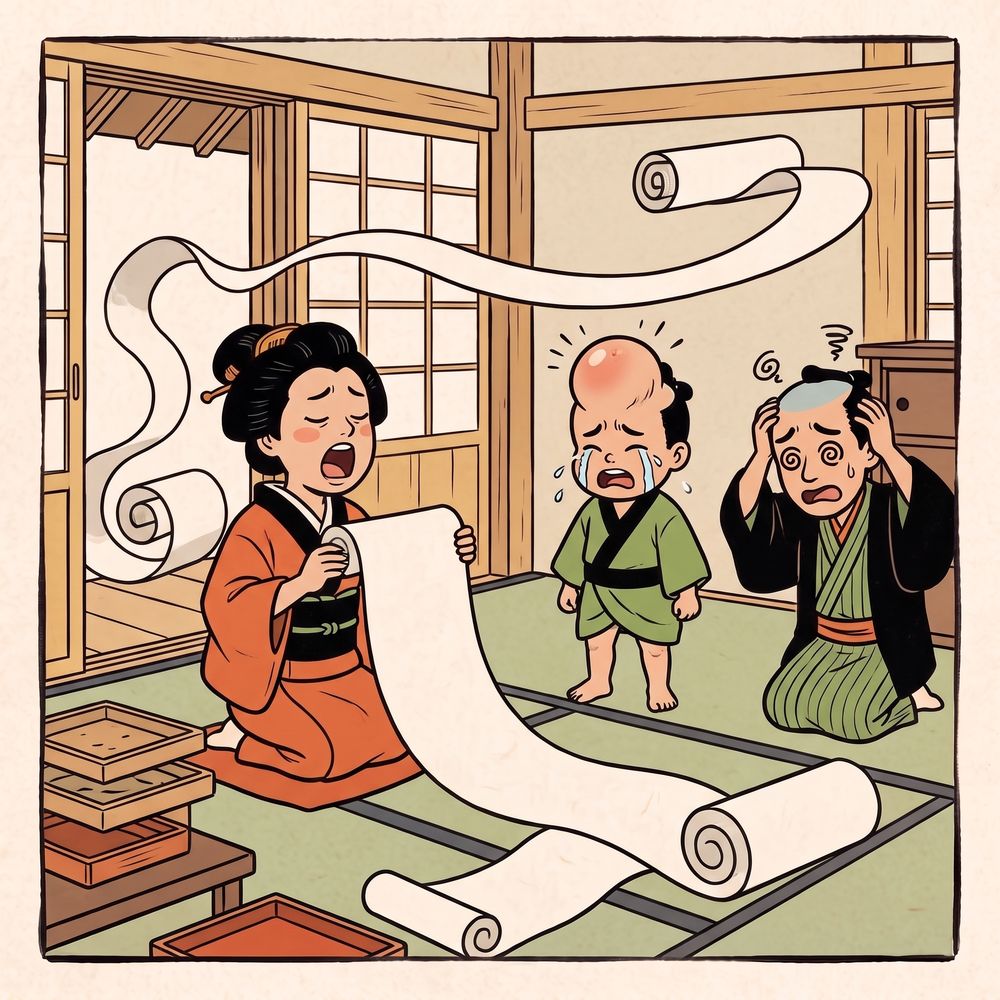
They hold the wedding that very evening. When the two are finally alone and he asks her name, she launches into a long recital, studded with lofty Chinese-derived words, covering her father's birthplace and her family's whole history. Hachigoro assumes the entire thing is her name.
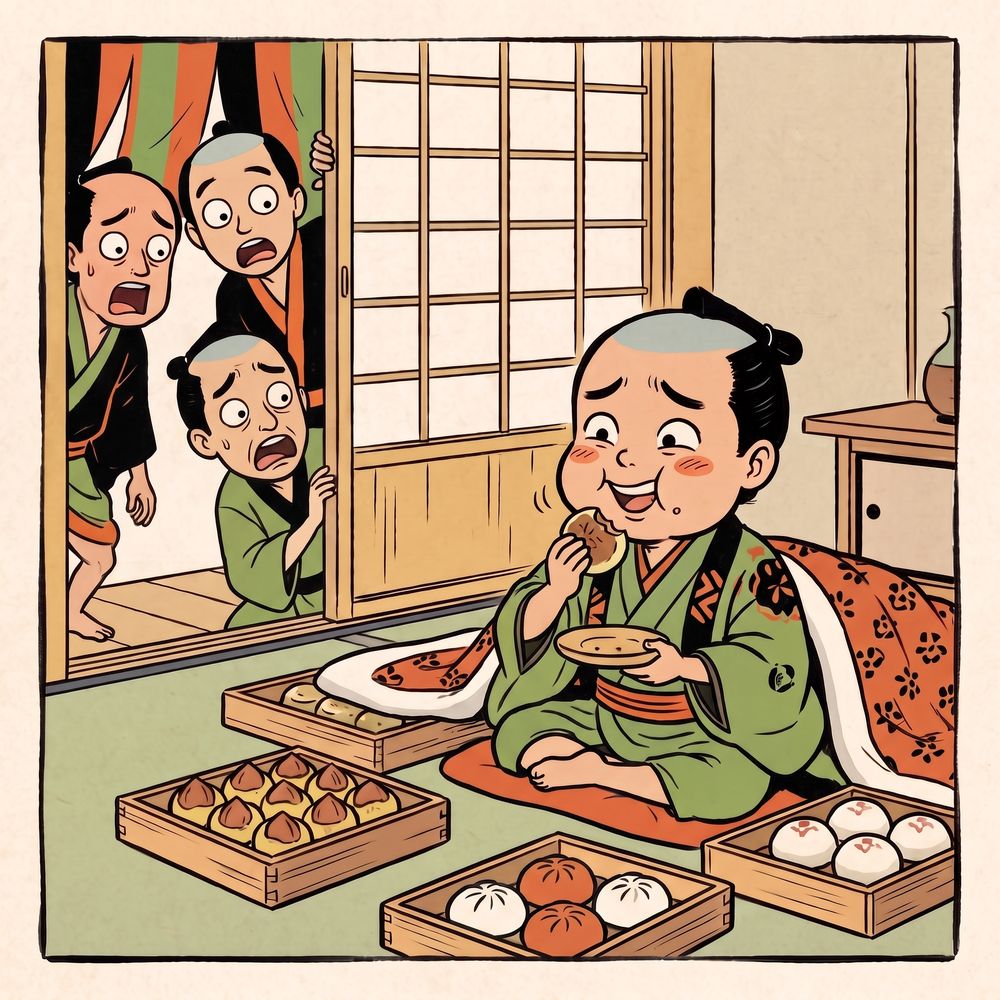
The next morning, even asking where the rice bin is turns into a complicated affair, so Hachigoro gives up and goes back to sleep. When breakfast is ready, his wife wakes him with a ceremonious speech like the closing of a formal letter, finishing with “kyoko kingen.” Hearing this, Hachigoro says...
The sage the punchline, contains spoilers
Tap to reveal the punchline
“If eating breakfast ends with ‘kyoko kingen,’ I suppose having a drink ends with ‘yotte kudan no gotoshi’?”
“Kyoko kingen” is a formal closing used in letters, something like “I remain, with deepest respect, yours.” “Yotte kudan no gotoshi” (“in witness whereof”) is the stock phrase that closes a written bond or contract. The sage (the punchline) is a pun that reads “yotte” (therefore) as “yotte” (drunk).
Edo and Kamigata
The story originally came from kamigata, where it is performed as Enyohaku. What makes the wife's speech so “stiff” differs between east and west.
| Edo: Tarachine | Kamigata: Enyohaku | |
|---|---|---|
| The wife's speech | Refined, formal Kyoto speech | Stiff, formal Chinese-derived vocabulary (kango) |
| What the title means | “Tarachine,” the poetic epithet for “mother” | A play on “en yo haku” (sweeps the veranda well), dressed up to sound like kango and meaning a good wife |
Key scenes original dialogue written for this site
Asking her name
- HachigoroBy the way, I still haven't asked your name.
- WifeThen permit me to state mine own name and lineage. In the first place, my father was born in the capital of Kyoto, and...
- HachigoroWh-whoa, hold on. There's more?
- (Counting on his fingers, he tilts his head further and further.)
- HachigoroThat's some long name. The sun'll be down before I finish calling you.
Where's the rice?
- WifePray tell, wherein lieth the polished grain?
- HachigoroPolished grain... oh, rice. The rice is in that box there.
- WifeI am most humbly obliged.
- HachigoroEven her thank-you for some rice is stiff. Best thing to do is go back to sleep.
The morning address
- WifeMy lord, the sun standeth already high, and thy repast groweth cold, wherefore I beseech thee to partake of it forthwith... kyoko kingen.
- (Under the covers, he opens just his eyes and stares at the ceiling.)
This is not a transcription of any storyteller's performance. The plot, the sage and the stock phrase “kyoko kingen” follow the classic version; the dialogue was written for this site.
Notable performers
- Yanagiya Kosan V1915–2002EdoKnown as one of the stories in his repertoire.
- Sanyutei Kinba III1894–1964EdoKnown as one of the stories in his repertoire.
- Kokontei Shincho III1938–2001EdoOne of the performers who took on this story.
- Katsura Shijaku II1939–1999KamigataOne of the performers of the kamigata version, Enyohaku.