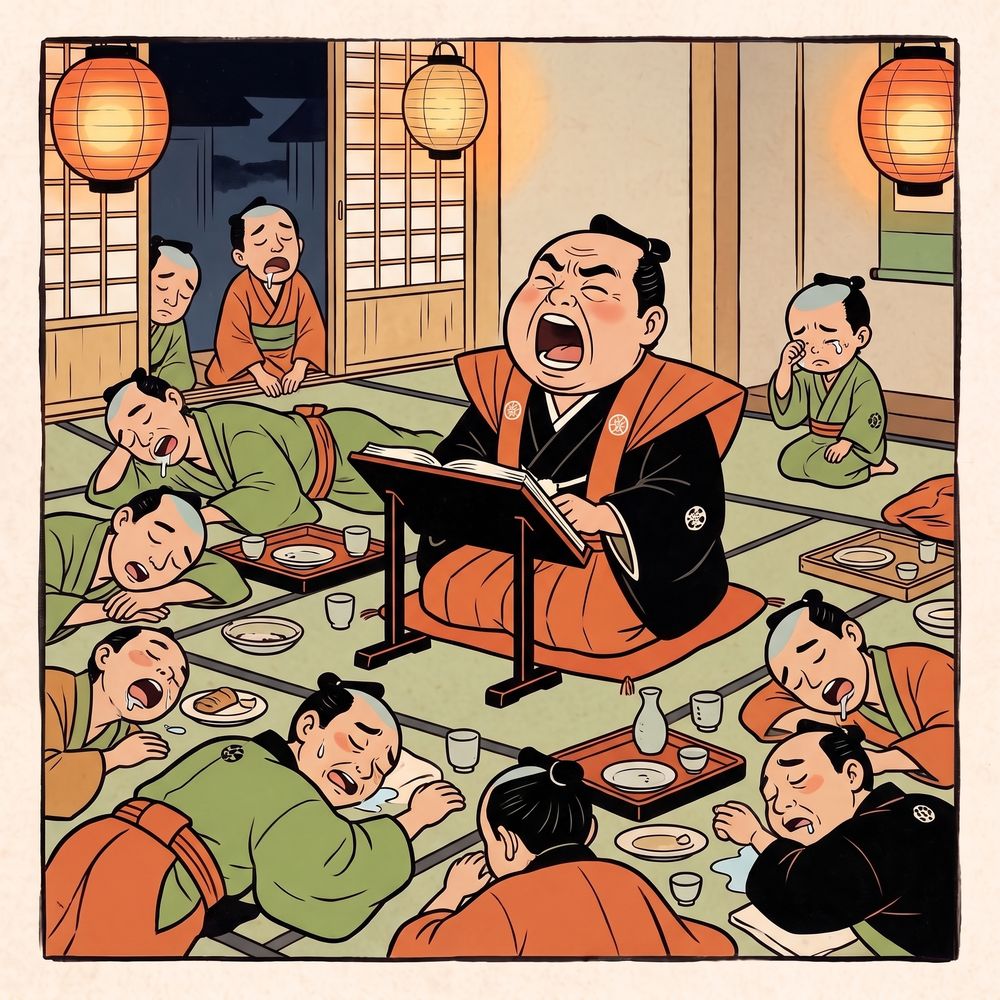
NedokoThe Sleeping Spot
寝床(ねどこ)
The master of a large shop is kind and well liked by the tenants of his row houses. His one fault is that he loves to make people listen to his awful gidayu, a style of dramatic chanting from the puppet theater. Every time he holds a recital, his tenants and his own staff invent excuses to get away. At last the master sulks...
The story
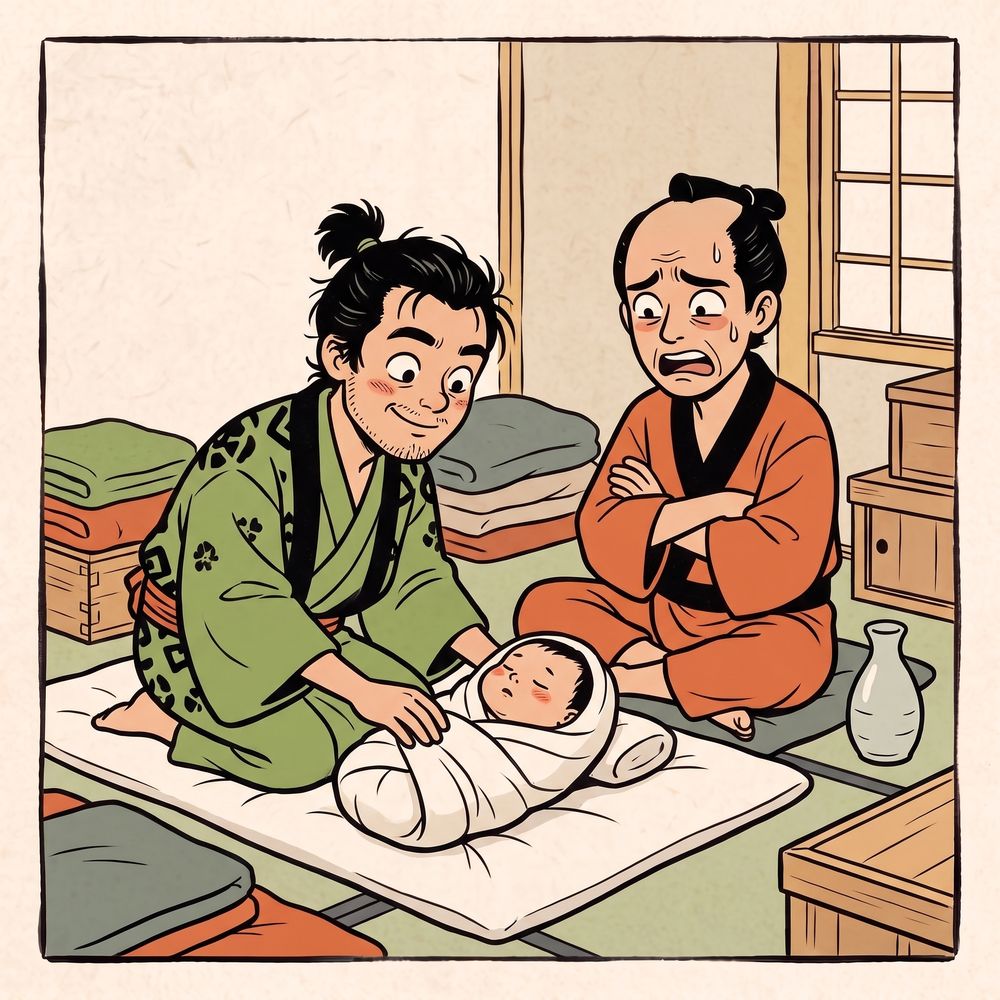
The master runs a shop on the main street and also owns the row of tenement houses behind it. He looks after people and his tenants are fond of him, but he is obsessed with gidayu chanting, he is very bad at it, and he cannot resist making others listen.
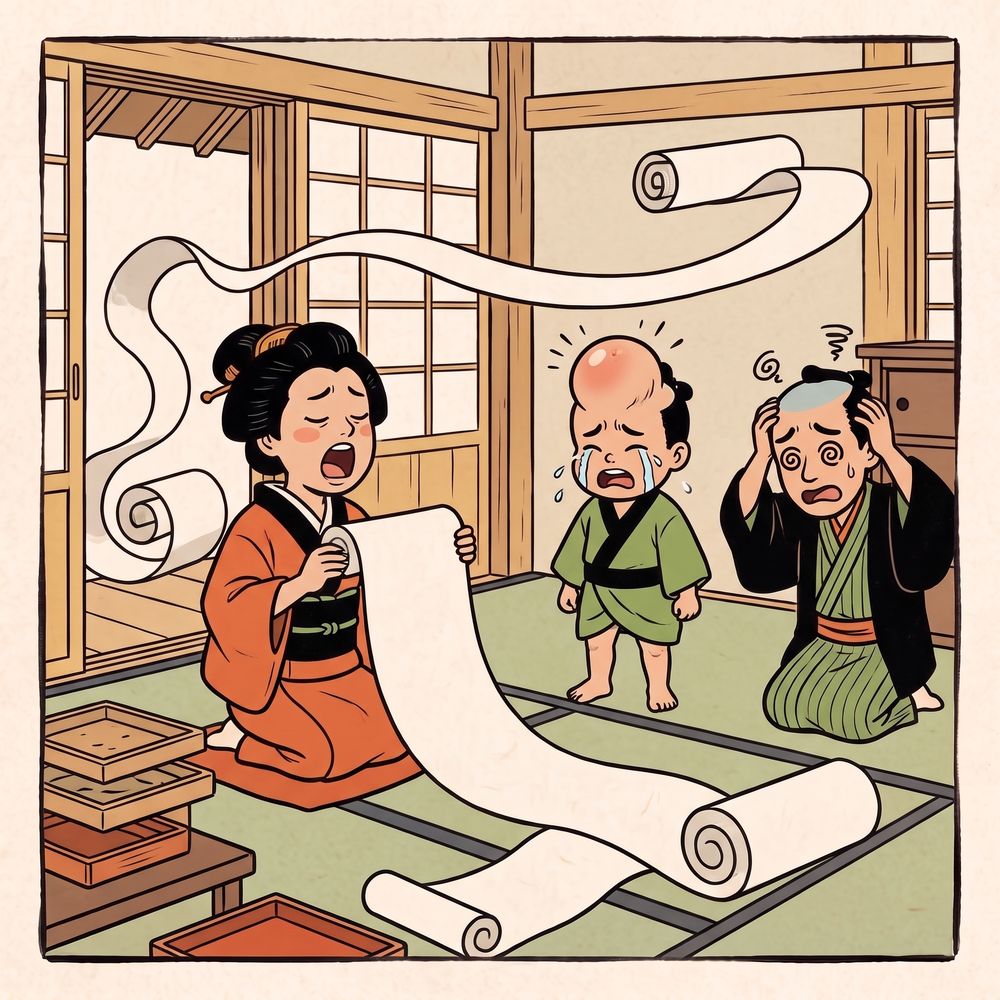
He decides to hold a recital tonight and sends the head clerk to invite the tenants. But the clerk comes back with nothing but excuses: a sudden big order, a death in the family, an upset stomach... When the master turns to his shop staff, they all fall ill at once as well.
Realizing at last that nobody wants to hear him, the master sulks. He announces that the tenants must move out and the staff are all dismissed, then lies down in a huff.
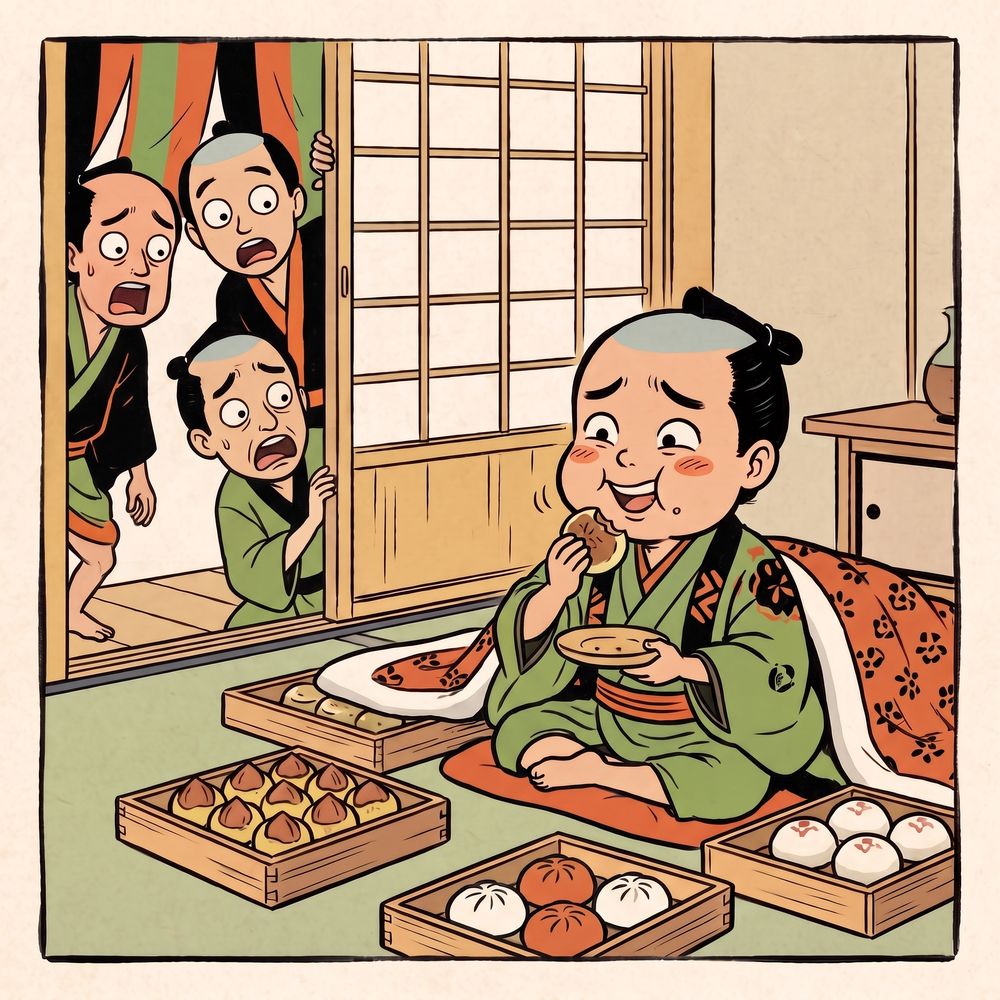
The panicked tenants and staff talk it over and decide that with enough sake they can survive the chanting, so they agree to come. When the clerk tells the master, “Everyone is dying to hear you,” his mood brightens at once, and he lays out sake and food and begins.
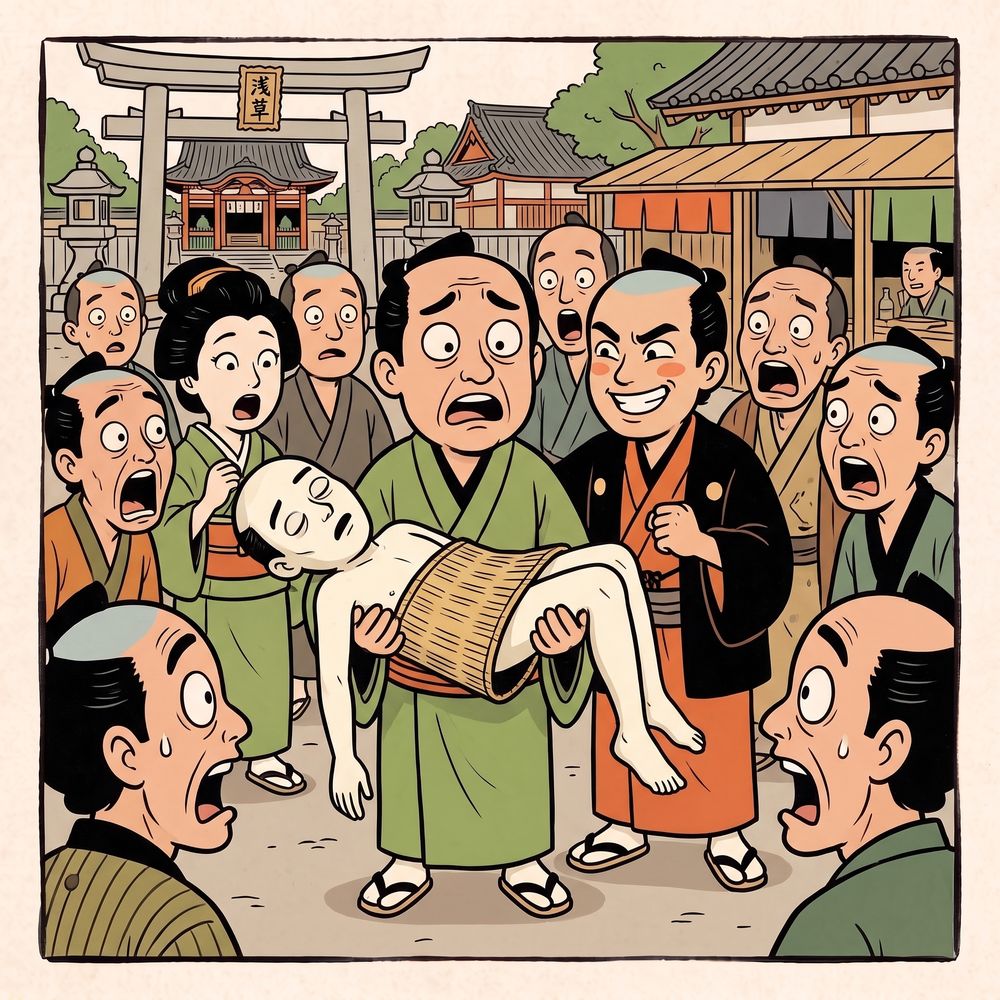
As the master chants away with his eyes shut, the guests drink themselves to sleep and sprawl across the floor. When he notices how quiet the room is, he is furious, but then he sees that only Sadakichi, the apprentice boy, is still awake and crying. Delighted that someone was moved by his performance, the master asks which part was so sad...
The sage the punchline, contains spoilers
Tap to reveal the punchline
“That is where I sleep, sir.”
The sage (the punchline): the yuka, the platform where the master sat to chant, was the very spot where Sadakichi usually sleeps. Everyone else got to doze off, but he could not, because his bed was taken. The joke plays on the yuka, or “floor,” of the gidayu stage and nedoko, “a place to sleep.”
Focusing on the Master or on the Tenants
The plot is the same, but performers put the weight in different places. The two great Showa-era masters below are often said to have taken opposite approaches. The story began in Kamigata, where it is also known as Nedoko Joruri.
| Katsura Bunraku VIII | Kokontei Shinsho V | |
|---|---|---|
| Focus | The master’s character | The tenants’ suffering |
| How the laughs come | By drawing in detail how the master changes whenever gidayu comes up | By boldly exaggerating the people at the mercy of his chanting |
Key scenes original dialogue written for this site
The clerk’s report
- MasterSo, how many of the tenants are coming?
- Head clerkWell, sir... The tofu maker has a big order all of a sudden, and he’ll be up all night preparing it.
- MasterBusiness is business. And the others?
- Head clerkThe hardware dealer has a meeting, the fire brigade chief has gone to a fire far away... and the wives all have upset stomachs.
- Master...Every one of them, and all on this one night?
The master sulks
- MasterVery well. Anyone who can’t listen to my gidayu can leave my houses. And the staff are all dismissed.
- (He throws off his haori jacket, turns his face away and lies down.)
- Head clerkM-master, that’s too cruel...
After the recital
- MasterWhat, they’ve all fallen asleep? After I put my heart into it... Oh, but Sadakichi is awake. And he’s crying.
- MasterEven a child understands, if he has the ear for it. Which part was so sad? The parting of parent and child?
- SadakichiNo, sir, it isn’t that...
This is not a transcription of any storyteller's performance. The plot and the sage follow the classic version. All lines were written for this site.
Notable performers
- Katsura Bunraku VIII1892–1971EdoKnown as a performer who excelled at this story. He studied gidayu himself, and there is a story that he held a “Nedoko party” where he served food and sake and made guests listen to his chanting.
- Sanshotei Karaku VIII1898–1964EdoOne of the performers whose recordings survive.
- Kokontei Shinsho V1890–1973EdoOne of the performers whose recordings survive. He exaggerated the tenants’ suffering.
- Katsura Shijaku II1939–1999KamigataOne of the performers whose recordings survive.