Inokori SaheijiSaheiji Stays Behind
居残り佐平次(いのこりさへいじ)
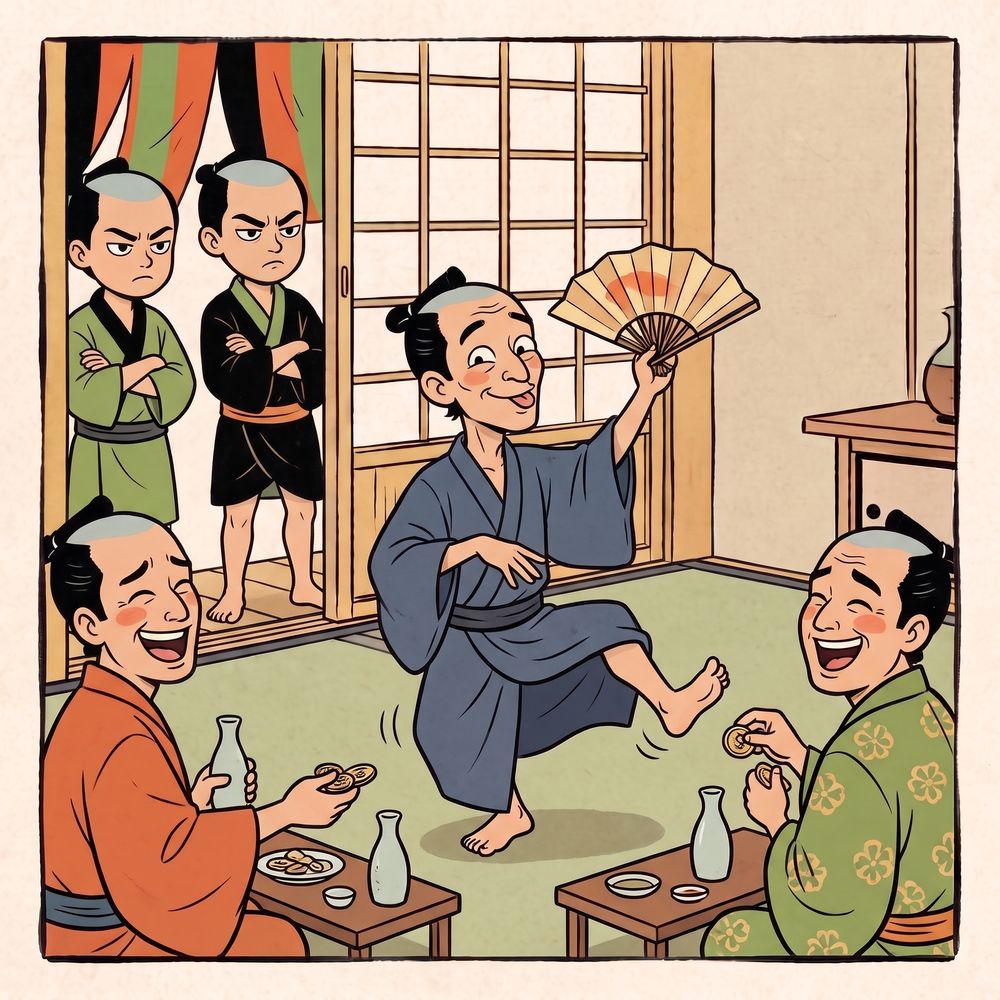
Saheiji talks his friends from the tenement into a spree at a brothel in the Shinagawa pleasure quarter, then stays on alone. When the house demands payment, he doesn't bat an eye: he moves himself into the futon storeroom, and before long he is wandering into the parlors uninvited to entertain the guests. In the end, the house would happily pay him just to leave.
The story
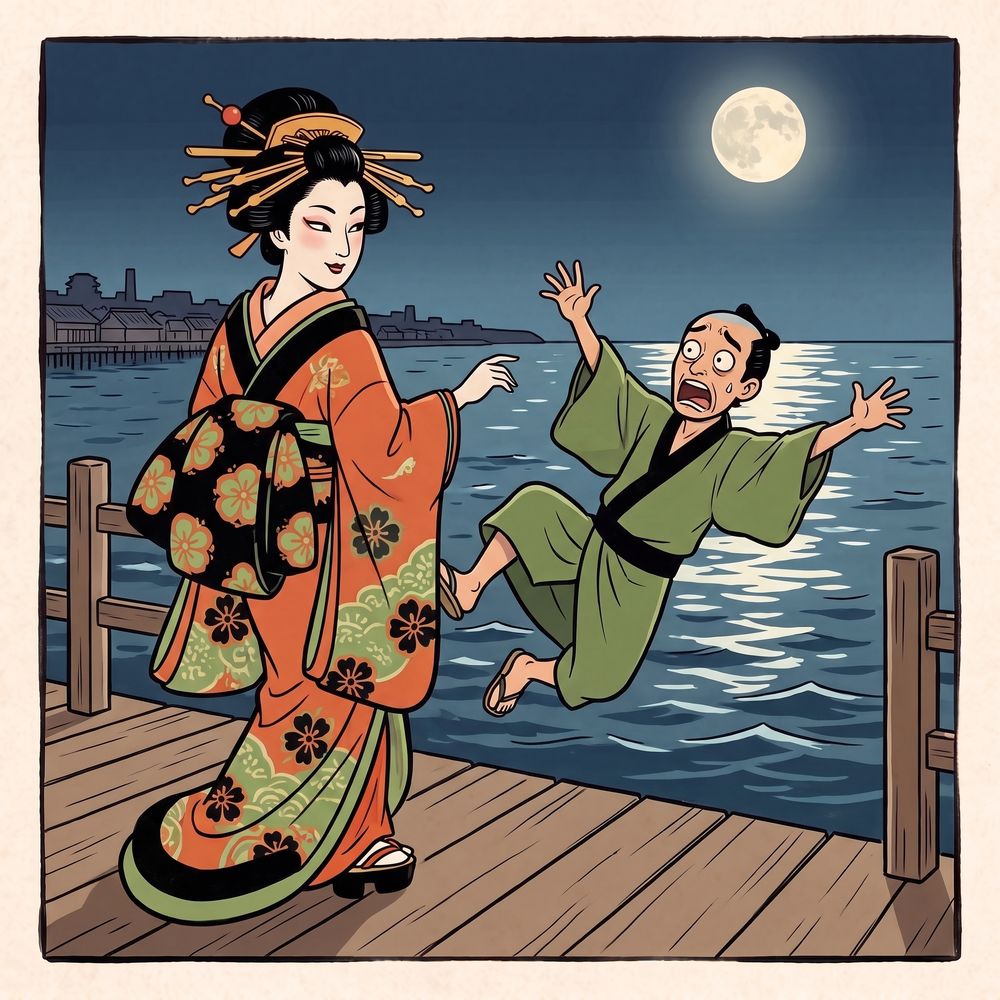
Saheiji, who lives in a tenement (nagaya), invites his friends to go out to Shinagawa for some fun. None of them has that kind of money, but Saheiji just tells them not to worry. They drink, sing and stay the night, and the next morning Saheiji announces that he'll stay a little longer, sending the others home ahead of him.
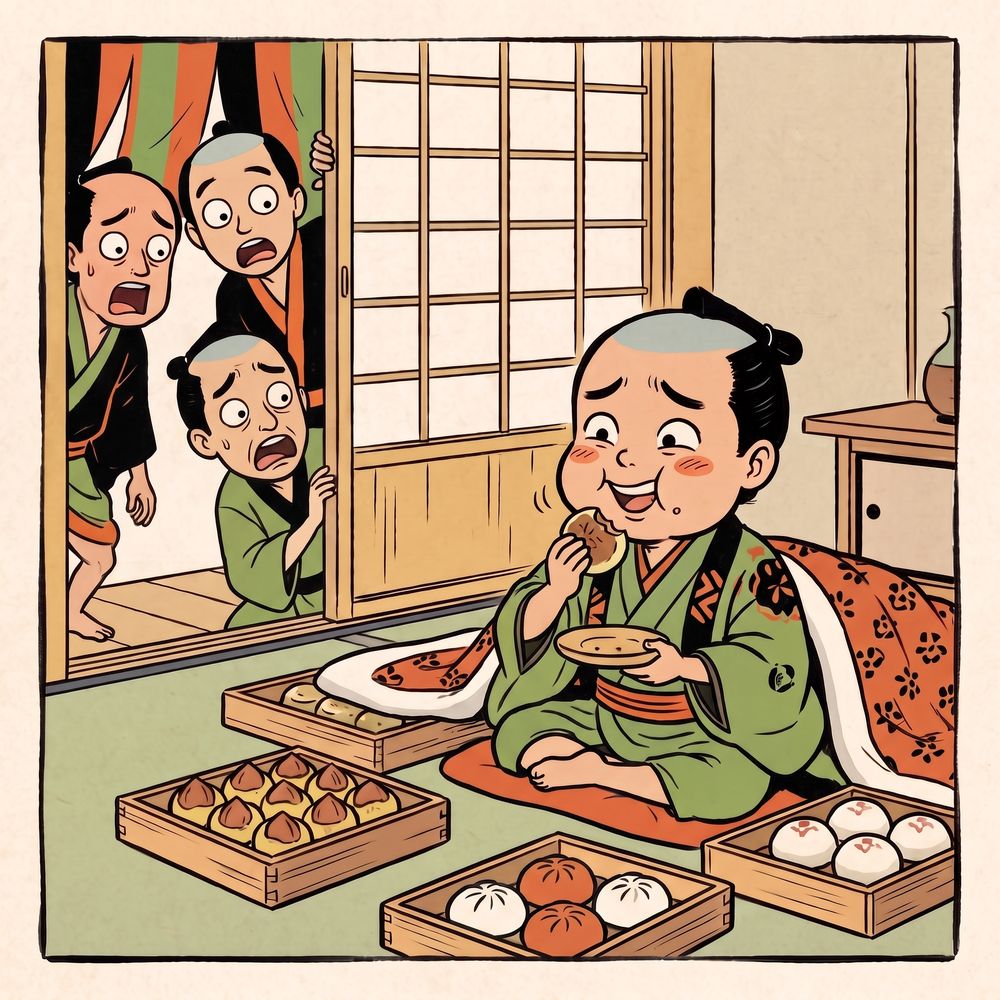
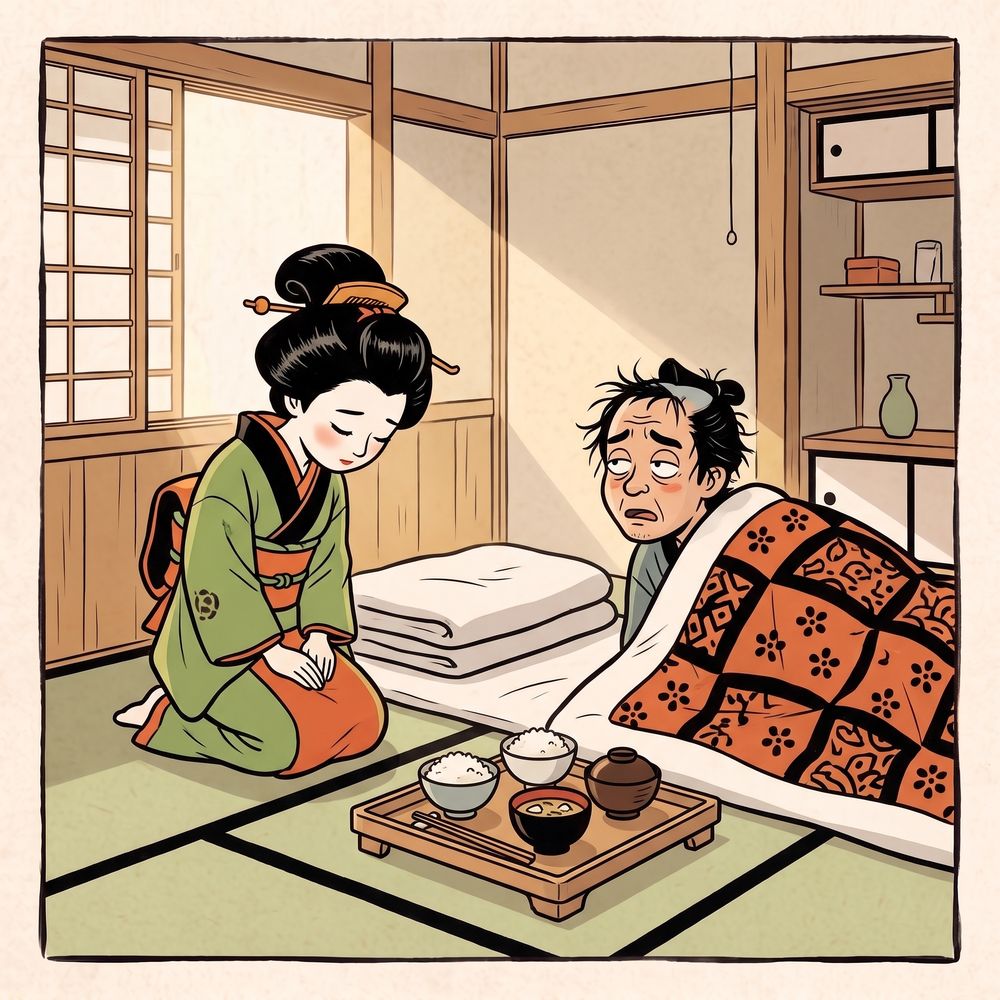
When the staff ask him to settle the bill, Saheiji fobs them off, saying his friends will bring the money, and carries on enjoying himself alone. After several days they press him hard, and he cheerfully admits that he has no money and his friends aren't coming. With the whole house in an uproar, he walks into the futon storeroom of his own accord and becomes an inokori, a customer held until his debt is paid.
When the house gets busy at night, Saheiji slips out of the storeroom and invites himself into the guests' parlors. With his quick tongue and near-professional party tricks, he delights the customers and even starts collecting tips. Soon the guests themselves are asking for “that inokori fellow.”
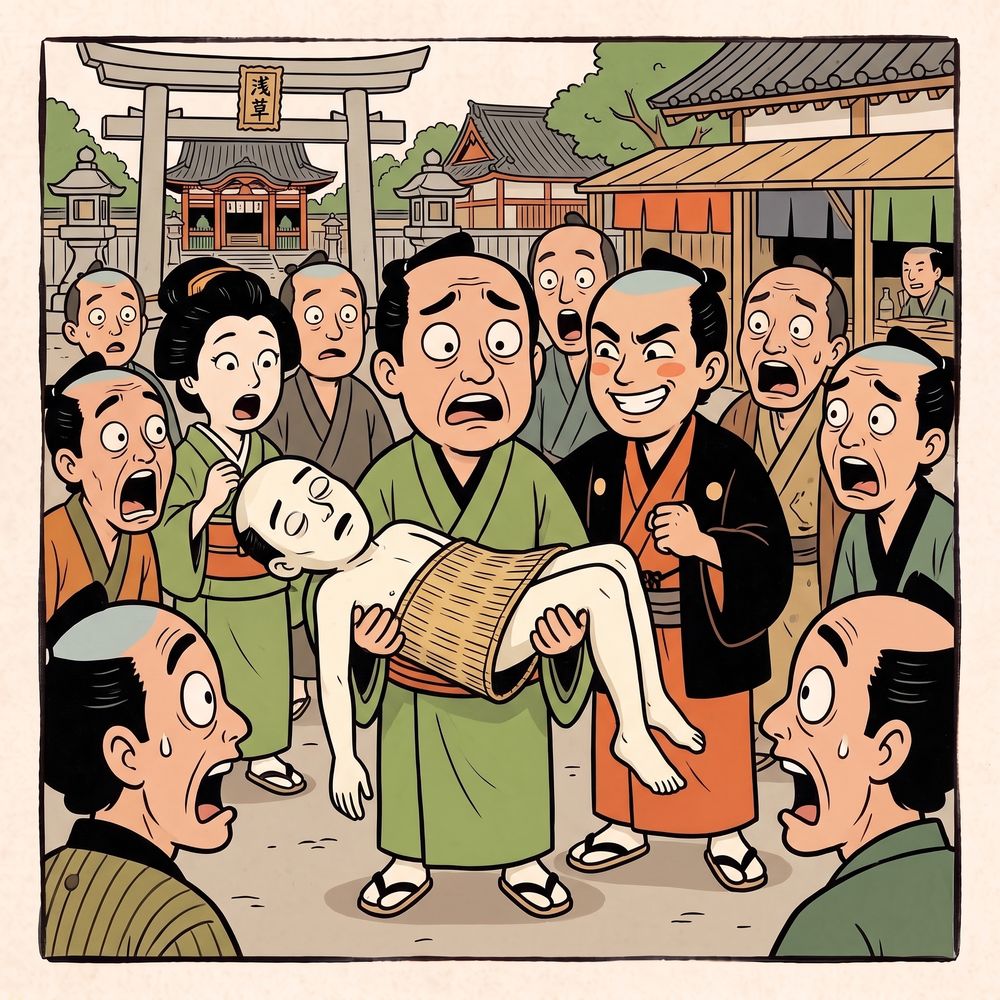
The young men of the house, who feel he is stealing their tips, beg the master to forget the bill and just throw him out. Even when the master tells him to go, Saheiji takes his time, and only leaves after squeezing money and tobacco out of him. A young man follows him, and Saheiji reveals that staying behind is his trade: he is “Inokori Saheiji.” He laughs at the master for being so soft and walks off. When the master hears this, he is furious...
The sage the punchline, contains spoilers
Tap to reveal the punchline
“Well, sir, your head's already sesame and salt.”
The master fumes, “He's put me in okowa!” (he's tricked me), and the young man answers with this line, the sage (the punchline). “Okowa” is a pun: it can mean deceiving someone, and it is also steamed sticky rice. Sticky rice is eaten sprinkled with gomashio, sesame and salt, and gomashio is also the word for hair going gray, so the young man lands the joke on the master's salt-and-pepper head. Because the expression “okowa ni kakeru” is hard for audiences to follow today, some performers explain it before telling the story, and some change the sage altogether.
Words in the Story
Knowing a little about how the pleasure quarters worked, and a few old expressions, makes Saheiji's nerve and the sage even funnier.
| Word | Meaning |
|---|---|
| Inokori | Being held at a brothel when you can't pay, until someone comes with the money. Such customers were usually put in the lamp room or the futon storeroom |
| Wakaishu (young men) | Male servants who looked after the guests. Livening up the parlors and earning tips was part of the job |
| Hokan (jester) | A male entertainer who performed in the parlors and kept guests in good humor. Saheiji takes on this role without being asked |
| Okowa ni kakeru | To deceive someone, to trick them |
| Gomashio atama | Literally “sesame-salt head”: black hair mixed with gray |
Key scenes original dialogue written for this site
One More Night
- SaheijiYou fellows go on home. I'm going to take it easy here one more night.
- FriendYou sure? What about the bill?
- SaheijiDon't worry about it. Leave everything to me.
Off to the Futon Room
- Young manUm, sir... when exactly will your friends be bringing the money?
- SaheijiThey won't. And I don't have any.
- Young manWhat?
- SaheijiI'm what you call an inokori, right? Which way's the futon room? Never mind, I'll find it myself.
The Deadbeat in the Parlor
- SaheijiPardon me, pardon me. Oh my, sir, what a handsome man! The girls won't leave you alone.
- GuestWho on earth are you? One of the staff?
- SaheijiNo, sir. I'm the inokori.
- (He snaps open his fan, flutters it, and breezily sings a few bars.)
This is not a transcription of any storyteller's performance. The plot and the sage are as handed down in the classical tradition; the dialogue was written for this site.
Notable performers
- Yanagiya Kosen I1883–1919EdoIs said to have made this story one of his signature pieces in the Taisho era.
- Sanyutei Ensho VI1900–1979EdoLearned Kosen's version and added his own touches; his performances are regarded as outstanding.
- Kokontei Shinsho V1890–1973EdoOne of the performers whose recordings survive.
- Kokontei Shincho III1938–2001EdoCounted among his major pieces.
- Tatekawa Danshi VII1936–2011EdoOne of the performers whose audio and video recordings survive.