ChihayafuruThe Poem Explained
千早振る(ちはやふる)
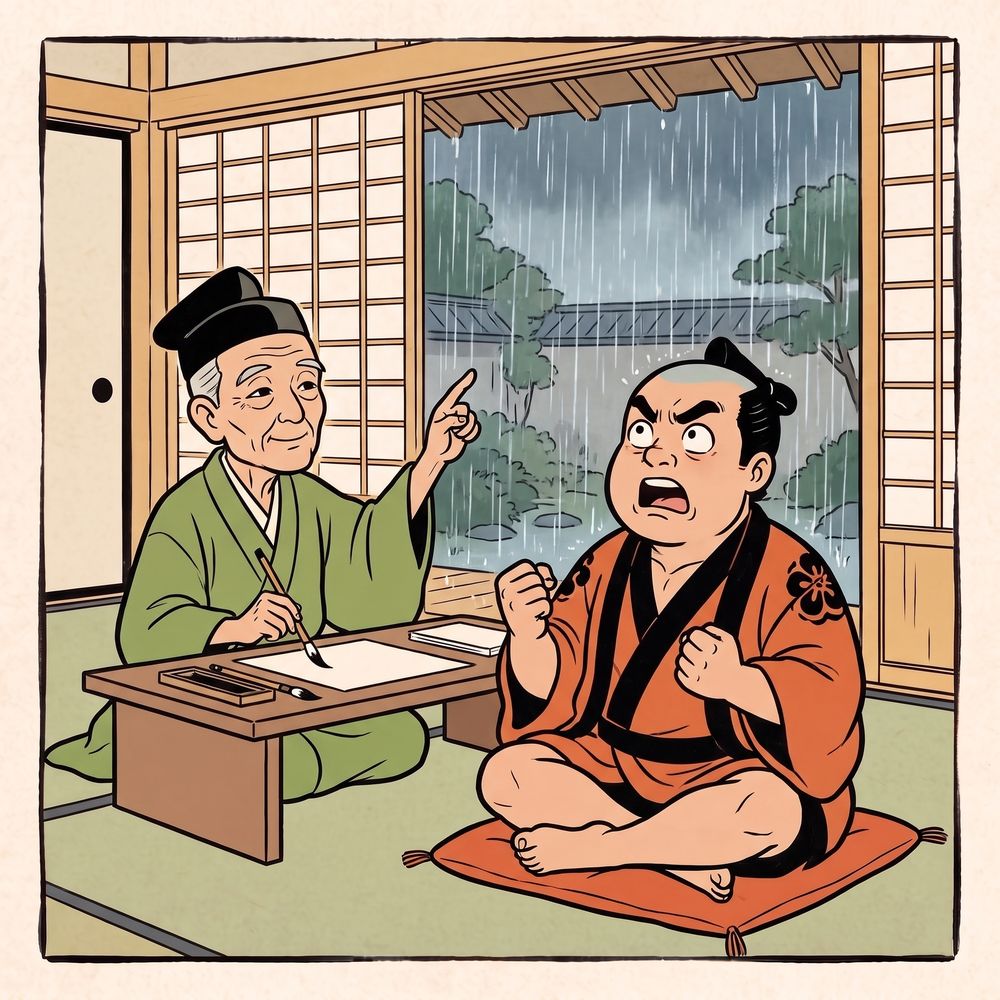
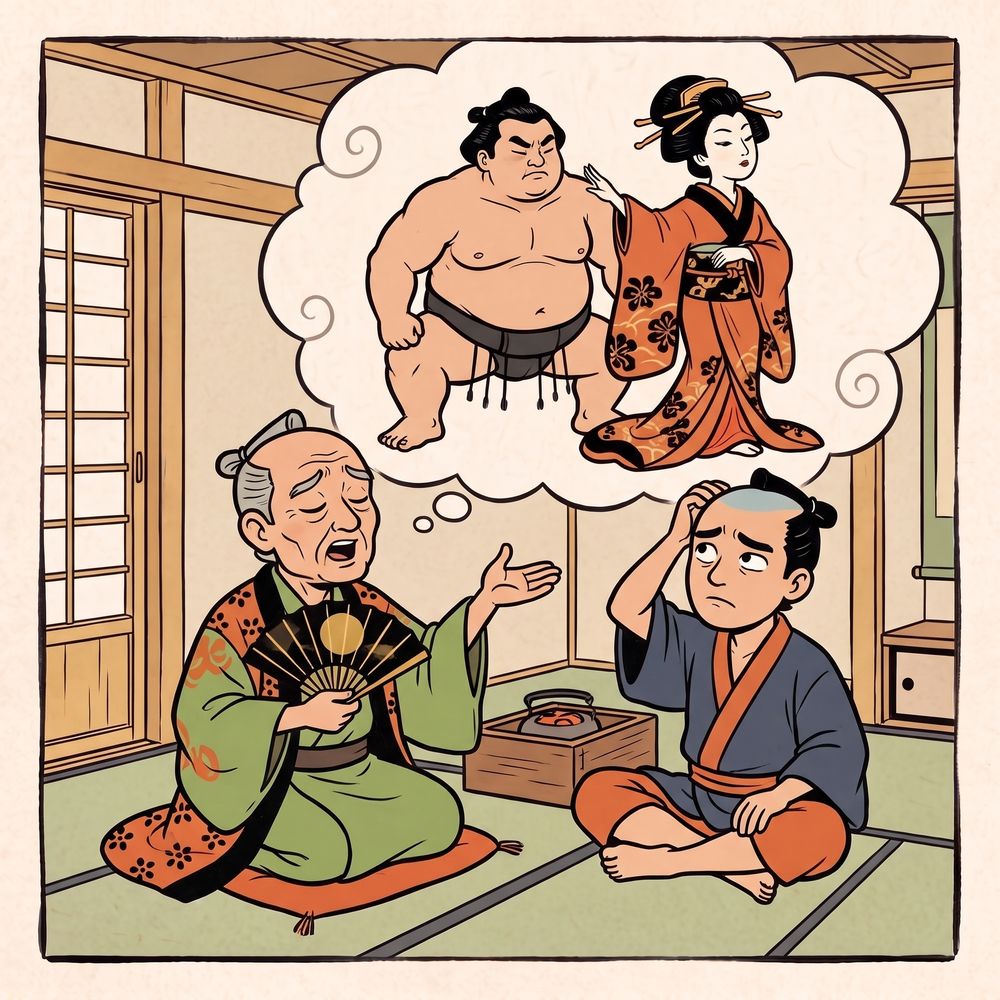
Hachigoro's daughter asked him the meaning of a poem from the Hyakunin Isshu, the classic anthology of one hundred poems, and he couldn't answer. So he visits the inkyo, the retired elder everyone treats as the neighborhood scholar. The truth is, the inkyo doesn't know the poem either. Unable to admit it, he starts inventing, on the spot, a love story about a sumo champion and a courtesan...
The story
Hachigoro drops in on the inkyo, a retired man the whole tenement looks up to as a fount of knowledge. His daughter asked him what Ariwara no Narihira's poem “Chihayafuru” means, and he couldn't tell her. The inkyo doesn't actually know either, but he can't bring himself to say so.
Long ago, the inkyo explains, a sumo champion named Tatsutagawa fell head over heels for a courtesan named Chihaya in the Yoshiwara pleasure quarter. But Chihaya couldn't stand sumo wrestlers and turned him down. Hence “Chihaya furu,” Chihaya rejects. Her junior, Kamiyo, wouldn't listen to him either. Hence “Kamiyo mo kikazu Tatsutagawa,” Kamiyo won't hear Tatsutagawa.
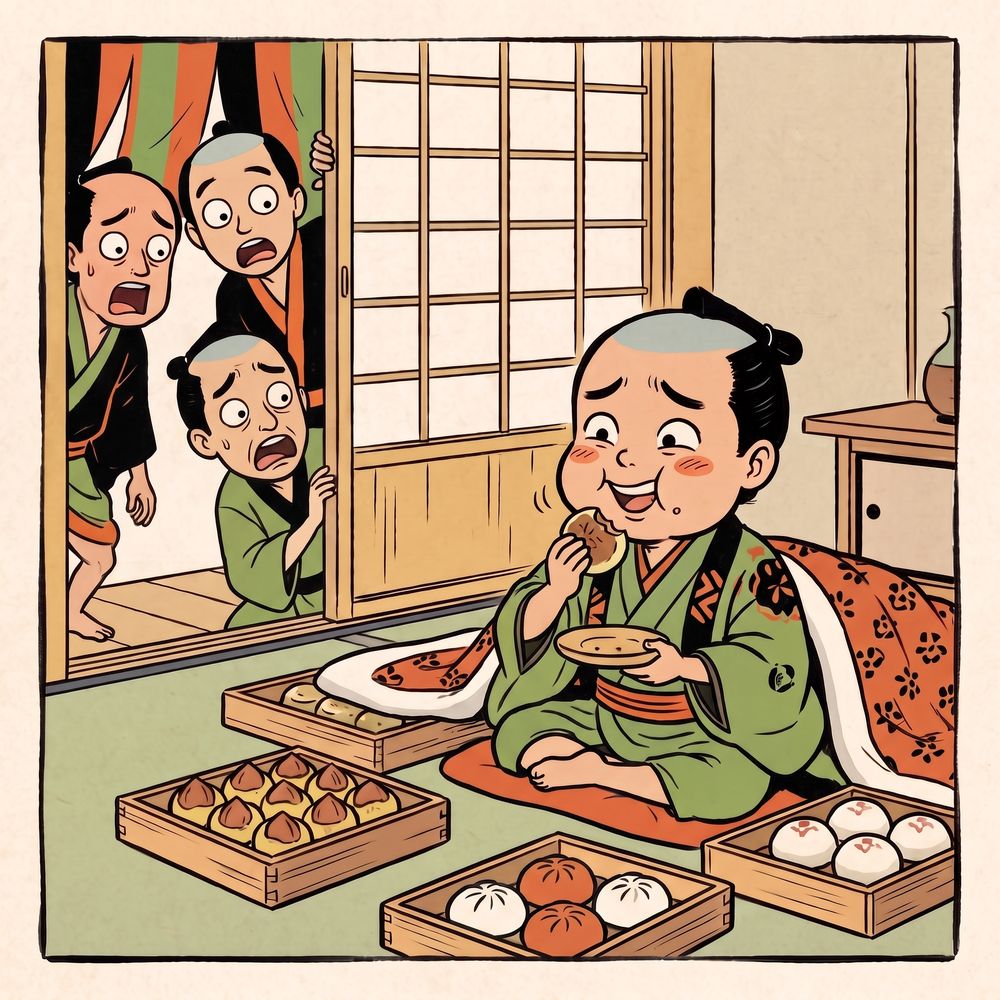
Heartbroken, Tatsutagawa quits sumo and takes over his family's tofu shop. Years later, a ragged woman comes to the shop begging for okara, the leftover soybean pulp. It is Chihaya, fallen on hard times. Tatsutagawa refuses to give her any okara and shoves her away, and Chihaya throws herself into a well. Hence “kara kurenai ni mizu kuguru,” no okara given, so into the water she dives.
At every turn Hachigoro raises a sensible question, and the inkyo bulldozes right through it. Just as the inkyo finishes and catches his breath, Hachigoro asks, “So what about the last bit, ‘to wa’?” Without missing a beat, the inkyo says...
The sage the punchline, contains spoilers
Tap to reveal the punchline
“Chihaya was just her professional name. Her real name was Towa.”
The sage (the punchline) twists the poem's final words, “to wa,” a classical phrase of wonder, into Towa, supposedly Chihaya's real name. Some performers first add a similarly absurd reading of another poem, Retired Emperor Yozei's “Tsukubane,” but it seems that part is often cut for time.
The inkyo's reading vs. the real meaning
The poem actually praises the autumn leaves turning the Tatsuta River crimson, likening the scene to tie-dyed cloth. The inkyo doesn't even know what a makurakotoba (a fixed poetic epithet) is, and he drags an Edo-period sumo wrestler and courtesan into a poem from the Heian period.
| Words in the poem | Usual meaning | The inkyo's reading |
|---|---|---|
| chihayafuru | A fixed epithet introducing “the gods” | The courtesan Chihaya rejected Tatsutagawa |
| kamiyo mo kikazu | Unheard of even in the age of the gods | Her junior Kamiyo wouldn't listen either |
| Tatsutagawa | A river famous for autumn leaves | The ring name of a popular sumo champion |
| karakurenai ni | In brilliant crimson | No okara (soybean pulp) given |
| mizu kukuru | Tie-dyes the water | She threw herself into a well (mizu kuguru, dives into the water) |
| to wa | A closing phrase of wonder: “that such a thing could be!” | Chihaya's real name, Towa |
Key scenes original dialogue written for this site
Can't admit he doesn't know
- HachigoroSir, this “chihayafuru” thing. What's it mean?
- InkyoHm... Ah, that one. Yes, that's, well, how shall I put it. Tell me, do you like sumo?
- HachigoroSumo? I'm asking about a poem.
- InkyoAnd I'm telling you about sumo.
From champion to tofu maker
- HachigoroA sumo champion quits the sport just because a girl turned him down?
- InkyoHe quit. Nothing to be done about it.
- HachigoroNothing to be done...?
- InkyoIf you start doubting that, the poem falls apart.
The last two syllables
- HachigoroOkay, I follow you up to “dives into the water.” So what's the “to wa” at the end?
- (The inkyo snaps his fan shut, glares at the ceiling, and goes silent.)
This is not a transcription of any storyteller's performance. The plot, the inkyo's interpretation, and the sage follow the classic version. The dialogue was written for this site.
Notable performers
- Kokontei Shinsho V1890–1973EdoOne of the performers whose recordings survive.
- Tatekawa Danshi VII1936–2011EdoOne of the performers whose recordings survive.
- Yanagiya Kosanji X1939–2021EdoKnown as part of his repertoire.