Nezumi-anaThe Rat Hole
鼠穴(ねずみあな)
Takejiro has wasted his parents’ fortune on pleasure, so he turns to his older brother, who runs a business in Edo. But the money his brother lends him to start out is a mere three mon. Driven by bitterness, Takejiro works without rest, and ten years later he is the master of a shop in Fukagawa with three storehouses. On the night he visits his brother to repay the three mon, he is pressed to stay over, but he can’t stop thinking about a rat hole in his storehouse...
The story
Back in his home village, Takejiro inherited farmland from his father, but he ruined himself with drink and pleasure and lost everything. He goes to his older brother, who has gone to Edo and is doing well in business, and asks to be taken on as a worker.
His brother tells him, “Rather than work for someone else, start your own business. I’ll lend you the money,” and hands him a small packet. On the way back Takejiro opens it and finds only three mon inside. Furious, he feels he is being mocked, but then he tells himself that three mon is still money to start with, and he makes up his mind to earn with it.
With the three mon he buys sandara-bocchi (round straw lids that cap the ends of a rice bale), unravels them and makes sashi, the cords used to string coins, and sells them. With that money he buys empty bales and makes straw sandals. Working from morning to night, he takes a wife, has a daughter named Oyoshi, and in about ten years he is the master of a shop in Hamaguri-cho, Fukagawa, with three storehouses.
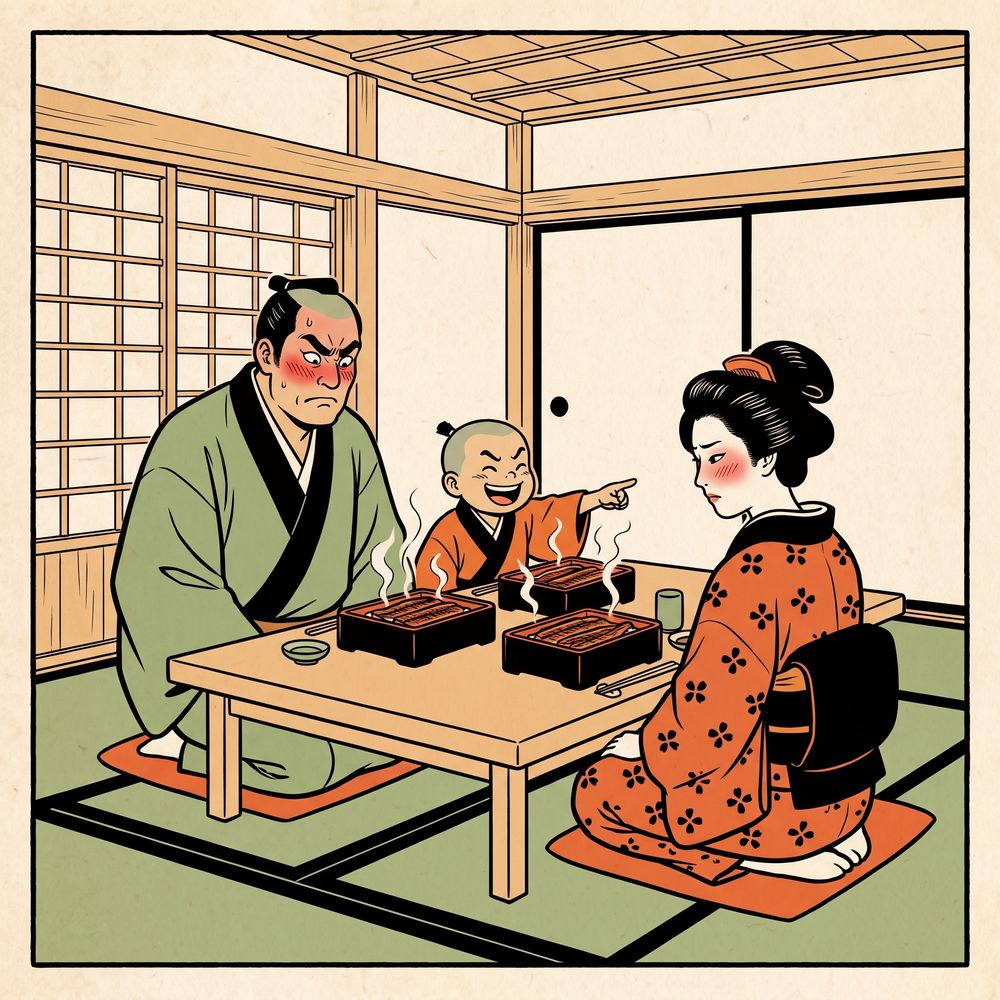
Takejiro visits his brother and repays the three mon, adding two ryo as interest. His brother reveals what he really meant: “If I had lent you dozens of ryo back then, you would have spent it on pleasure again. That’s why I gave you three mon.” The brothers share sake. It is a windy night, and Takejiro, worried about a rat hole in his storehouse, tries to go home, but his brother keeps him there, saying, “If your place burns down, I’ll give you my whole fortune.”
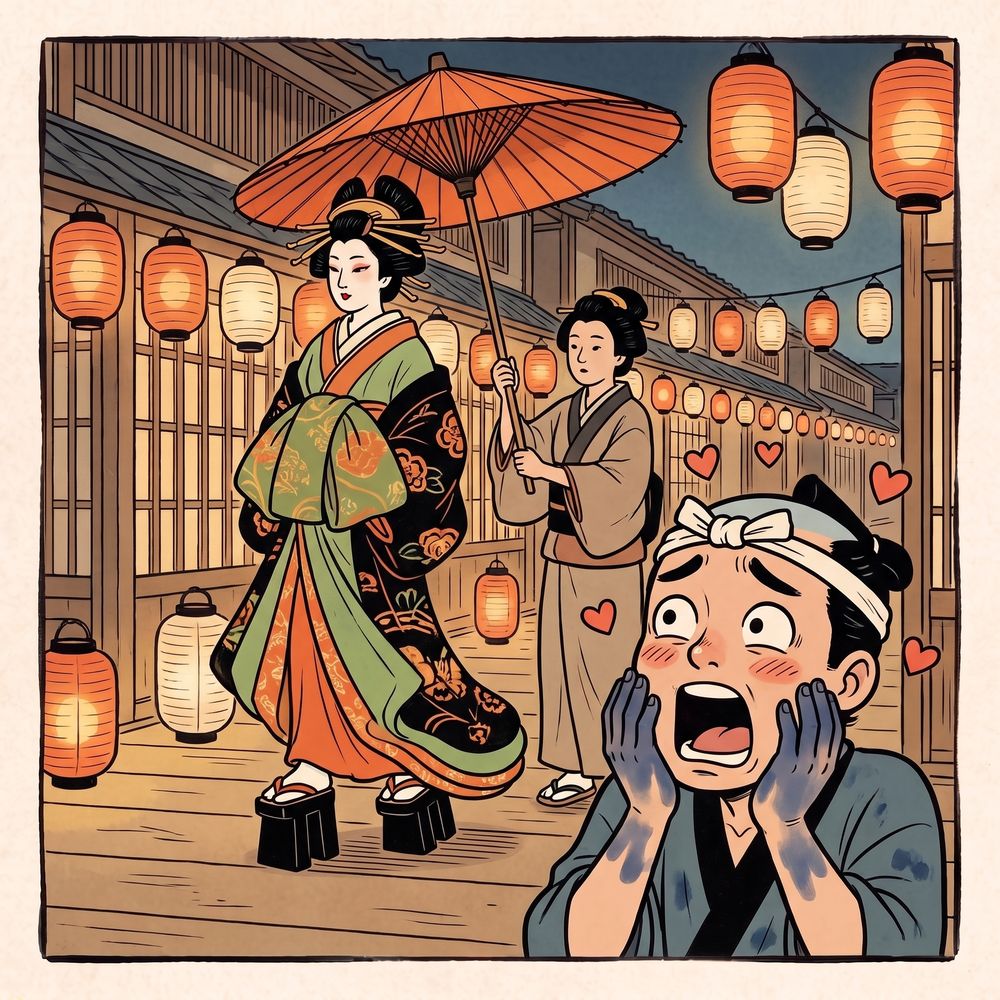
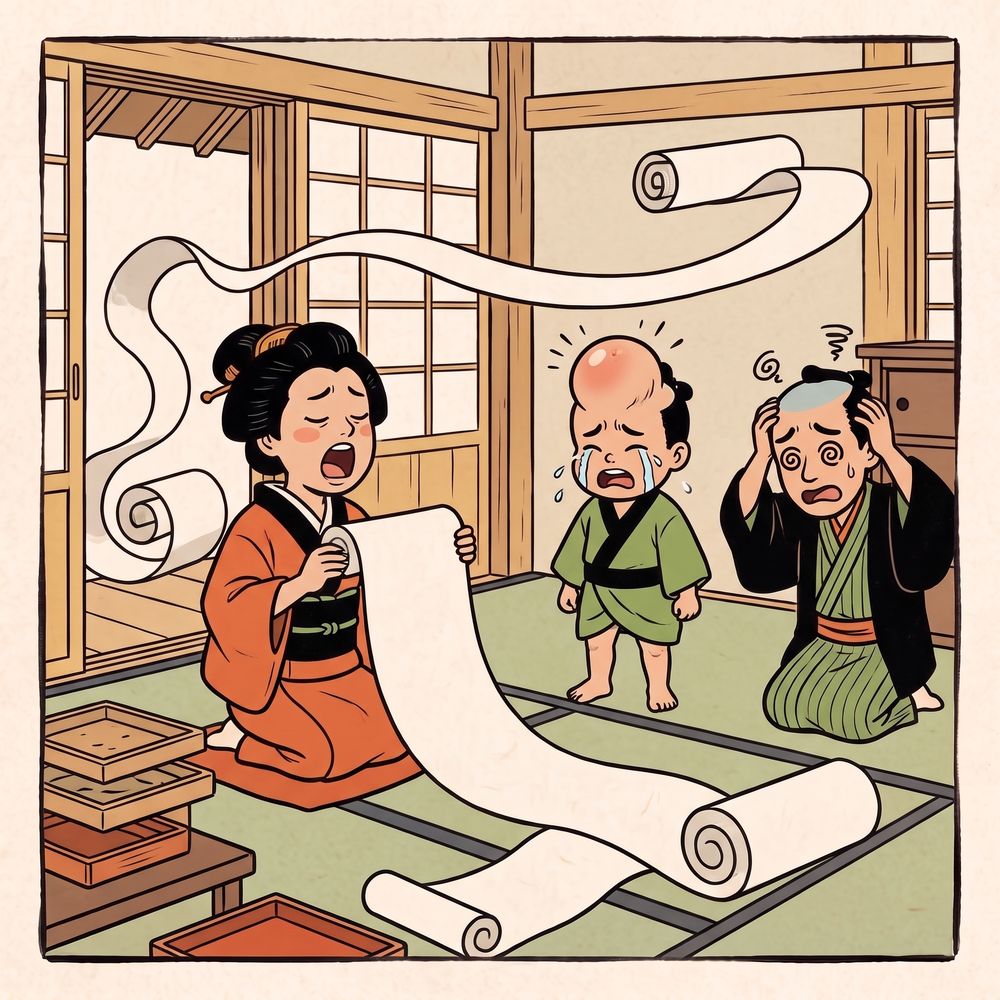
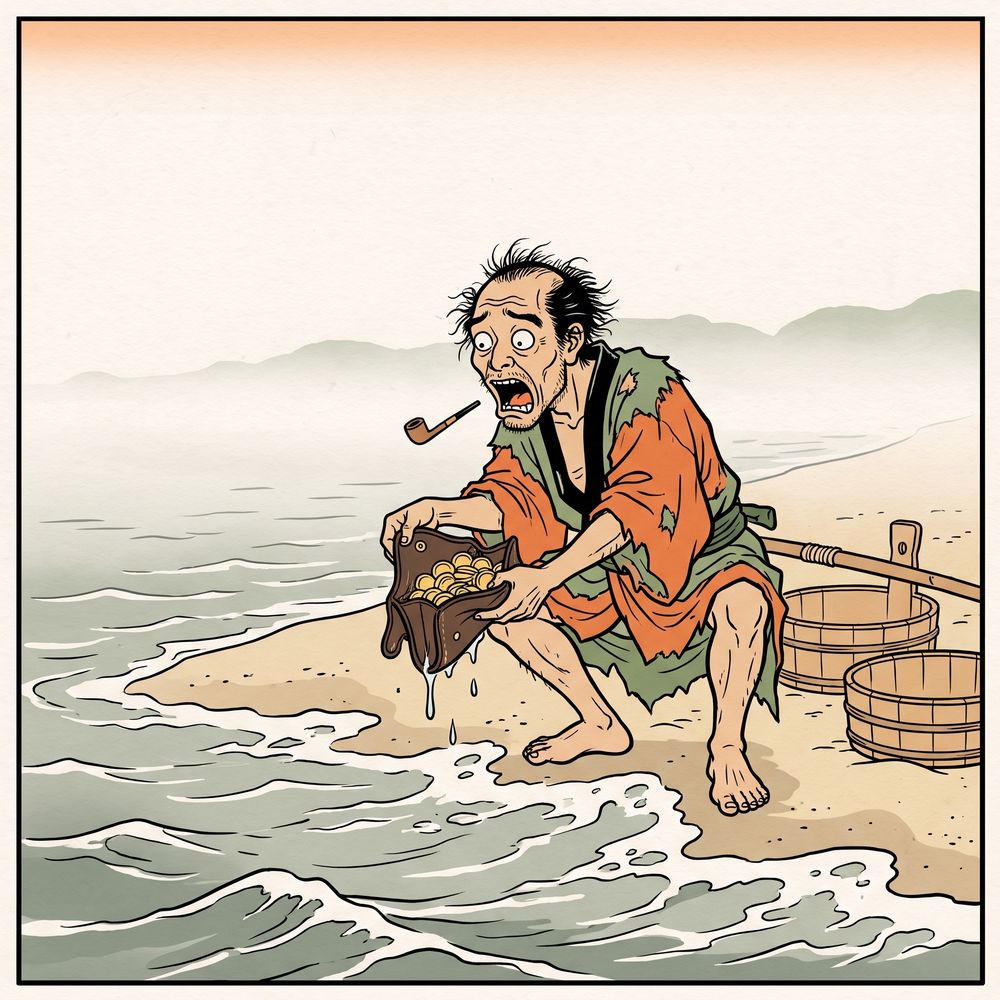
That night a fire breaks out in Fukagawa, and flames that enter through the rat hole burn his storehouses and shop to the ground. He tries to start over but fails, and goes to his brother to borrow money. His brother refuses to listen: “Giving you my fortune was just drunken talk.” His daughter Oyoshi, seeing how desperate things are, offers on her own to sell herself to the Yoshiwara pleasure quarter, but on the way home Takejiro has the twenty ryo he finally raised stolen by a pickpocket. Thinking it is all over, he is about to hang himself when...
The sage the punchline, contains spoilers
Tap to reveal the punchline
“Dreams come from the fatigue of the dozo.”
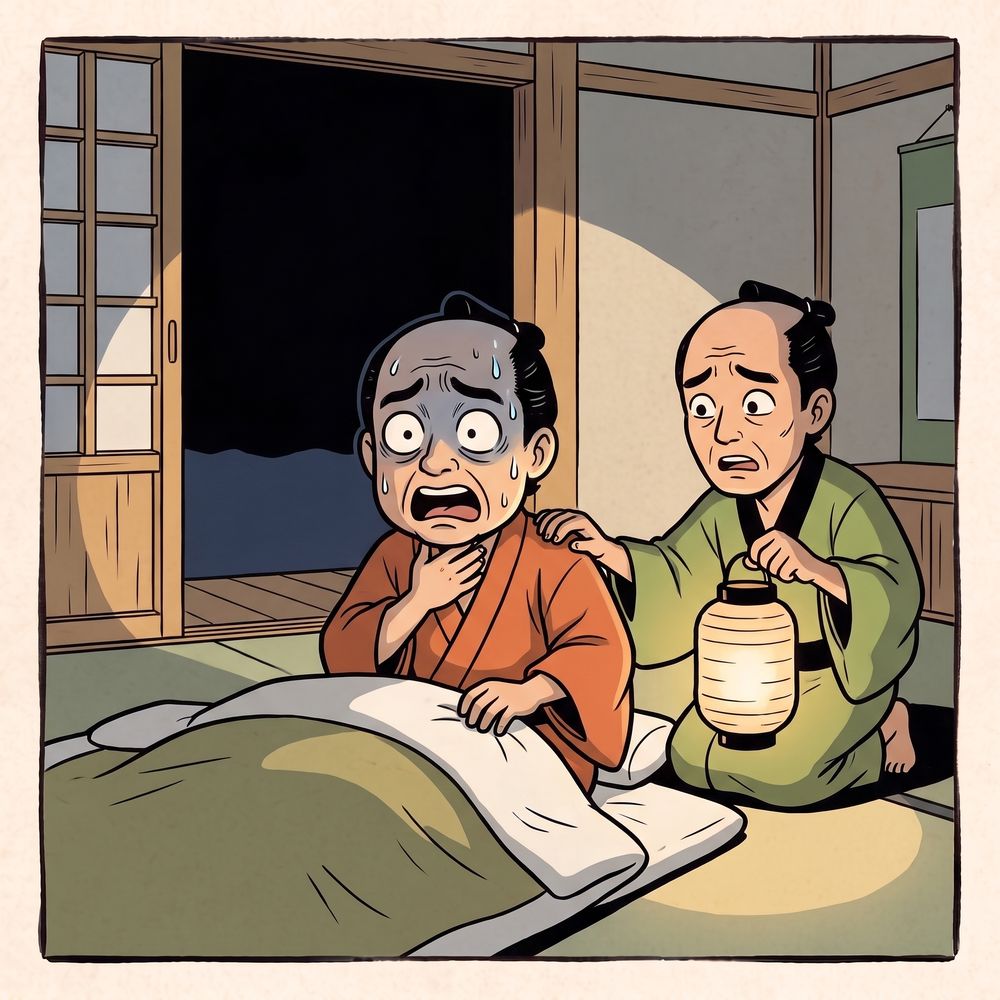
The sage (the punchline): his brother shakes him awake, saying he was moaning in his sleep, and Takejiro realizes it was all a dream he had at his brother’s house. His brother says he must have had such a dream because he was so worried about his storehouses. It is a jiguchi-ochi, a punchline built on a pun: the saying “dreams come from the fatigue of the gozo,” the five internal organs, meaning dreams come from a tired body, is twisted into dozo, the earthen storehouses Takejiro was worried about.
The Brother in the Dream and the Real Brother
The cold brother of the second half is the brother as he appears in Takejiro’s dream. You can also hear it as Takejiro’s buried resentment toward the brother who lent him only three mon, coming out as a dream. When he wakes up, his brother had been looking out for him all along. It is a heavy ninjo-banashi with few laughs.
| While awake | In the dream | |
|---|---|---|
| The brother’s words | I gave you three mon so that you would never drift back into pleasure | Giving you my fortune was just drunken talk |
| Takejiro’s shop | A fine shop in Fukagawa with three storehouses | Burned to the ground after fire enters through the rat hole |
| His daughter Oyoshi | Living safely at home with her parents | Sells herself to the Yoshiwara for her father’s sake |
Key scenes original dialogue written for this site
The packet of three mon
- Takejiro(Opening the packet on the way back) ...One mon, two mon, three mon. What’s this? Only three mon?
- TakejiroMaking a fool of me... No, wait. Even three mon is something to start with. All right, I’ll make money out of these three mon.
- (He tucks the packet into his kimono, looks straight ahead and starts walking.)
His brother after ten years
- TakejiroBrother, I’ve come to return the three mon from back then. And this is just a small token of interest.
- Older brotherYou’ve done well for yourself... Take, you must have hated me for lending you only three mon.
- Older brotherIf I had given you a lump of money, you would have spent it on pleasure again. You are who you are today because you started from three mon.
- Takejiro...And I never knew. For ten years I worked hating you, brother.
A windy night
- TakejiroBrother, the wind is strong tonight. There’s a rat hole in my storehouse and it’s weighing on me. Please let me go home.
- Older brotherWe haven’t seen each other in ages. Stay the night. If your place burns down, I’ll give you my whole fortune.
- TakejiroWell, if you go that far...
Waking up
- Older brotherTake, Take. What’s wrong? You were moaning terribly.
- Takejiro...Huh, brother? Where am I... The storehouses, Oyoshi... Oh, it was a dream.
- (He feels his throat and lets out a long breath.)
This is not a transcription of any storyteller's performance. The plot and the sage follow the classic version. All lines were written for this site.
Notable performers
- Sanyutei Enba III1882–1945Kamigata and EdoHe is said to have brought this story, originally from Osaka, to Tokyo.
- Sanyutei Ensho VI1900–1979EdoHe first performed it in 1953 (Showa 28) and kept it in his repertoire for many years. One of the performers whose recordings survive.
- Tatekawa Danshi VII1936–2011EdoOne of the performers whose recordings survive.
- Yanagiya Kosanji X1939–2021EdoOne of the performers whose recordings survive.