Umaya KajiThe Stable Fire
厩火事(うまやかじ)
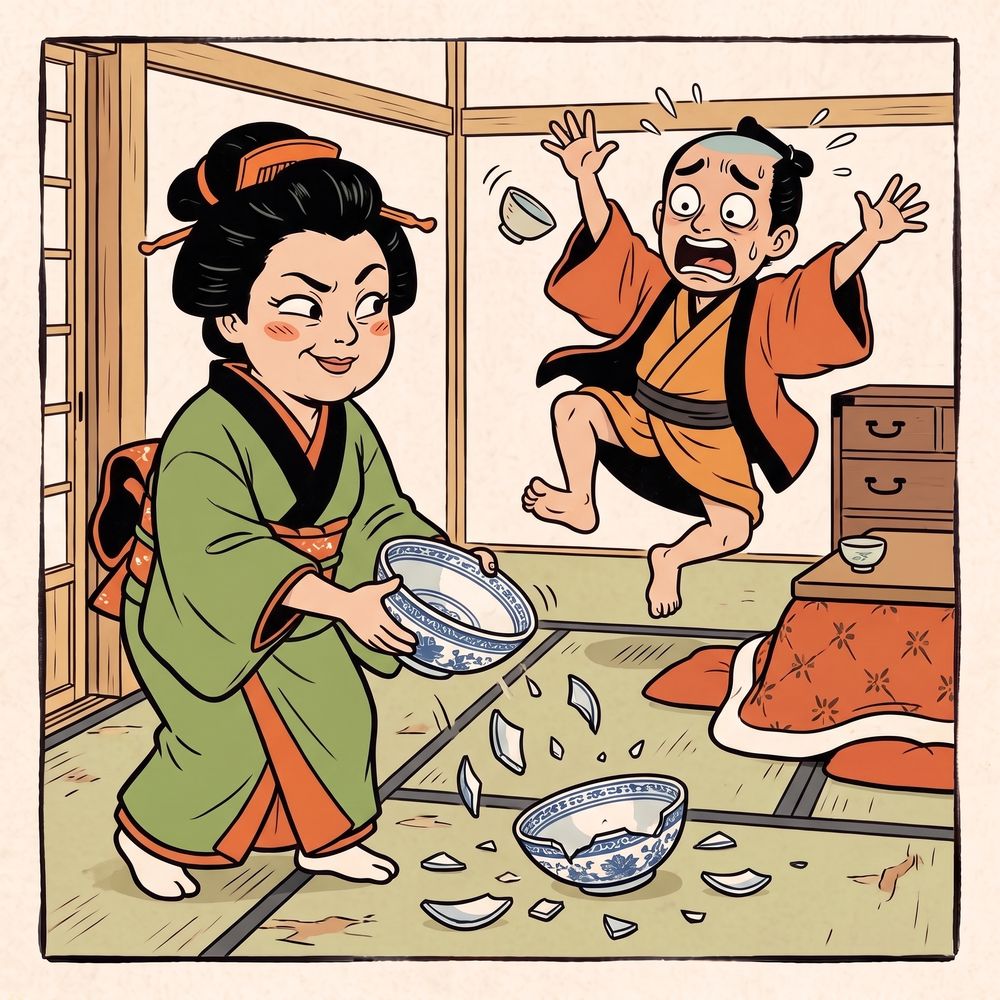
Osaki is a skilled hairdresser, but her younger husband spends his days drinking and loafing, and it drives her to distraction. Still, she can't bring herself to leave him. When she goes to the go-between who arranged their marriage for advice, he suggests testing her husband's true feelings, following an old story about Confucius. She is to break a piece of porcelain he treasures, right in front of him...
The story
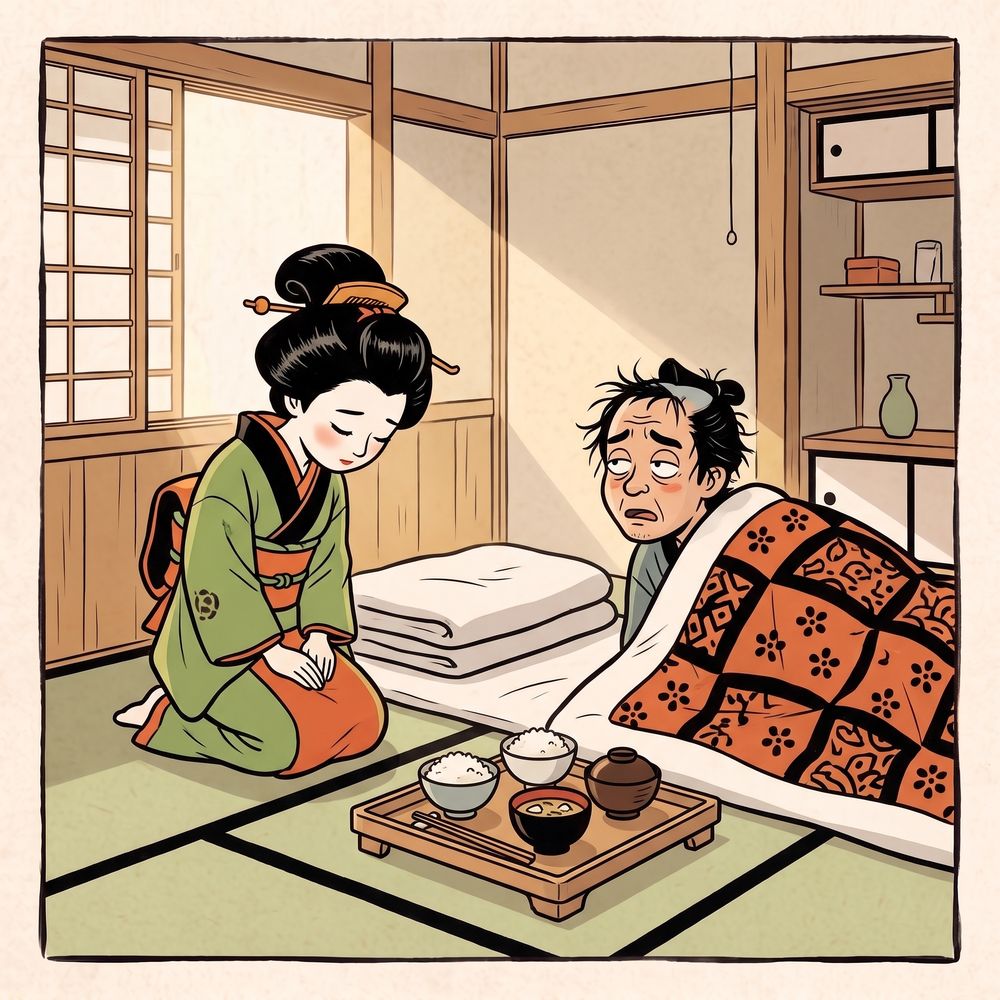
Osaki earns the living as a hairdresser, and her husband is what people call a “hairdresser's husband”: he doesn't work and drinks and plays from midday on. After yet another fight, Osaki storms into the go-between's house. She says she wants to leave him, but complains that she can't tell what he really feels about her.
The go-between tells her two stories. One is about Confucius in ancient China. While he was away, his stable burned and his beloved horse died, yet Confucius never asked about the horse, only whether his disciples were hurt. The other is about a samurai who cared so much for his porcelain that he lost sight of people and wrecked his household.
Break the porcelain your husband treasures on purpose, he says, and decide what to do by whether he worries about the dish or about you. Osaki goes home and tries it right away.
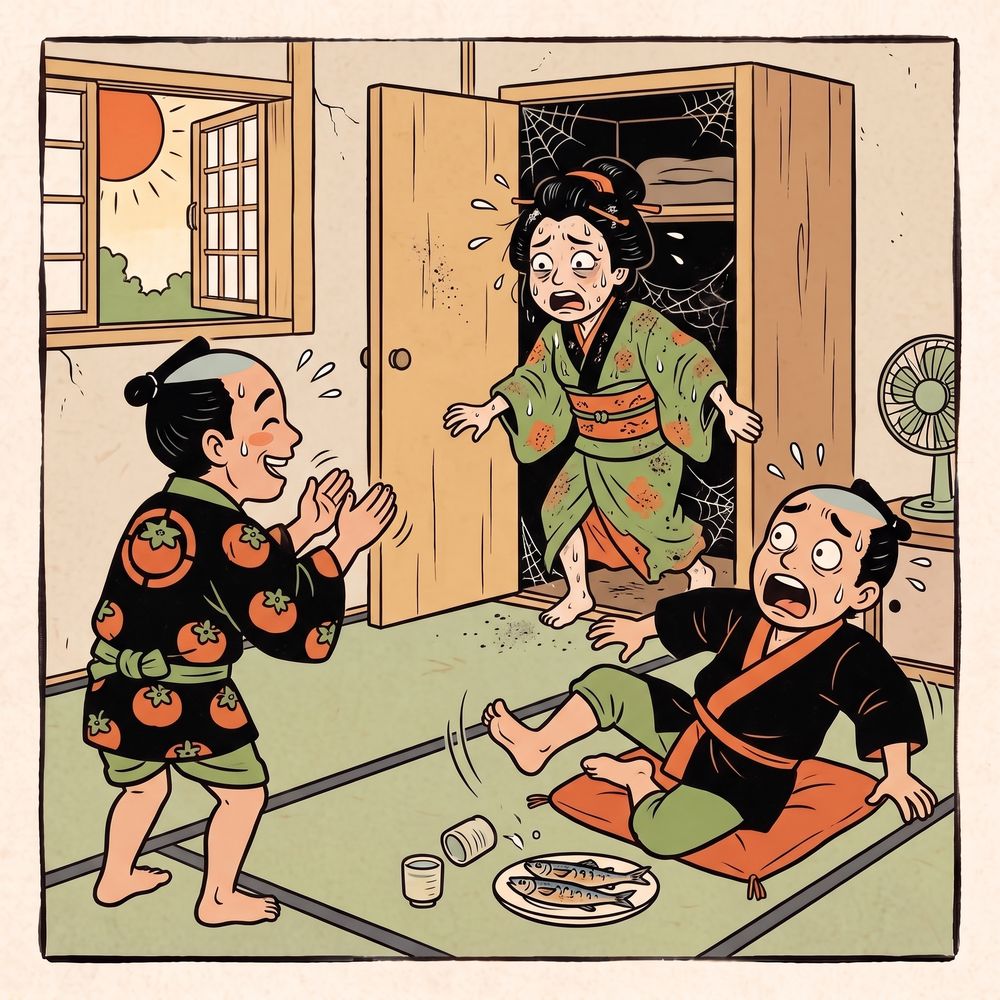
When Osaki drops the porcelain and it shatters, her husband's first concern is her: is she hurt? Overjoyed, Osaki asks, “Am I really that precious to you?” And he answers...
The sage the punchline, contains spoilers
Tap to reveal the punchline
“Of course! If you got hurt, I couldn't loaf around drinking starting tomorrow.”
The sage (the punchline) turns everything upside down: he worried about her body only because he'd be in trouble without his breadwinner. The story builds on the tale of Confucius, then flips it with the husband's true motive at the very end. The highlight is Osaki's way of talking, her complaints about her husband keep slipping into bragging about him.
The go-between's two stories
The title, Umaya Kaji, comes from the story of Confucius that the go-between cites. Osaki's test combines both of his stories.
| What happens | The lesson for Osaki | |
|---|---|---|
| The Confucius story | His stable burned and his beloved horse died, but Confucius asked only after his disciples | Someone who puts people before things can be trusted |
| The samurai story | He cared so much for his porcelain that he neglected people and his household fell apart | Don't stay with someone who values things over people |
| Osaki's test | She breaks her husband's treasured porcelain in front of him | Which one he worries about will show his true feelings |
Key scenes original dialogue written for this site
At the go-between's house
- OsakiThis time I mean it, I'm leaving him. ...But you know, he does have his sweet side.
- Go-betweenSo which is it? Did you come to leave him or to brag about him?
Smashing the porcelain
- (She hugs a precious dish in both hands and stages an exaggerated stumble.)
- OsakiOh! Oh dear, it slipped.
- HusbandHey, you okay? You hurt?
Asking what he really feels
- OsakiDear, am I really more important to you than your porcelain?
- HusbandWell, obviously.
This is not a transcription of any storyteller's performance. The plot and the sage follow the classic version. The dialogue was written for this site.
Notable performers
- Yanagiya Kosan III1857–1930EdoPerformed it in a long form that starts from how the couple met, and passed it on to Katsura Bunraku VIII.
- Katsura Bunraku VIII1892–1971EdoPolished it into a short version focused on Osaki's feelings and made it one of his specialties.
- Kokontei Shinsho V1890–1973EdoOne of the performers whose recordings survive.
- Kokontei Shincho III1938–2001EdoOne of the performers whose recordings survive.