Tengu SabakiThe Tengu's Judgment
天狗裁き(てんぐさばき)
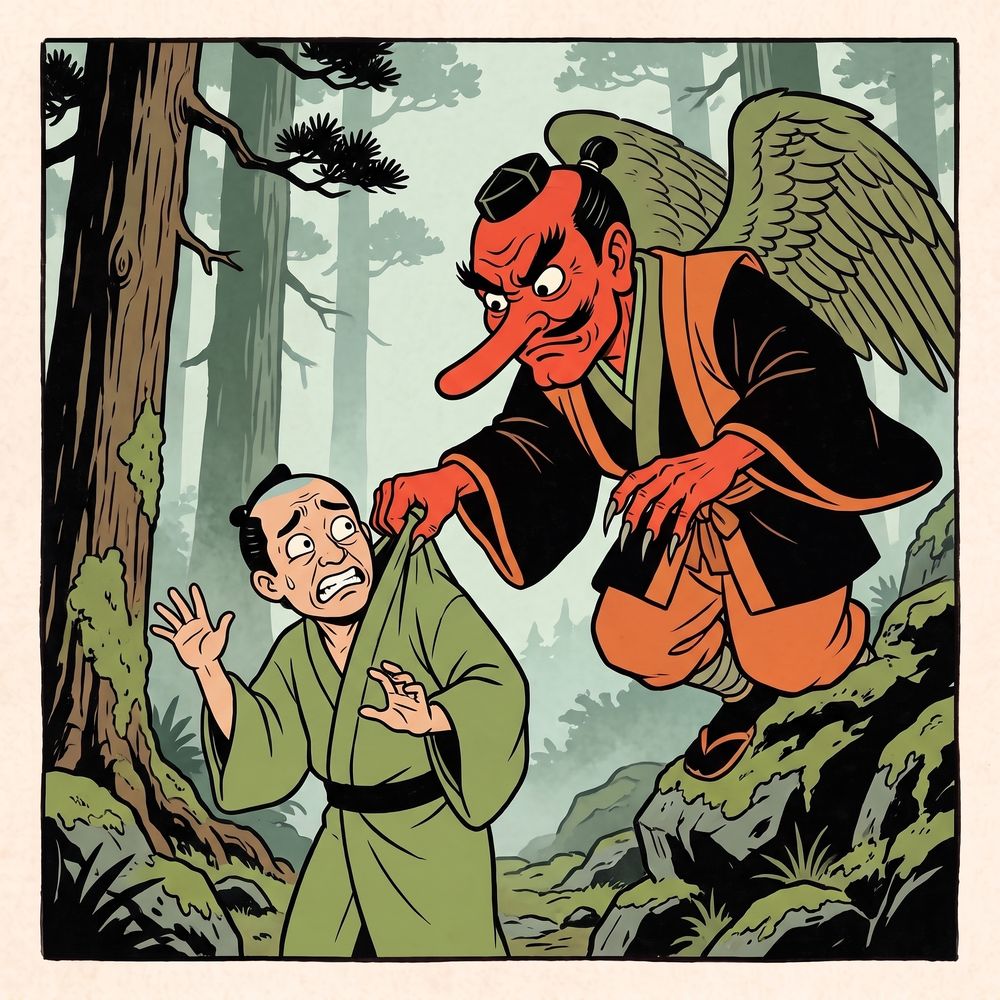
Kihachi is napping at home when his wife shakes him awake and asks, “What were you dreaming about?” He doesn't remember anything, so he answers, “I wasn't dreaming,” but his wife is sure he is hiding something, and it turns into a quarrel between husband and wife. The neighbor and the landlord who step in both say, “It's only a dream,” yet each of them ends up wanting to hear what the dream was, and even the magistrate asks the same question. In the end, even a great tengu (a long-nosed mountain goblin) deep in the mountains... It is a story about a dream, in which the same question keeps growing bigger and bigger.
The story
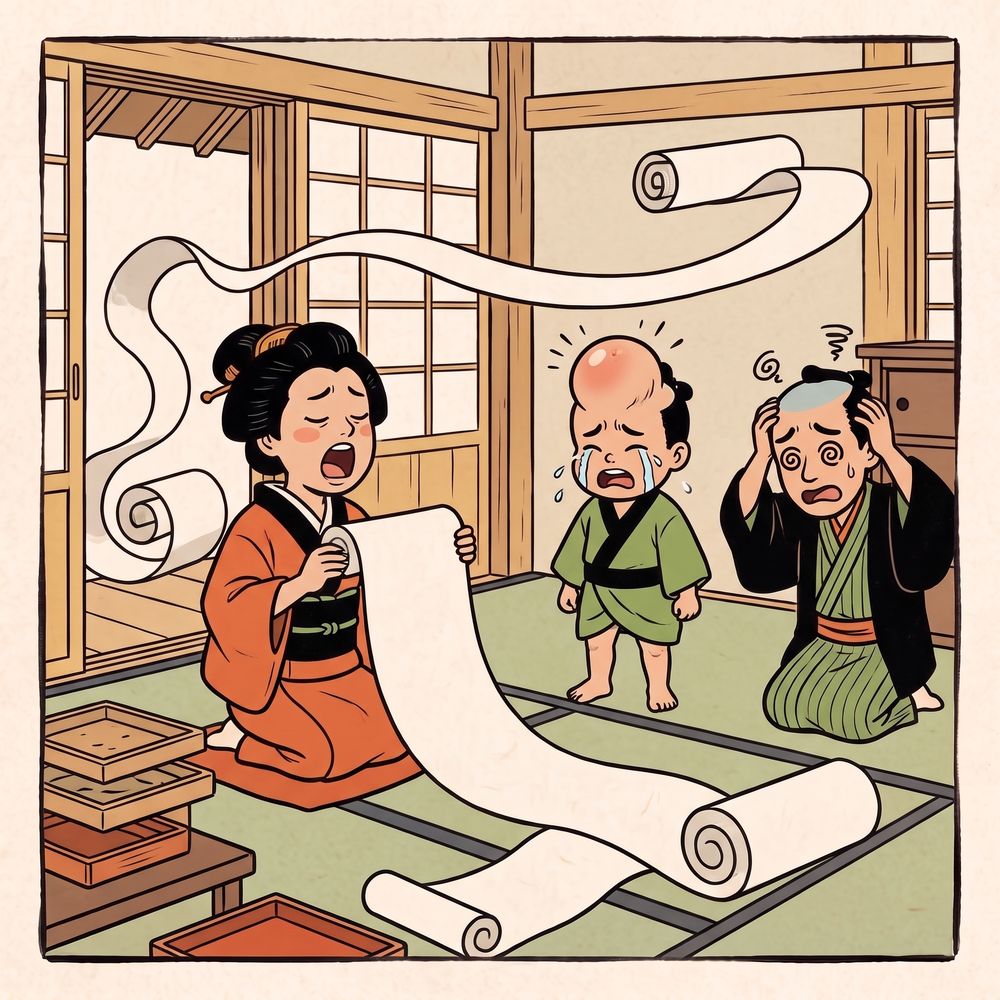
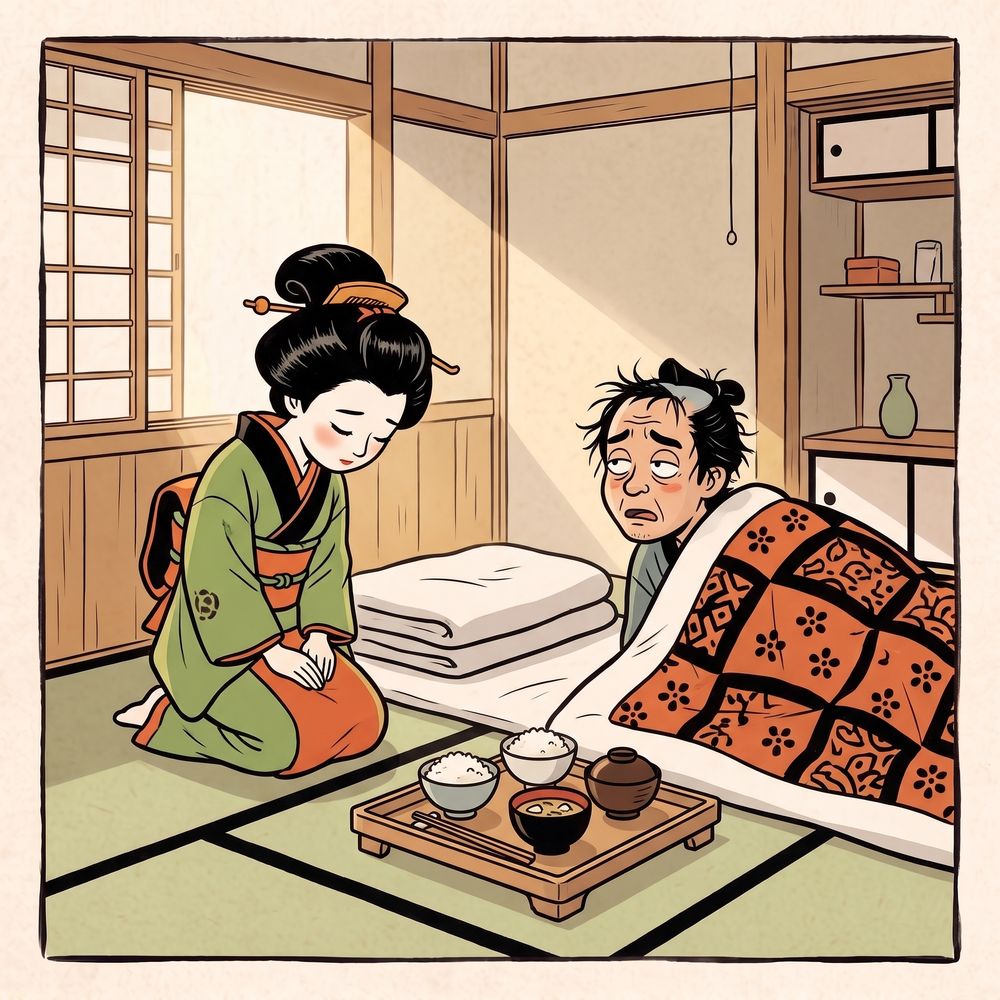
Kihachi is taking a nap at home when his wife shakes him awake. Something about his sleep-talking or his sleeping face seems to have been odd, and she asks, “What were you dreaming about?” Kihachi doesn't remember anything, so he answers, “I wasn't dreaming.” His wife is convinced that he had a dream he can't tell anyone about and is hiding it, and she keeps asking. “I wasn't dreaming.” “Yes, you were.” The back-and-forth finally turns into a fierce quarrel between husband and wife.
Toku, who lives next door, hears the commotion. He asks what happened and calms the two of them down: “You shouldn't fight over a mere dream.” But right after that he says, “So, what did you dream about?” When Kihachi says, “I told you, I wasn't dreaming,” Toku won't accept it, and this time Kihachi and Toku start fighting.
Then the landlord of the nagaya (row house) comes along and he, too, settles the quarrel by saying, “It's only a dream.” But the landlord also says, “Tell me, at least, what the dream was.” When Kihachi insists that he didn't dream, the landlord gets angry and tells him to move out of the nagaya.
The matter grows, and in the end it goes to the magistrate's office for judgment. The magistrate first scolds the landlord for troubling the authorities over such a thing, and just when it seems the case is closed, he turns to Kihachi: “And what manner of dream did you have?” When Kihachi still answers that he didn't dream, the magistrate loses his temper and orders him to be hung from a tree in the garden of the magistrate's office.
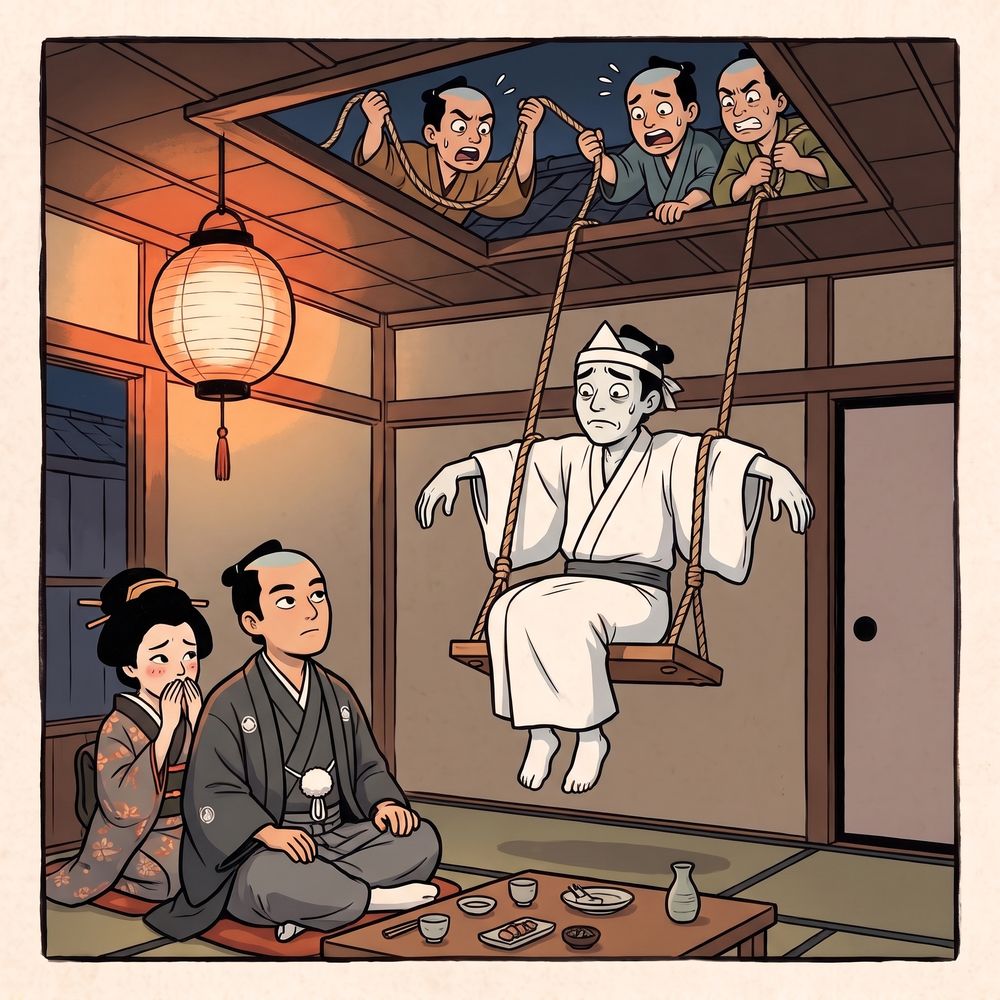
Kihachi is hanging there at a loss when a sudden gust of wind sweeps him up, and before he knows it he is somewhere deep in the mountains. In front of him is a great tengu (a long-nosed mountain goblin), who says that he happened to be passing over the magistrate's office, saw Kihachi being treated unfairly and rescued him. Kihachi thanks him, but then the great tengu says, “By the way, what did you dream about?” When Kihachi answers that he didn't dream, the furious tengu grabs him by the neck, and Kihachi writhes in pain as the long nails dig into the back of his neck.
At that moment Kihachi is shaken awake by his wife. He is in his own home; he had been groaning a great deal in his nap, she says. Everything up to now was a dream. As Kihachi sighs with relief, his wife says...
The sage the punchline, contains spoilers
Tap to reveal the punchline
“What were you dreaming about?”
The whole long uproar turns out to be a dream, and at the very end the story comes back to the same question it began with. On television programs with little time, Katsura Beicho III sometimes performed it so that Kihachi wakes up when he is tied up at the magistrate's office and his wife asks what he was dreaming about, and on those occasions he used the title Yume no Kenka.
Tengu Sabaki and Ha-uchiwa
Tengu Sabaki shares its first half with Ha-uchiwa (The Feather Fan), a longer story. In Kamigata the story once died out, but Katsura Beicho III revived it, drawing on the performances of Kokontei Shinsho V and Kingentei Basho X. Beicho first named the hero Kiroku, a familiar name in Kamigata stories, but later changed it to Kihachi, a name used only in this story.
| Tengu Sabaki | Ha-uchiwa | |
|---|---|---|
| When the dream comes | A dream during a nap | Hatsuyume, the first dream of the New Year |
| In front of the tengu | He keeps saying “I wasn't dreaming” to the end | He pretends to tell a dream and gets hold of the tengu's feather fan |
| Who wants to hear it | His wife, the neighbor, the landlord, the magistrate and the great tengu, growing bigger each time | The landlord and the magistrate do not appear |
| What comes next | He wakes up when the great tengu grabs him by the neck | He flies through the sky with the tengu's feather fan and comes down on the treasure ship of the Seven Lucky Gods |
| How it ends | His wife asks again what he was dreaming about, and it is back to the beginning | The sage is a pun connected with the Seven Lucky Gods |
Key scenes original dialogue written for this site
Arguing after the nap
- WifeYou were grinning away in your sleep. What were you dreaming about?
- KihachiA dream? I didn't see a thing. I was just sound asleep.
- WifeDon't lie to me. With a face like that, you can't tell me you saw nothing.
- KihachiIf I didn't see it, I didn't see it. I can't hand over something that isn't there.
The landlord steps in
- LandlordNow, now. A husband and wife locking horns over a dream. What a sight.
- KihachiYou understand, don't you, sir? I really didn't dream anything.
- LandlordOf course, of course... So, tell just me, quietly.
- KihachiNot you too, sir!
The great tengu in the mountains
- Great tenguI was passing over the magistrate's office and saw you hanging from a tree in a bad way. So I brought you here.
- KihachiThank you, sir. You've saved my life. You're my guardian... my guardian tengu.
- Great tenguNo need for thanks. More to the point, what sort of dream is it that everyone wants so badly to hear?
- (Kihachi clutches his neck with both hands and bends backward.)
This is not a transcription of any storyteller's performance. The plot and the sage follow the classic version. All lines were written for this site.
Notable performers
- Katsura Beicho III1925–2015KamigataHe revived this story, which had died out in Kamigata. He changed the hero's name from Kiroku to Kihachi.
- Kokontei Shinsho V1890–1973EdoOne of the performances Beicho drew on when he revived the story.
- Kingentei Basho X1928–1982EdoHis performance of Tengu Sabaki is the well-known one in Edo rakugo.