KajikazawaSnow Night at Kajikazawa
鰍沢(かじかざわ)
A traveler from Edo has made a pilgrimage to Mount Minobu, and on the way back he loses the road in heavy snow. At a lone house deep in the mountains he is greeted by Okuma, who was once an oiran (a high-ranking courtesan) in the Yoshiwara pleasure quarter. Okuma's eye falls on the large sum in his purse, and she keeps pressing him to drink some tamagozake (hot sake with egg)...
The story
A traveler from Edo is on his way back from a pilgrimage to Mount Minobu when he loses his way in heavy snow. Night falls, and just as he is about to freeze, he spots a lone house with a light in the mountains and asks to stay the night.
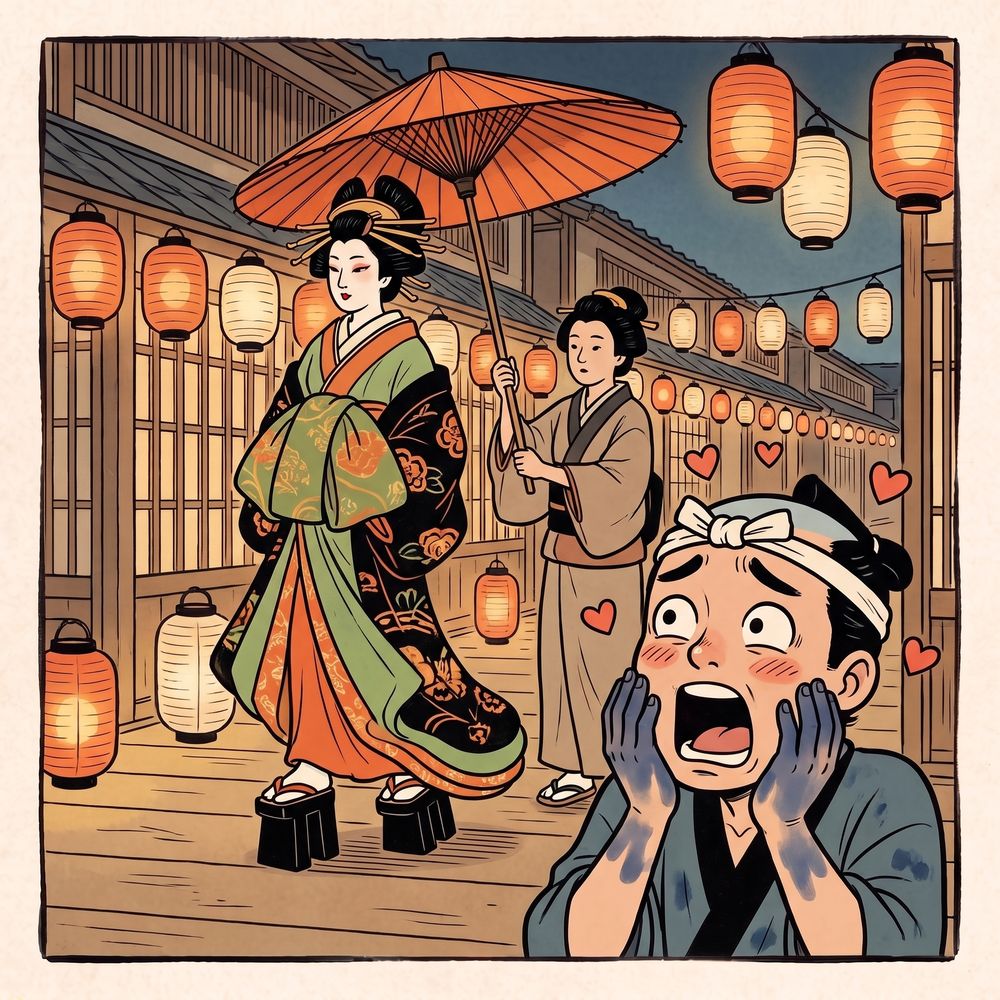
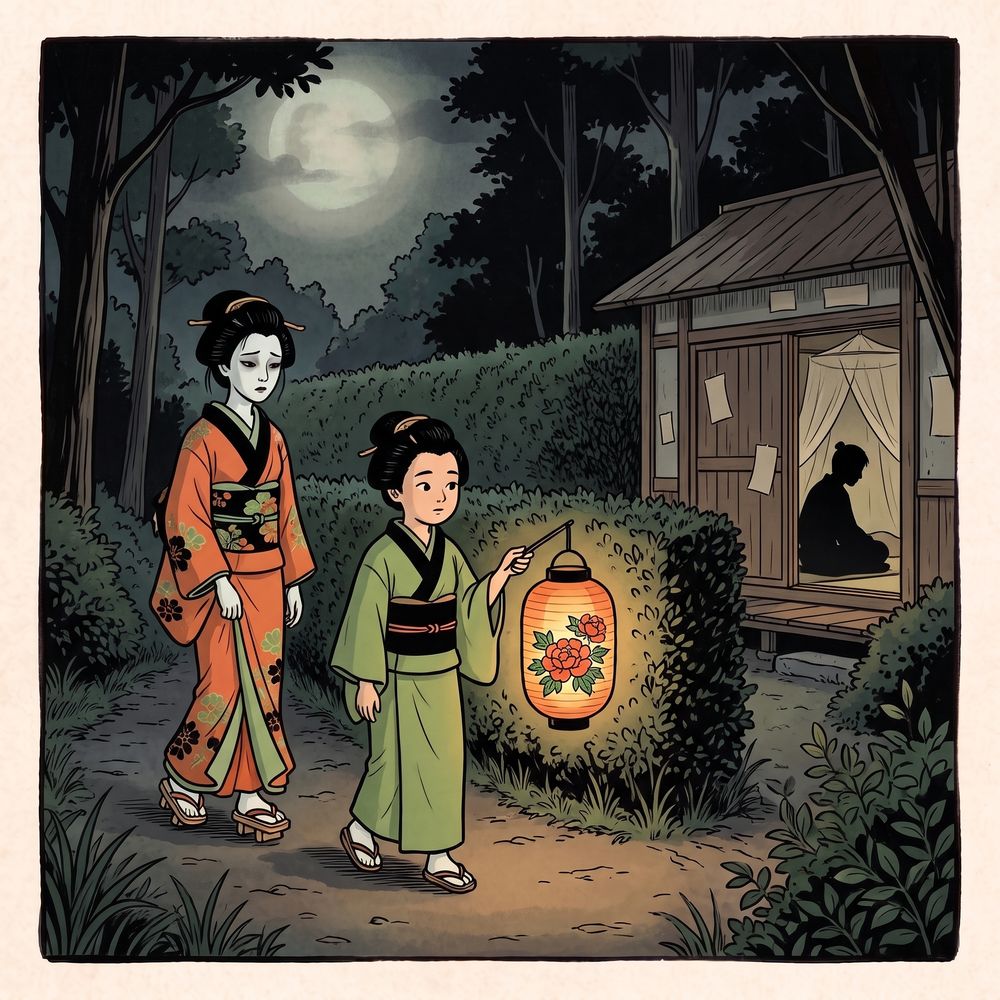
He is greeted by Okuma, an alluring woman who looks out of place in such a humble house. As he warms himself by the hearth, the traveler realizes she was once a well-known oiran (a high-ranking courtesan) in the Yoshiwara. She tells him that she tried to die in a lovers' suicide with a man, failed, and slipped out of the pleasure quarter, and that she now lives here in the mountains as that man's wife. Her husband is a hunter who sells bear ointment.
Okuma asks the traveler to keep who they are a secret, and he takes money from his purse to thank her. Her eye falls on the large sum in the purse. She keeps pressing tamagozake (hot sake with egg) on the traveler, who does not drink, then goes off to the village to buy sake for her husband's nightcap. The traveler takes only a little, but it goes straight to his head, and he lies down in the back room.
Then her husband Denzaburo comes home and drinks the tamagozake that was left over. Okuma returns, and as she stands there in shock, Denzaburo starts to writhe in pain. The sake was laced with a numbing drug, and Okuma meant to steal the traveler's money.
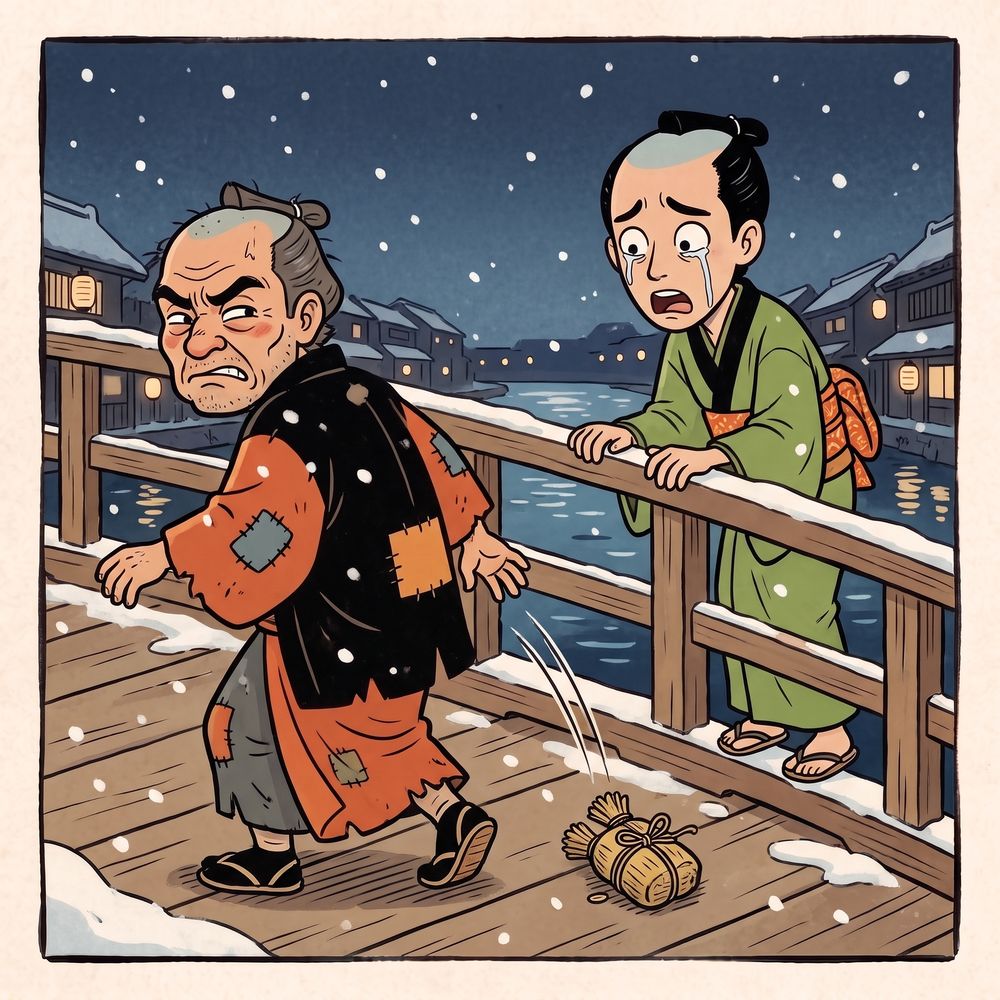
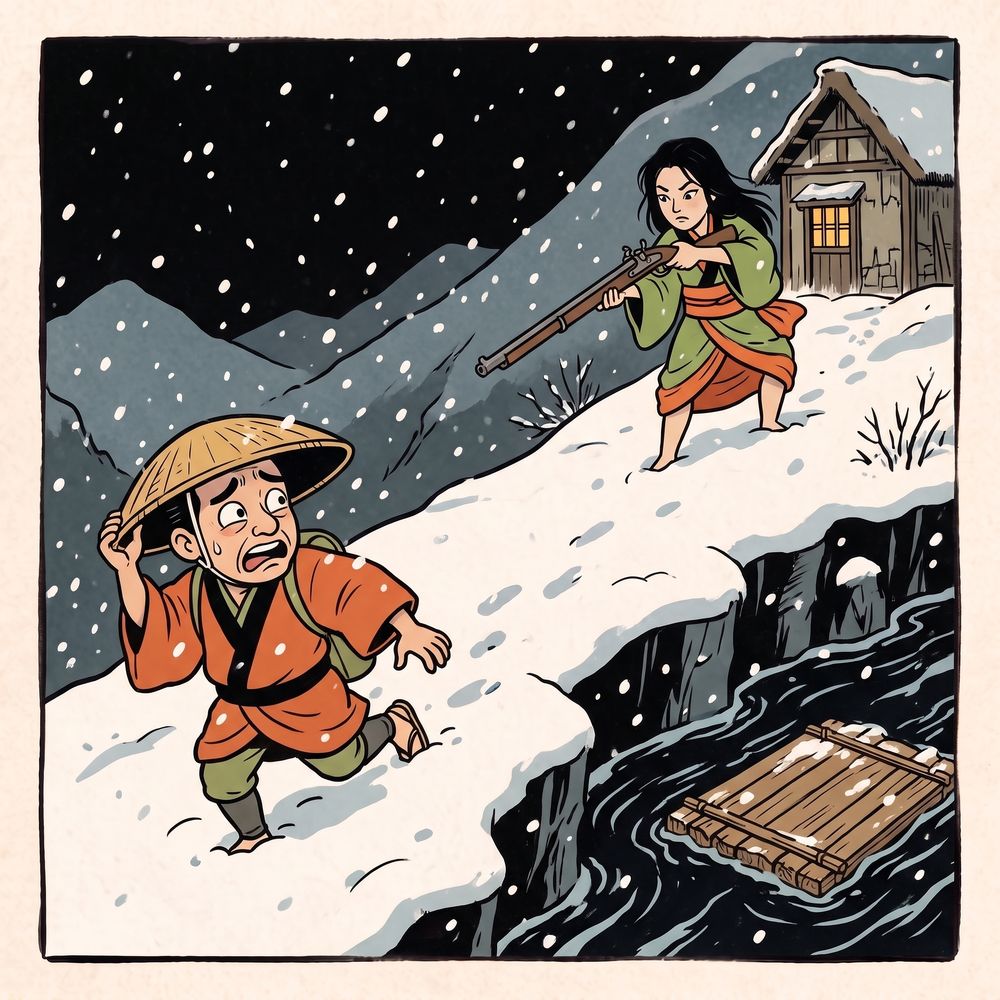
Realizing this, the traveler finds that his own body is numb and will not move as he wants. He swallows the poison-antidote charm he was carrying (the Komuroyama charm) together with some snow and crawls out of the house. Okuma comes after him through the snow with a gun.
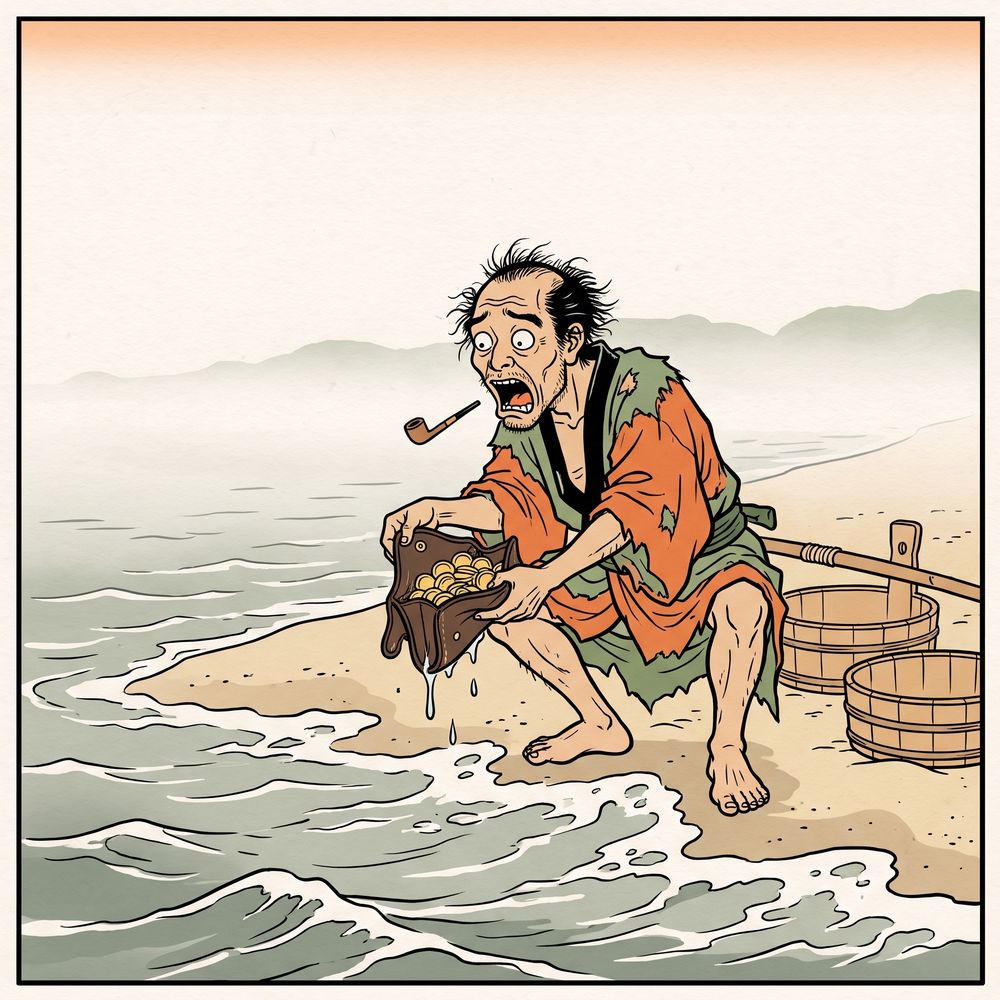
Cornered, the traveler falls off the cliff and lands on a raft tied up at the bank. The jolt snaps the mooring rope, and the raft drifts off. Soon the raft breaks apart, and as he clings to a single log and desperately chants the daimoku (the Nichiren prayer “Namu Myoho Renge Kyo”), the bullet Okuma fires misses him and hits a rock.
The sage the punchline, contains spoilers
Tap to reveal the punchline
“Saved by the ozaimoku (the log / the daimoku)!”
The sage (the punchline) closes the story by saying he owes his life to the blessing of Ososhi-sama (Nichiren, the founder of the sect). It is a jiguchi (a pun), playing on ozaimoku, “the log” of the raft he is clinging to, and odaimoku, “the daimoku” prayer he was chanting.
A story born from a sandai-banashi
A sandai-banashi is a performance in which three themes given by the audience are worked into a single story on the spot. The three themes of Kajikazawa are said to be “the Komuroyama charm,” “tamagozake” and “bear ointment,” and each plays an important part in the plot: the poison-antidote charm, the drugged tamagozake, and the hunter husband who sells bear ointment. There is also a theory that the themes were “a gun,” “tamagozake” and “a poison-antidote charm.”
| Sandai-banashi theme | Role in the story | |
|---|---|---|
| First | The Komuroyama charm | The poison-antidote charm the traveler swallows with snow |
| Second | Tamagozake | The sake Okuma laces with a numbing drug and presses on the traveler |
| Third | Bear ointment | The trade of Okuma's husband, Denzaburo |
Key scenes original dialogue written for this site
The house in the snow
- TravelerExcuse me. I've lost my way in this snow, and my legs won't carry me any farther. Even a spot under the eaves will do. Could you let me stay the night?
- OkumaOut here in the mountains, there isn't another house for miles. It's a shabby place, but come, sit by the fire.
- TravelerThank you... Why, ma'am, I feel as if I've met you somewhere before.
Tamagozake
- OkumaFor a chilled body, there's nothing better than this. Drink it while it's hot.
- TravelerThat's very kind of you. I'm no drinker, so just a sip... Well, my eyelids have suddenly gone heavy.
- (He cups the teacup in both hands and blows on it before sipping.)
The snowy cliff
- TravelerMy body's numb, it won't do what I tell it. That's it, I have the antidote charm... Namu Myoho Renge Kyo, Namu Myoho Renge Kyo.
- (He slips and falls to the river below the cliff. A folded fan is raised like a gun and aimed.)
This is not a transcription of any storyteller's performance. The plot and the sage follow the classic version. All lines were written for this site.
Notable performers
- Sanyutei Ensho VI1900–1979EdoOne of the stories he was known for. His 1970 performance at the Rakugo Kenkyukai survives on video.
- Hayashiya Shozo VIII (Hayashiya Hikoroku)1895–1982EdoKnown for shibai-banashi (theatrical stories) and kaidan-banashi (ghost stories), and Kajikazawa was one of the stories he was known for. His performance at the 1970 “Shibai-banashi Hayashiya Shozo no Kai” was recorded on 16 mm film.
- Kingentei Basho X1928–1982EdoOne of the performers whose recordings survive.