KinmeichikuThe Golden Bamboo
金明竹(きんめいちく)
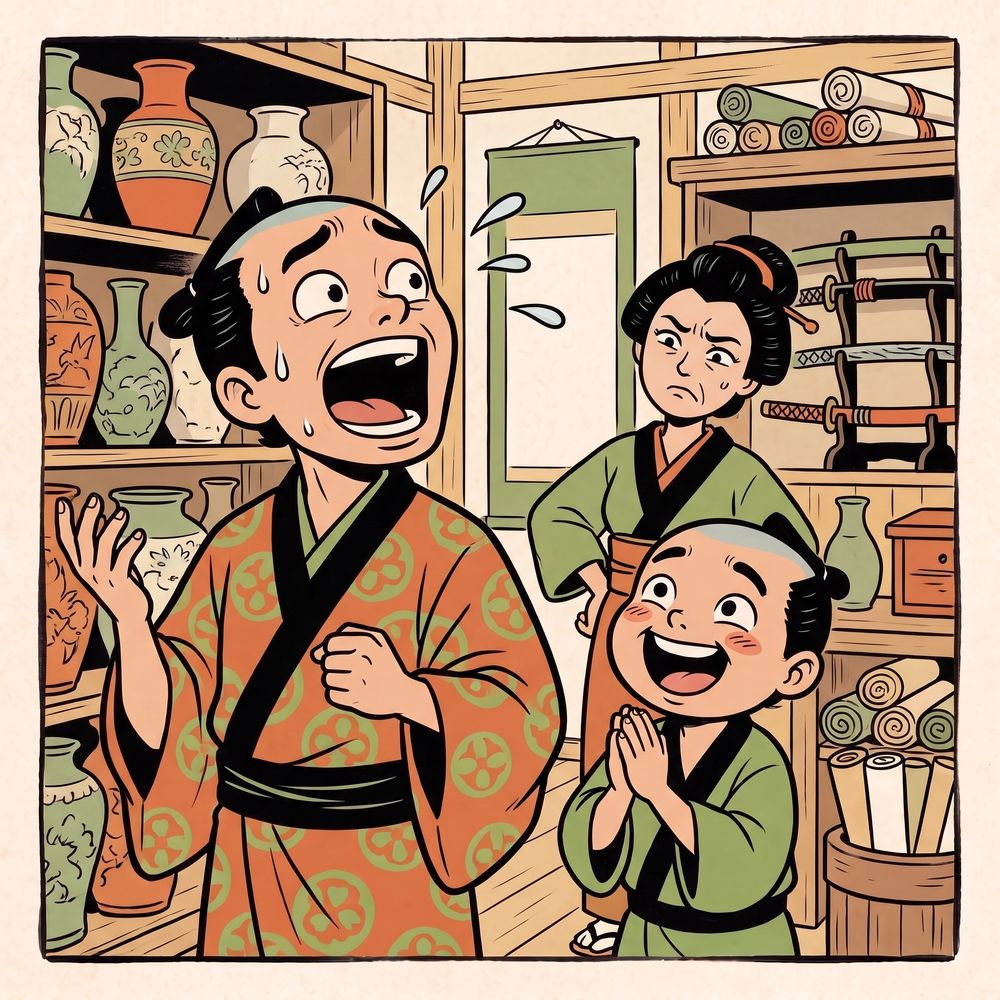
Yotaro, minding his uncle’s antique shop, applies whatever excuse he is taught to every situation, and gets scolded for it again and again. After his uncle goes out, a messenger arrives and reels off the names of art objects at top speed in Kamigata dialect (the speech of Osaka and Kyoto). Neither Yotaro nor the mistress of the house can make head or tail of it.
The story
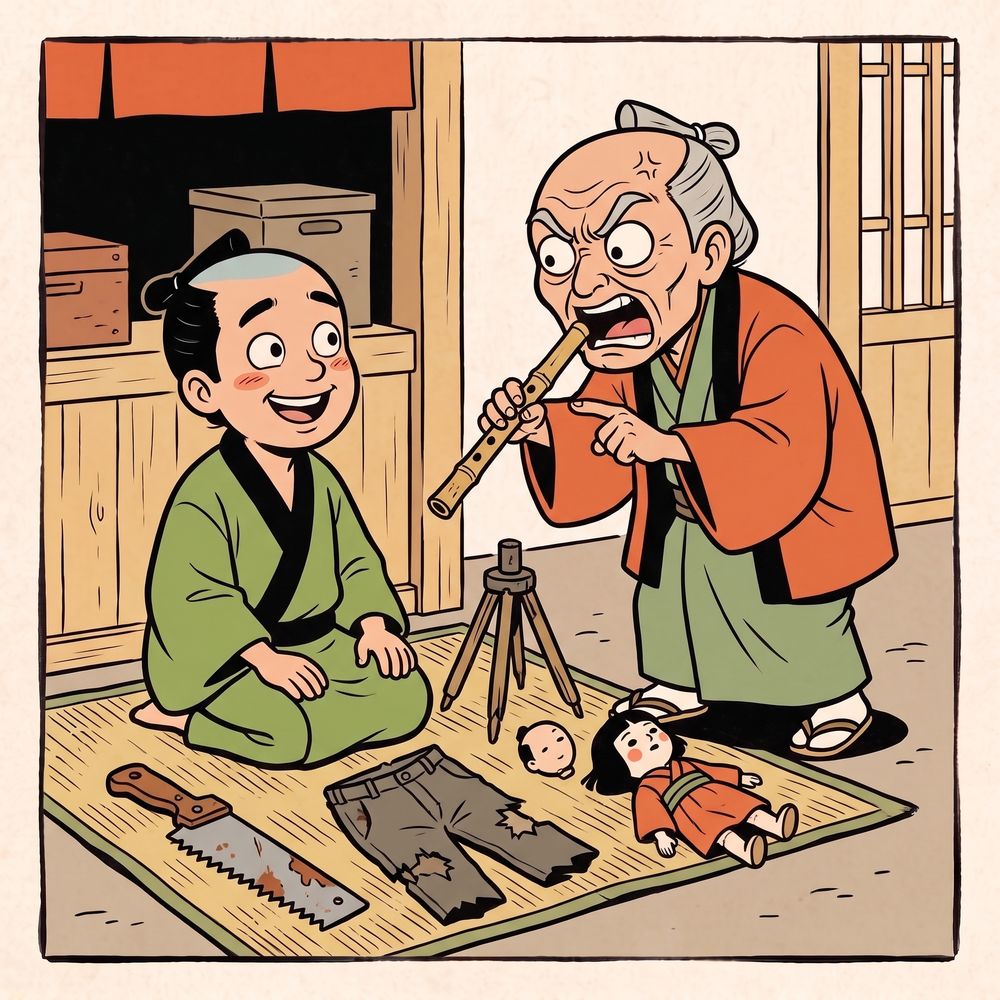
Yotaro, minding the antique shop, lends a brand-new, expensive umbrella to a man sheltering from the rain. His uncle scolds him and explains that the proper way to refuse is to say the umbrella has fallen apart and can’t be used. Then Yotaro gives the very same excuse to a neighbor who comes to borrow the cat, and gets scolded again.
For a cat, his uncle says, tell them she’s in heat and hasn’t come home, or she has an upset stomach and is lying down. So when someone comes asking to borrow the master himself, Yotaro answers, “I’m afraid the master is in heat...”
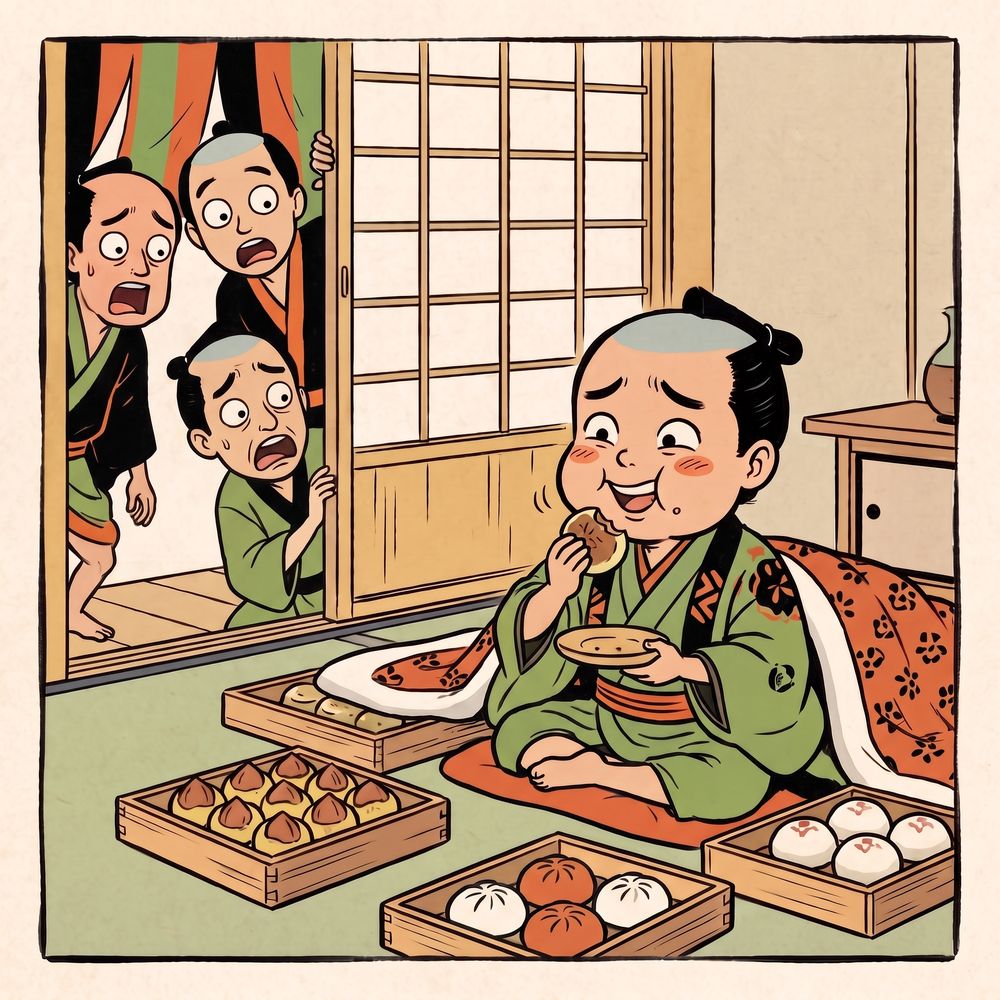
After the uncle goes out, a man who seems to be from Kamigata arrives, introducing himself as a messenger from Kagaya in Nakabashi. In one breathless rush of Kamigata dialect, he delivers a message about seven art objects brokered by a middleman named Yaichi. Yotaro has no idea what it means and finds it so funny that he makes the man say it again and again. The mistress comes out but can’t catch it either. Forced to repeat the same speech over and over, the messenger leaves completely worn out.
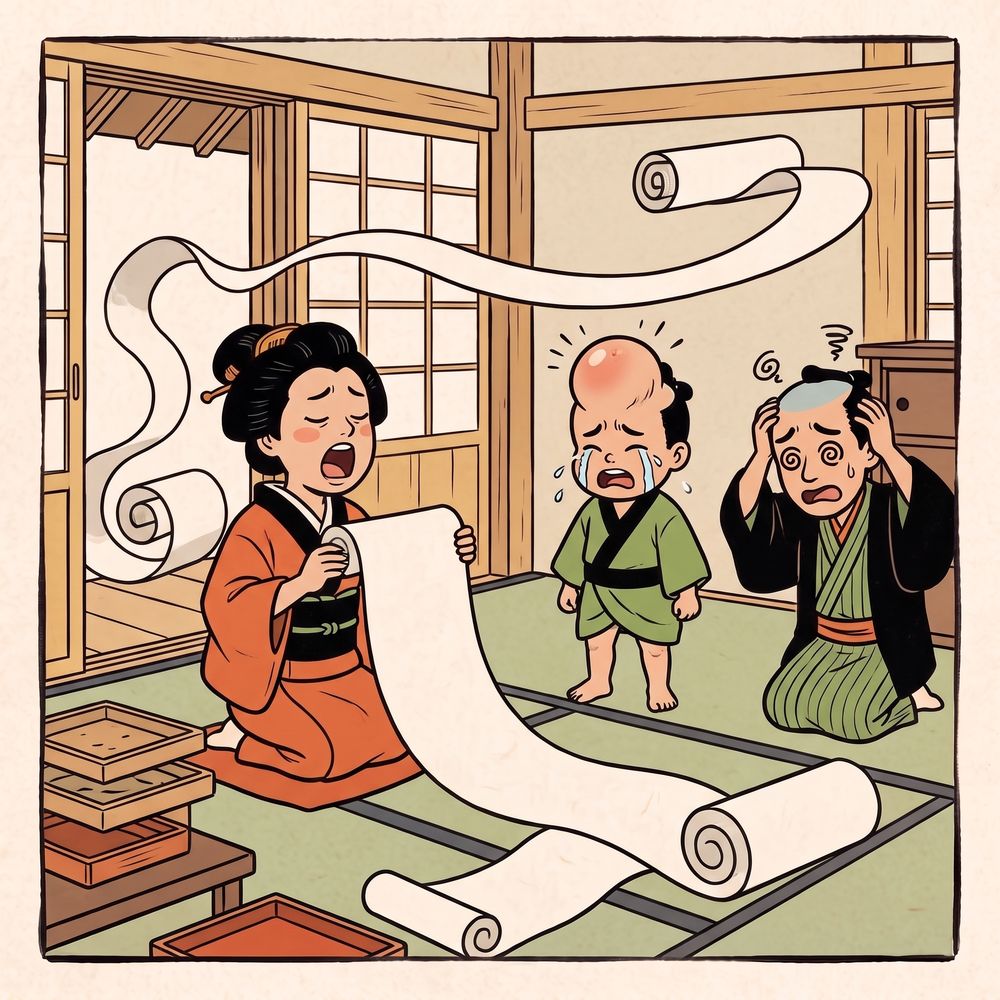
When the master returns, the mistress tries to pass on the message, but it comes out as nonsense: Yaichi the broker went mad, cut a courtesan clean in two... Finally she says he jumped into an old pond. The master, who had put down a deposit through Yaichi to buy some pieces, asks, “Did he buy them, then?” And she replies...
The sage the punchline, contains spoilers
Tap to reveal the punchline
“No, sir. Kawazu. He didn’t buy.”
The sage (the punchline) is a pun. The messenger’s speech mentions a scroll of Basho’s famous haiku “Furuike ya kawazu tobikomu mizu no oto” (“An old pond / a frog jumps in / the sound of water”). Kawazu means “frog,” but it also sounds like kawazu, “without buying.” So the mistress, still thinking of the pond, ends up saying “he didn’t buy.” Some performers replace the messenger’s Kamigata dialect with Nagoya or Tsugaru dialect.
The Objects in the Message
The messenger’s speech is a parade of sword fittings, tea utensils and masterpieces of calligraphy and painting. On stage, the fun is that this torrent of dialect and connoisseur jargon is completely beyond Yotaro and the mistress. Once you know what it means, you can also see where the mistress’s mix-ups come from. The speech begins: “Wate wa Nakabashi no Kagaya Sakichi kata kara tsukai ni sanjimashite...” (“I have come as a messenger from Kagaya Sakichi’s in Nakabashi...”).
| Phrase in the message | Meaning |
|---|---|
| Yujo, Kojo, Sojo no mitokoromono | A matched set of sword fittings (menuki, kogai and kozuka) by master craftsmen of the Goto family |
| Bizen Osafune no Norimitsu | A sword by a swordsmith of Bizen |
| Yokoya Somin no kozuka-tsuki no wakizashi | A short sword (wakizashi) fitted with a kozuka (a small knife carried in the scabbard) by Yokoya Somin, a metalworker of the mid-Edo period. The message notes that the wood of the hilt was different |
| Nonko no chawan | A tea bowl by Donyu (Nonko) of the Raku ware line |
| Obakusan kinmeichiku no zundo no hanaike | A cylindrical flower vase made from kinmeichiku bamboo, inscribed by Enshu Soho (Kobori Enshu) |
| Oribe no kogo | An incense container of Oribe ware |
| Furabo shohitsu no kakemono | A hanging scroll of the “Furuike ya” haiku in the hand of Matsuo Basho (Furabo) |
| Takuan, Mokuan, Ingen no kobyobu | A small folding screen pasted with calligraphy by three Zen monks |
Key scenes original dialogue written for this site
Refusing the cat
- NeighborThe mice are running wild at our place. Could we borrow your cat?
- YotaroOur loaner cat fell apart in the long rains the other day, so we put it in the shed for kindling...
- NeighborThe cat... fell apart?
The messenger from Kamigata
- MessengerI have come as a messenger from Kagaya Sakichi’s in Nakabashi...
- YotaroUncle, do that again. It’s funny.
- MessengerI’d be obliged if you didn’t go finding it funny, now.
The mistress passes on the message
- MistressApparently Yaichi-san was eating nothing but rice and tea, and then he went off to Hyogo by boat.
- MasterHow on earth did you hear it that way?
This is not a transcription of any storyteller's performance. The plot, the sage and the set opening of the messenger’s speech follow the classic version. All other lines were written for this site.
Notable performers
- Sanyutei Kinba III1894–1964EdoOne of the performers whose recordings survive.
- Kokontei Shinsho V1890–1973EdoOne of the performers whose recordings survive.
- Sanyutei Enjo I1944–2021EdoA native of Nagoya, he performed a “Nagoya version” of Kinmeichiku with the messenger speaking Nagoya dialect.
- Yanagiya Kosanji X1939–2021EdoOne of the performers whose recordings survive.