Sutoku-inEmperor Sutoku’s Poem
崇徳院(すとくいん)
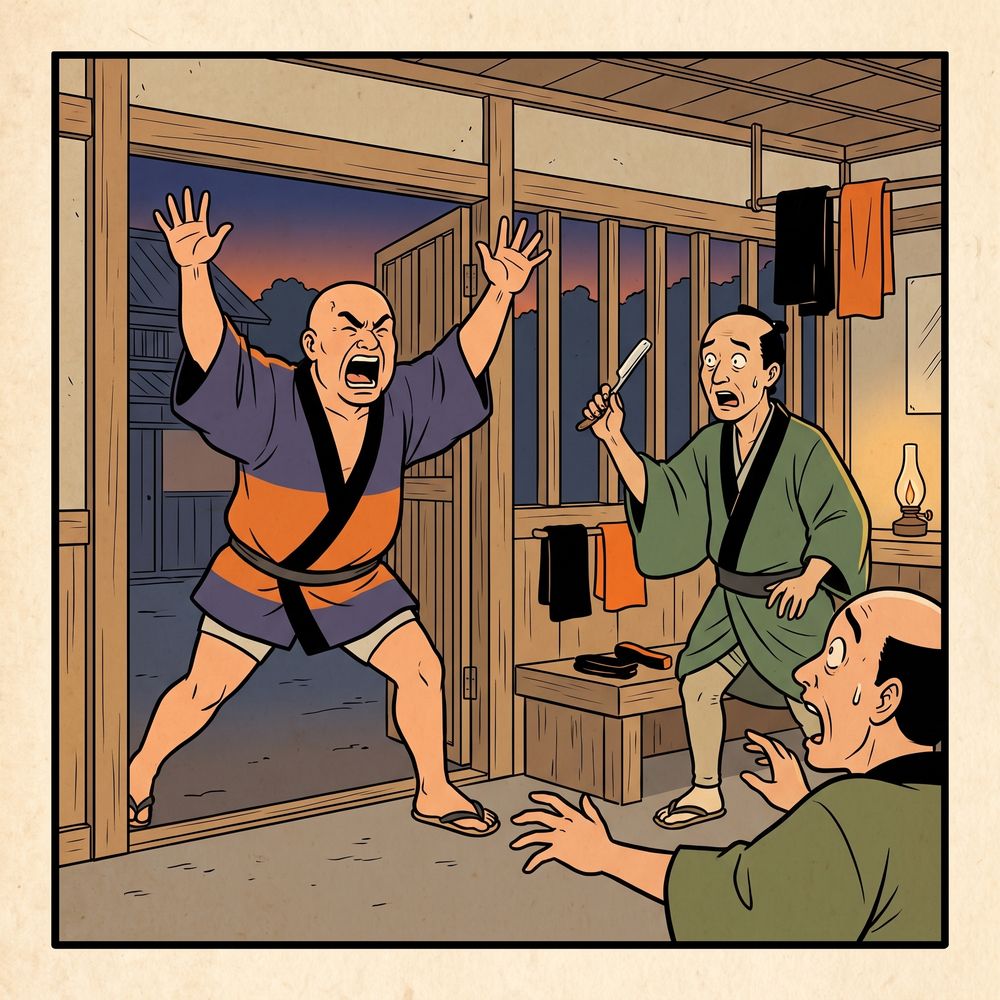
The young master of a large merchant house has taken to his bed, sick with love. All the girl he met at a teahouse left behind was the first half of a poem by the retired Emperor Sutoku. Eyes lit up by the promised reward, Kumagoro, a tradesman who works for the family, runs all over town shouting the poem, determined to find her within three days.
The story
The young master of a large merchant house has fallen ill, and no doctor can cure him. It is a sickness of the heart, they say, and he will recover once whatever is weighing on him is cleared up, but he won’t tell anyone what it is. At a loss, the old master asks Kumagoro, who works for the family and gets along well with the young man, to find out.
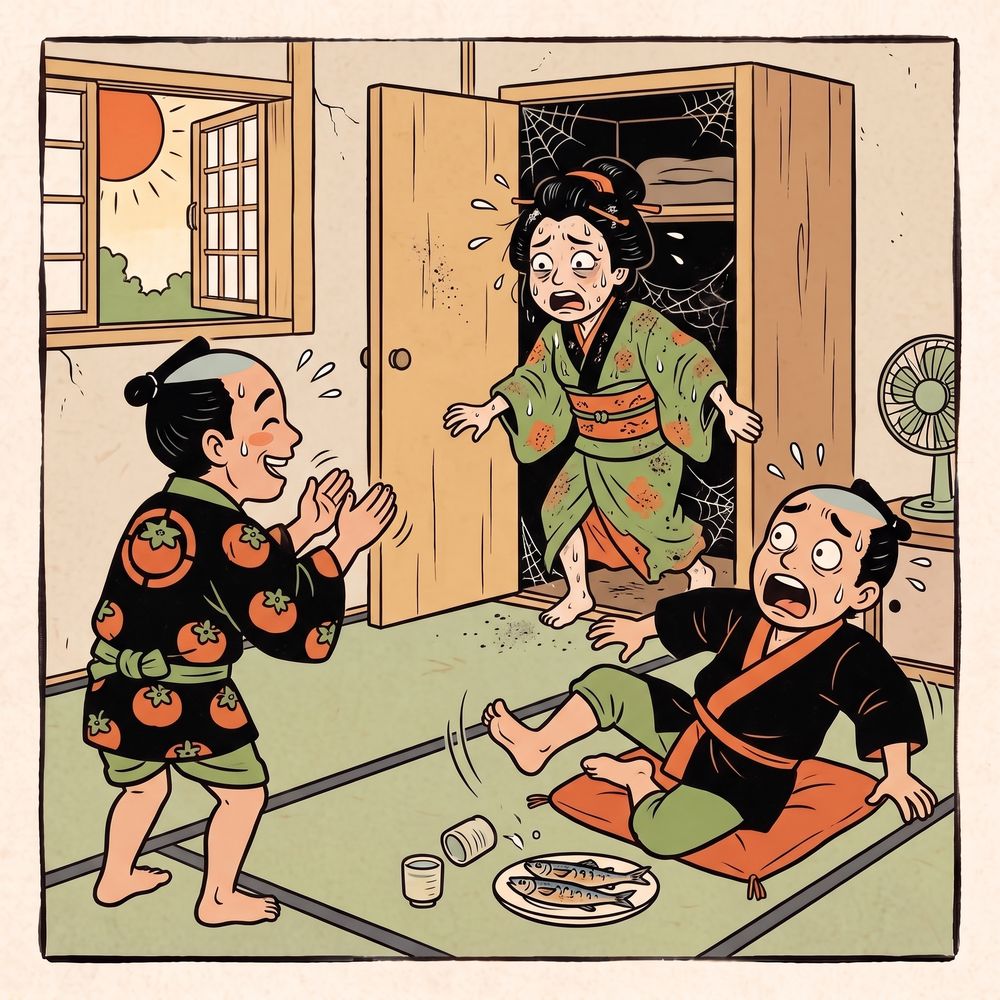
To Kumagoro he confesses: he is lovesick. About twenty days earlier, on a visit to a temple, he stopped at a teahouse and saw a beautiful girl. When he picked up the tea cloth (chabukusa) she had dropped and handed it back, she wrote only the first half of a poem, “Se o hayami / iwa ni sekaruru / takigawa no” (“Swift the stream / split by a rock / the rapids divide”), and left. The second half goes “warete mo sue ni / awan to zo omou” (“though parted, in the end / I know we will meet again”), meaning that someday they will meet again. But he has no idea who she is or where she lives.
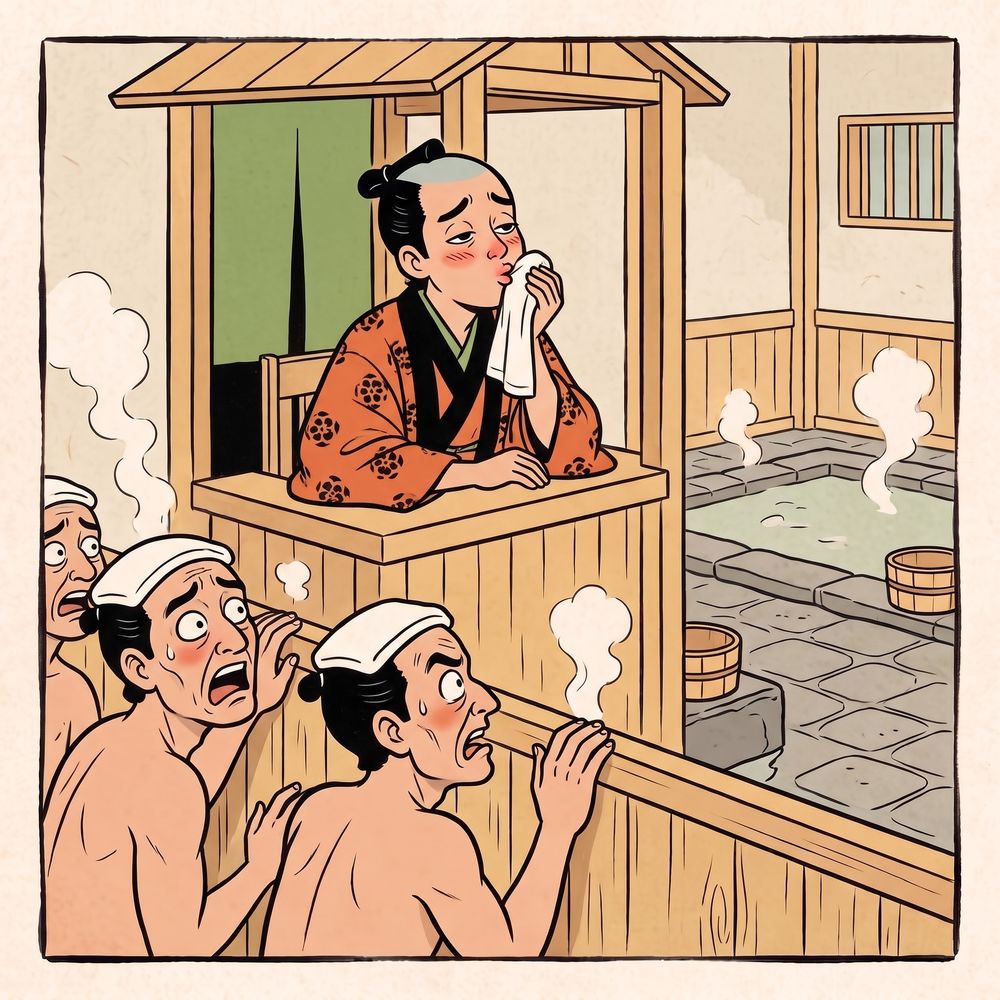
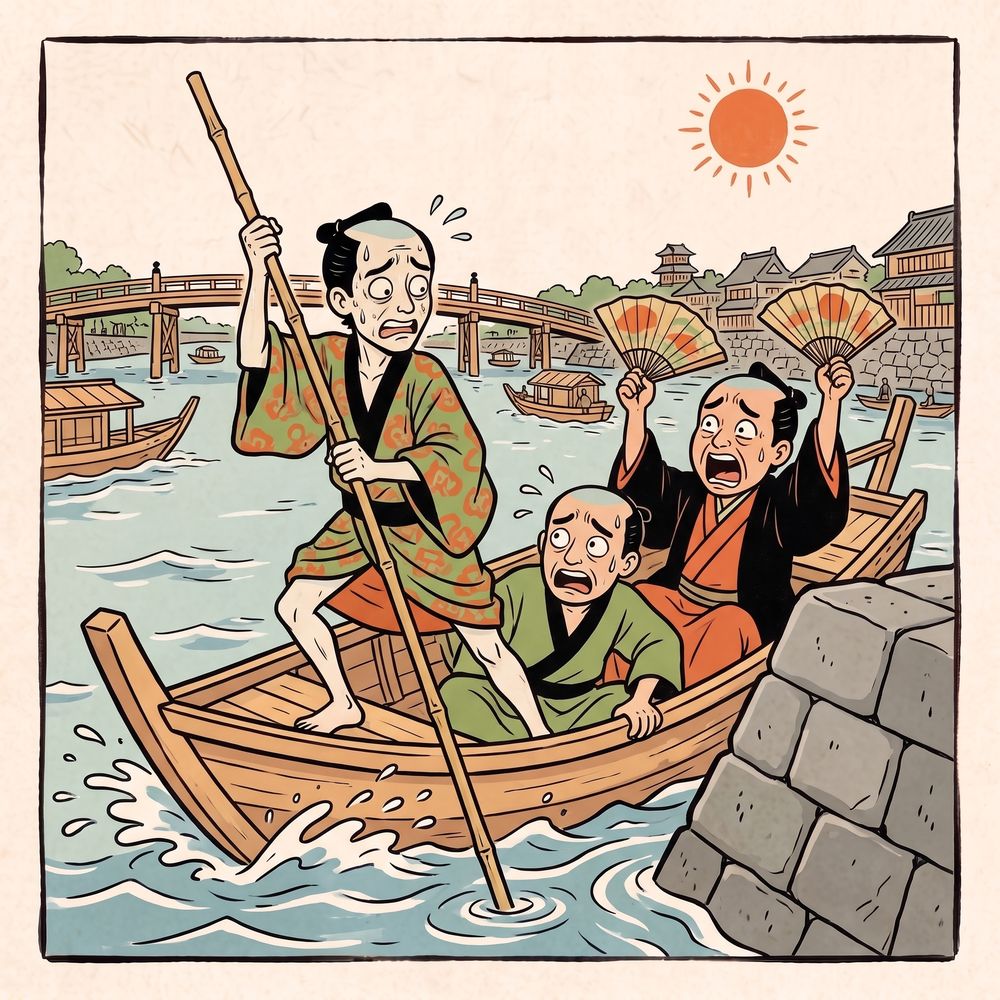
Hearing that his son won’t last another five days, the old master promises Kumagoro that if he finds the girl within three days, he will wipe out Kumagoro’s debts and pay him a reward on top. Kumagoro wastes two days running around blindly. Then, on his wife’s advice, he tries shouting the first half of the poem in places where crowds gather, like bathhouses and barbershops.
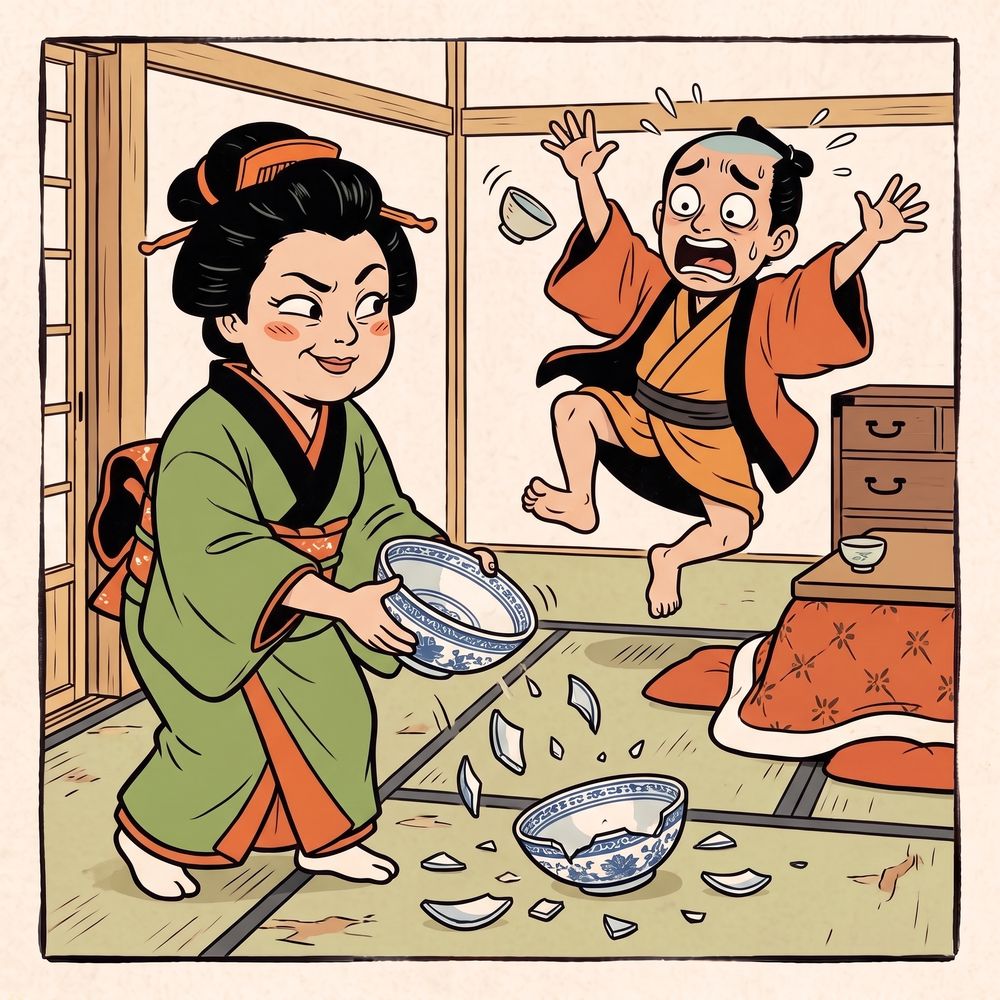
On the third day, after going from barbershop to barbershop, his head and face are shaved smooth. At dusk, in yet another barbershop, a customer bursts in and starts talking: the young lady of the house he works for is lovesick over a young master she met at a teahouse. The clues are a tea cloth and Emperor Sutoku’s poem. Kumagoro grabs the man, and as each tries to drag the other home, the barbershop mirror falls and shatters...
The sage the punchline, contains spoilers
Tap to reveal the punchline
“Though it’s broken, at month’s end I’ll buy you another.”
The sage (the punchline) is Kumagoro’s answer when the barber demands to know what he’ll do about the mirror. He twists the second half of the poem, “warete mo sue ni awan to zo omou” (“though parted, in the end we will meet again”), into “warete mo sue ni kawan to zo omou.” Wareru means both “to part” and “to break,” sue (“the end”) becomes the end of the month, when bills were settled, and awan (“we will meet”) becomes kawan (“I will buy”). In another version, when the man he is grappling with says “Let go of me,” Kumagoro replies, “I won’t let go. I’m going to bring them together” (awasu, echoing awan, “we will meet,” in the poem). When the story is called Saraya, the last shop is not a barbershop but a shop selling plates, and what breaks is one of the plates for sale.
Kamigata and Edo
Originally a Kamigata story, it was also brought to Edo (Tokyo). In Tokyo it is considered a signature piece of Katsura Mikisuke III. The plot is almost the same; what differs is the temple or shrine where the young master meets the girl.
| Kamigata | Edo | |
|---|---|---|
| Where they meet | Kozu-gu Shrine (Kozu-san) | Kiyomizu Kannon-do Hall in Ueno |
| Well-known performers | Katsura Shijaku II, Katsura Kitcho and others | Katsura Mikisuke III, Kokontei Shincho III and others |
| Sage | “Though it’s broken, at month’s end I’ll buy you another,” or ending with “I’m going to bring them together” | |
| Also known as | Saraya, Hanami Ogi | |
Key scenes original dialogue written for this site
The lovesick confession
- KumagoroCome on, young master, don’t hold out on me. Just tell me, quietly.
- Young master...You won’t laugh?
- KumagoroI won’t laugh.
- Young masterI can’t forget a girl I met at a teahouse.
- KumagoroWhat, you were dying over that?
Shouting in the barbershop
- (He slams the door open and shouts from the pit of his stomach.)
- KumagoroSe o hayamiii! Iwa ni sekaruruuu!
- BarberWelcome... Wait, what’s all the racket?
- KumagoroOh, nothing. Give me a shave while I’m here.
- BarberHow many shops is this since morning? You haven’t got any whiskers left to shave.
Found her
- Man...and the young lady says the poem went something like “Se o hayami.”
- KumagoroHey! Tell me more about that!
- ManW-who are you?
- KumagoroI’ve been looking for that girl for three days!
This is not a transcription of any storyteller's performance. The plot and the sage follow the classic version. The dialogue was written for this site.
Notable performers
- Katsura Mikisuke III1902–1961EdoConsidered the master of this story in Tokyo. He learned it during a period he spent in Osaka.
- Katsura Shijaku II1939–1999KamigataCounted among his major works.
- Kokontei Shincho III1938–2001EdoOne of the performers whose recordings survive.
- Katsura Kitcho1954–2005KamigataOne of the performers whose recordings survive.