Sanbo Ichiryo ZonThree Parties, One Ryo Lost Each
三方一両損(さんぼういちりょうぞん)
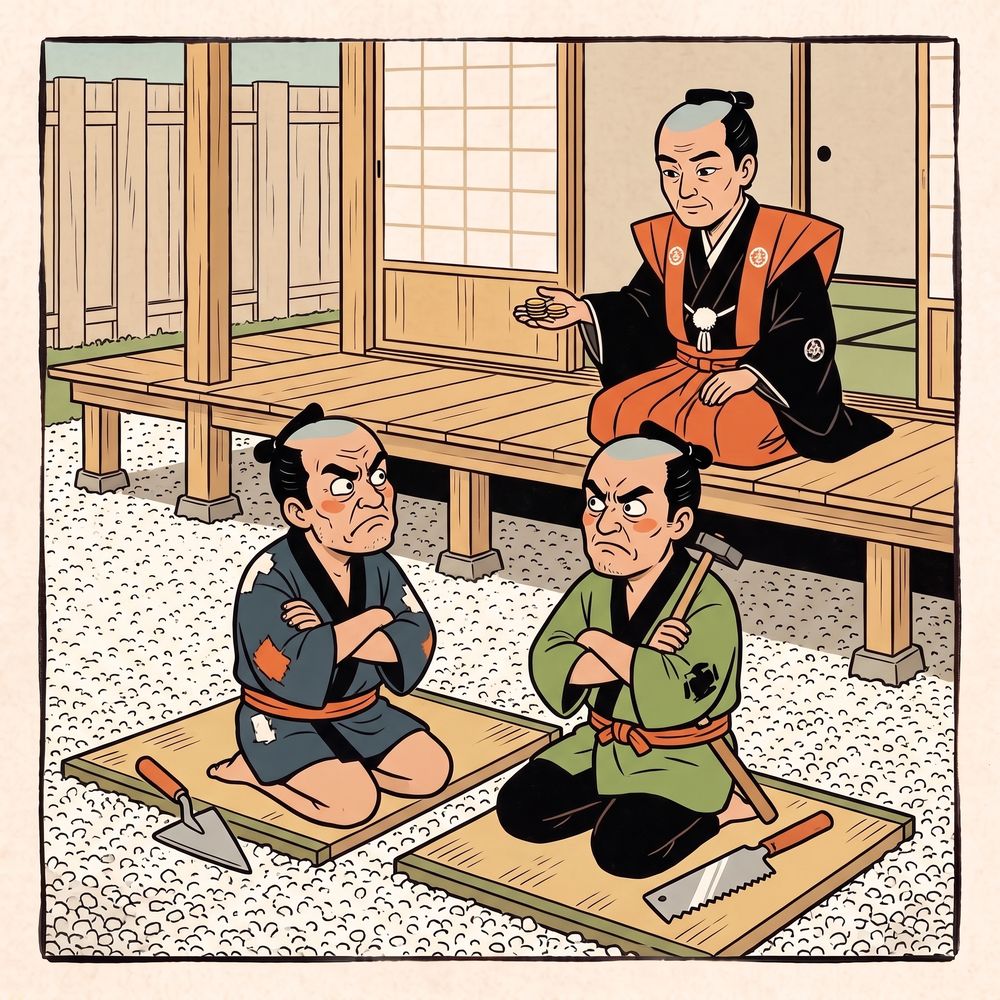
Kintaro the plasterer finds a purse holding three ryo. Using a note inside, he tracks down the owner, Kichigoro the carpenter, and brings it back. But Kichigoro refuses it: “Money I dropped isn’t mine anymore.” Both are proud Edokko, true sons of Edo, and neither will back down, until the case goes before the famous magistrate Ooka Echizen...
The story
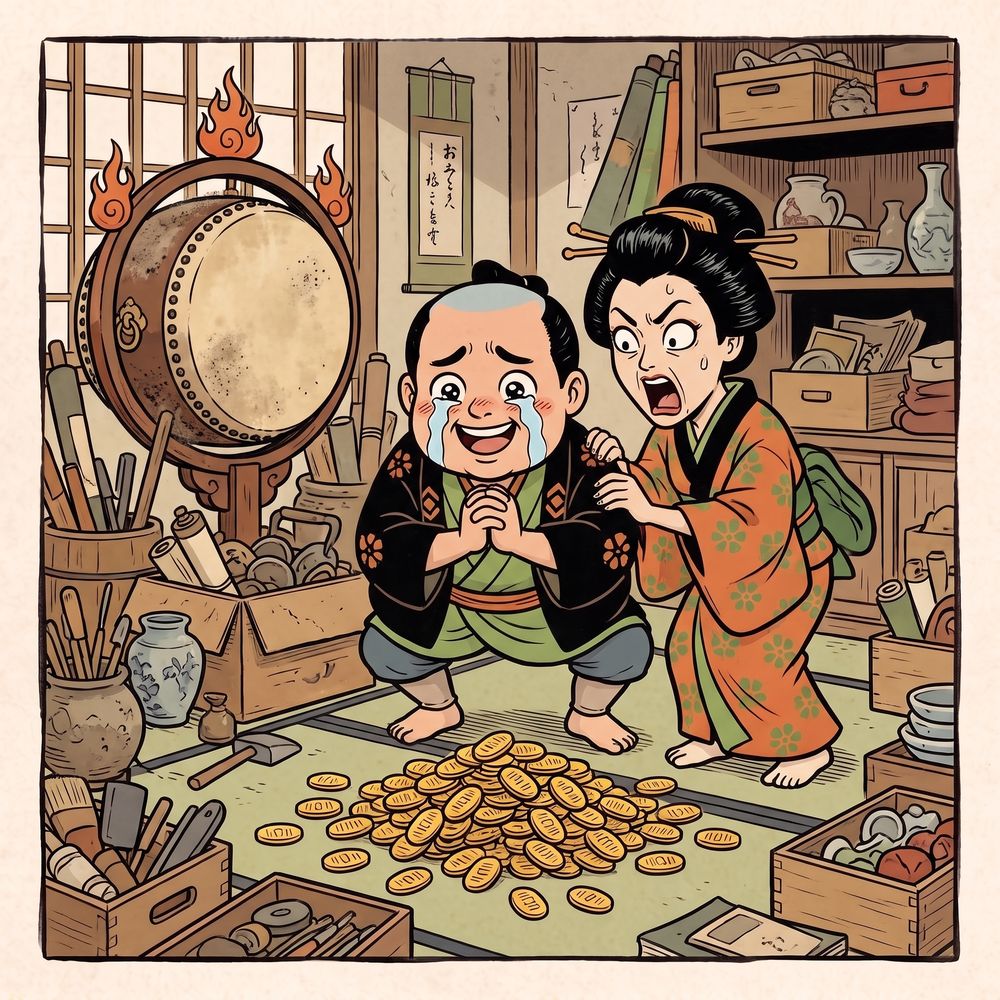
Kintaro the plasterer finds a purse in the street. Inside are three ryo, a personal seal and a written note. The note shows that the owner is Kichigoro the carpenter, so Kintaro goes all the way to his tenement to return it.
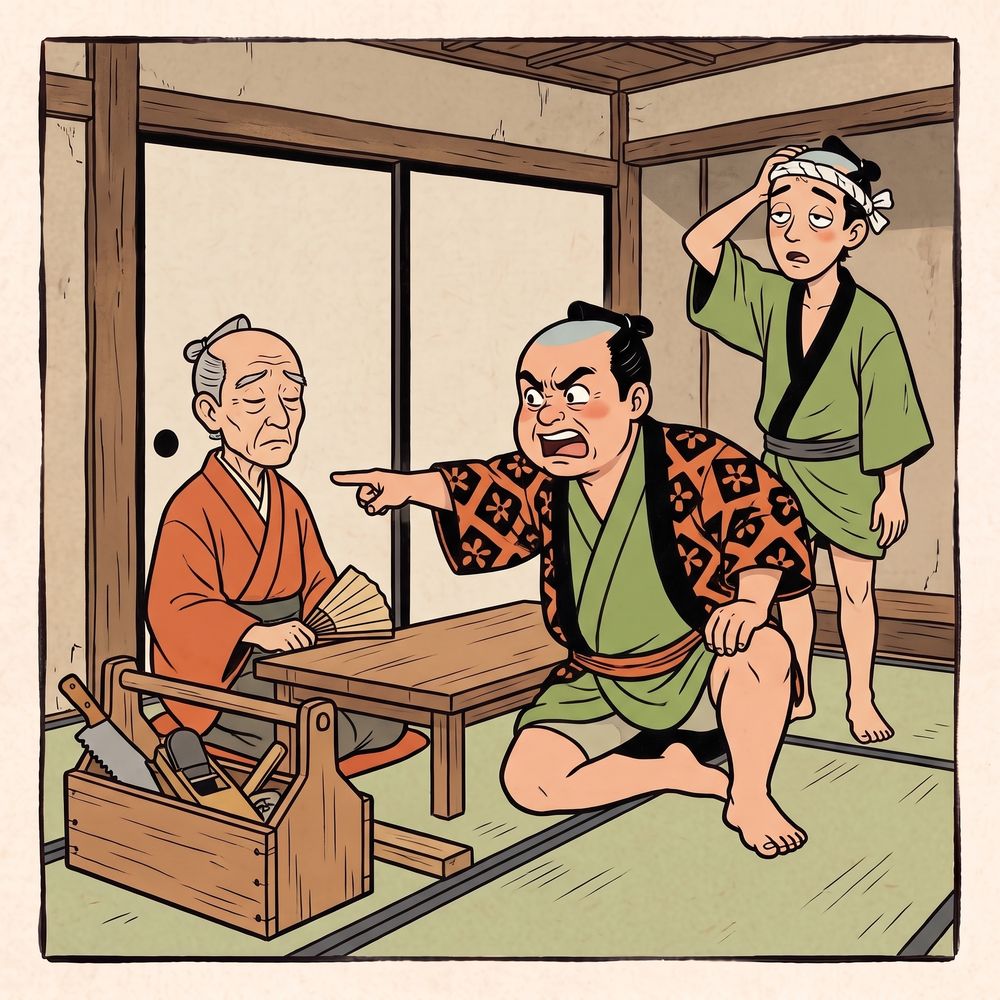
But Kichigoro takes only the note and the seal and pushes the money back. “Once I’ve dropped money, it isn’t mine. I haven’t sunk so low as to pocket it.” Kintaro won’t give in either: “If I’d wanted the money, I wouldn’t have brought it back in the first place.”
The argument turns into a fight, and even the landlord cannot calm it down. It is a strange quarrel in which both men insist they do not want the money. In the end a complaint is filed, and the two are summoned before Ooka Echizen-no-kami, the South Magistrate.
Echizen agrees that both men have a point. He adds one ryo of his own to make four and gives each man two as a reward. Kintaro found three and got two, so he loses one. Kichigoro dropped three and got two back, so he loses one. Echizen put in one, so he loses one too. “Three parties, one ryo lost each,” and both men are satisfied.
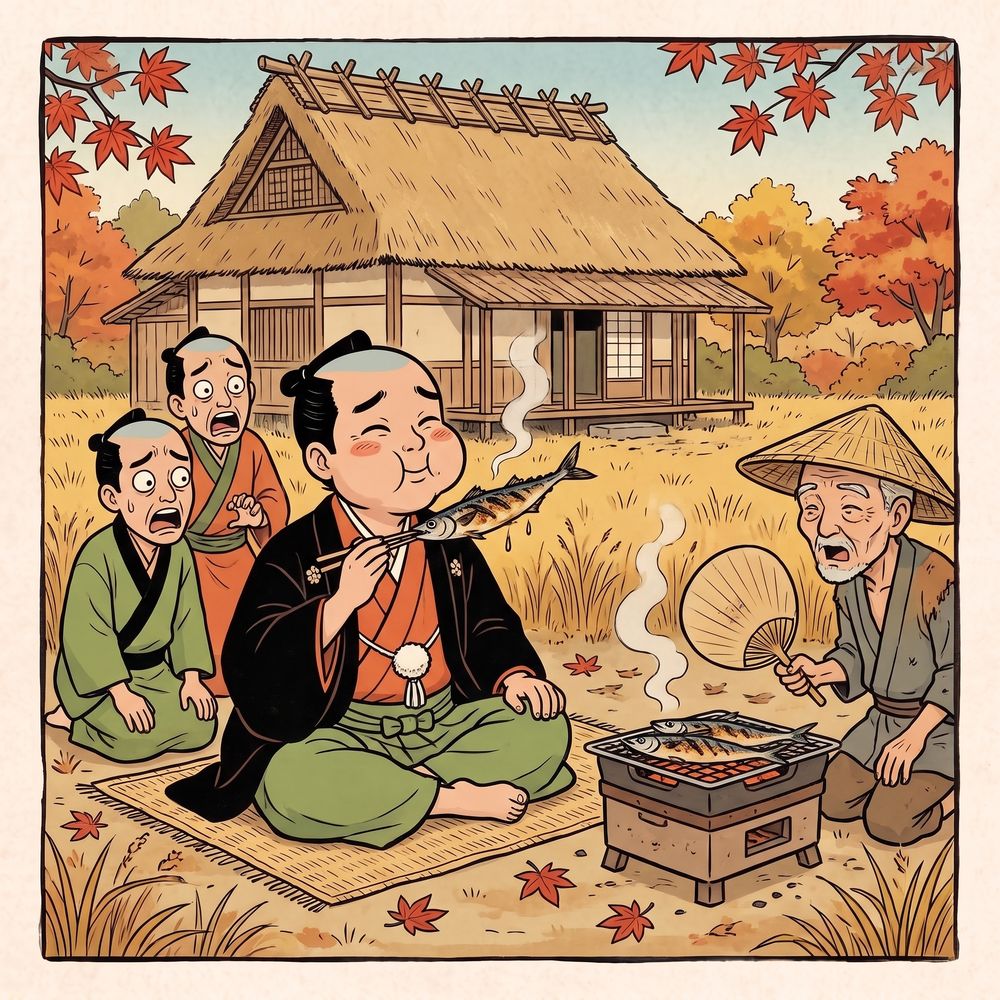
After the judgment, Echizen has a meal served to the two. Faced with a feast they could never afford, they eat as fast as they can. When Echizen warns them, “However hungry you are, eating too much is bad for you,” they answer...
The sage the punchline, contains spoilers
Tap to reveal the punchline
“Ookya kuwanee, tatta ichizen.” (We don’t eat much, just one bowl.)
The sage (the punchline) is a pun. “Ookya” (much) sounds like Ooka, and “ichizen” (one bowl) sounds like Echizen, so the reply contains the magistrate’s own name. The fun is that, even in front of the great magistrate, the two keep up their bold Edokko talk to the very end.
One Ryo Lost Three Ways
There is no record that Ooka Echizen actually made this judgment. The tale is said to come from Itakura Seiyo, a collection of judgments by Itakura Katsushige and his son Shigemune, who served as governors of Kyoto. It was later absorbed into the Ooka tales and is told both in kodan and in rakugo. The rakugo version adds the meal scene to set up the sage, but the story is also told as a simple tale without it.
| Started with | Ended with | Loss | |
|---|---|---|---|
| Kintaro (who found it) | Three ryo found | Two ryo reward | |
| Kichigoro (who lost it) | Three ryo dropped | Two ryo reward | |
| Ooka Echizen (the judge) | One ryo of his own | Nothing |
Key scenes original dialogue written for this site
Returning the purse
- KintaroHey, you’re Kichigoro, right? This is your purse, isn’t it? Your name was on the note, so I brought it back.
- KichigoroYeah, it’s mine. Thanks for the note and the seal, I’ll take those. I don’t want the money. Take it home.
- KintaroWhat? I go to all this trouble and that’s what I get?
- KichigoroI gave it up the moment I dropped it. Money that’s left my hands isn’t going back in my pocket.
The court
- EchizenKintaro, why do you refuse the money you found?
- KintaroSir, if I’d wanted it, I’d never have returned it. An Edokko couldn’t hold his head up after that.
- EchizenKichigoro, why do you refuse your own money?
- KichigoroMoney I dropped isn’t mine anymore, sir. Same as him, it’s a matter of pride.
- (Echizen looks from one man to the other, opening his fan a little as he thinks.)
The meal
- KintaroHey, look, a whole fish with the head on. I’ve never seen a feast like this in my life.
- EchizenNow, now, however hungry you are, you must not eat too much.
- KichigoroNo need to worry, sir.
This is not a transcription of any storyteller's performance. The plot and the sage follow the classic version. All lines were written for this site.
Notable performers
- Sanshotei Karaku VIII1898–1964EdoOne of the performers whose recordings survive.
- Sanshotei Muraku I1925–2005EdoKnown as a performer who excelled at this story. He was a disciple of Karaku VIII.
- Kokontei Shincho III1938–2001EdoOne of the performers whose recordings survive.