KagekiyoKagekiyo's Eyes
景清(かげきよ)
Sadajiro, one of the finest menuki-shi (sword-fitting carvers) in Kyoto, has lost his sight to an eye disease. Urged on by Jinbei, a kindly danna (well-to-do neighbor), he begins visiting the Kannon of Kiyomizu every day for a hundred days. Legend says that Akushichibyoe Kagekiyo, a fierce warrior of the Heike clan, offered his own two eyes at this temple. But on the final day his eyes still do not open, and on the way home a fierce thunderstorm breaks. When Sadajiro comes to after fainting, who should appear before him but... The story was born in Kamigata (Osaka-Kyoto style), was brought to Tokyo by Sanyutei Enba III, and in Tokyo Katsura Bunraku VIII shaped it into a ninjo-banashi (human drama).
The story
Sadajiro, said to be one of the three best menuki-shi (carvers of the ornamental fittings on sword hilts) in Kyoto, has developed an eye disease and can no longer see anything. The doctors have given up on him, and he cannot work. He puts on a cheerful face, but inside, everything is dark.
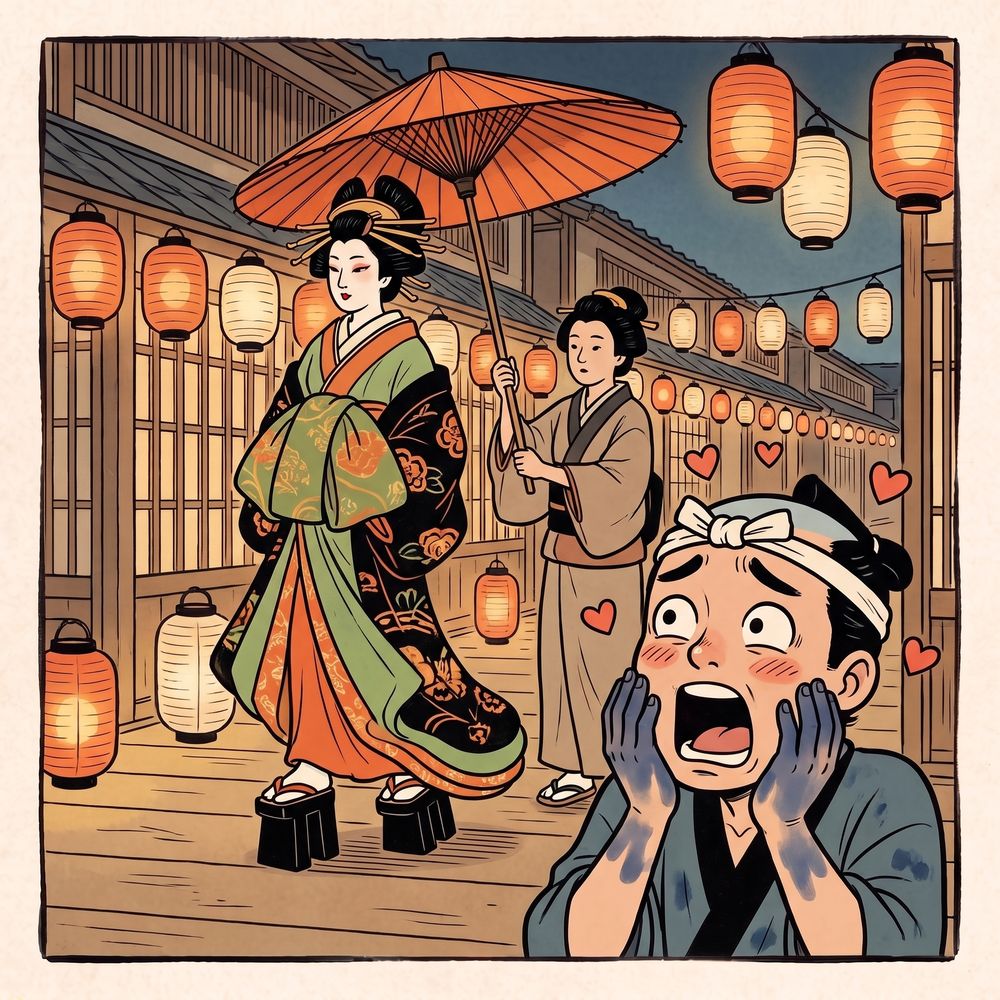
Jinbei, a danna (well-to-do man) in the neighborhood, regrets the loss of such skill and urges him to turn to the gods and buddhas. It turns out Sadajiro has already made a twenty-one-day vow to the Kannon (goddess of mercy) of Yanagidani, said to work wonders for eye disease. But on the final day, he got friendly with a young woman who could not see and was praying beside him, and the two of them went drinking at the foot of the mountain, paying with the offering money.
Appalled, Jinbei tells him to mend his ways this time and visit the Kannon of Kiyomizu for a hundred days, or two hundred if need be. There is a legend that Akushichibyoe Kagekiyo, captured after failing to kill Minamoto no Yoritomo, said, “I do not wish to see the world of the Genji,” gouged out his own eyes, and offered them at Kiyomizu-dera. Told that this Kannon has a special tie to eyes, and thinking of his aged mother, Sadajiro begins going there every day.
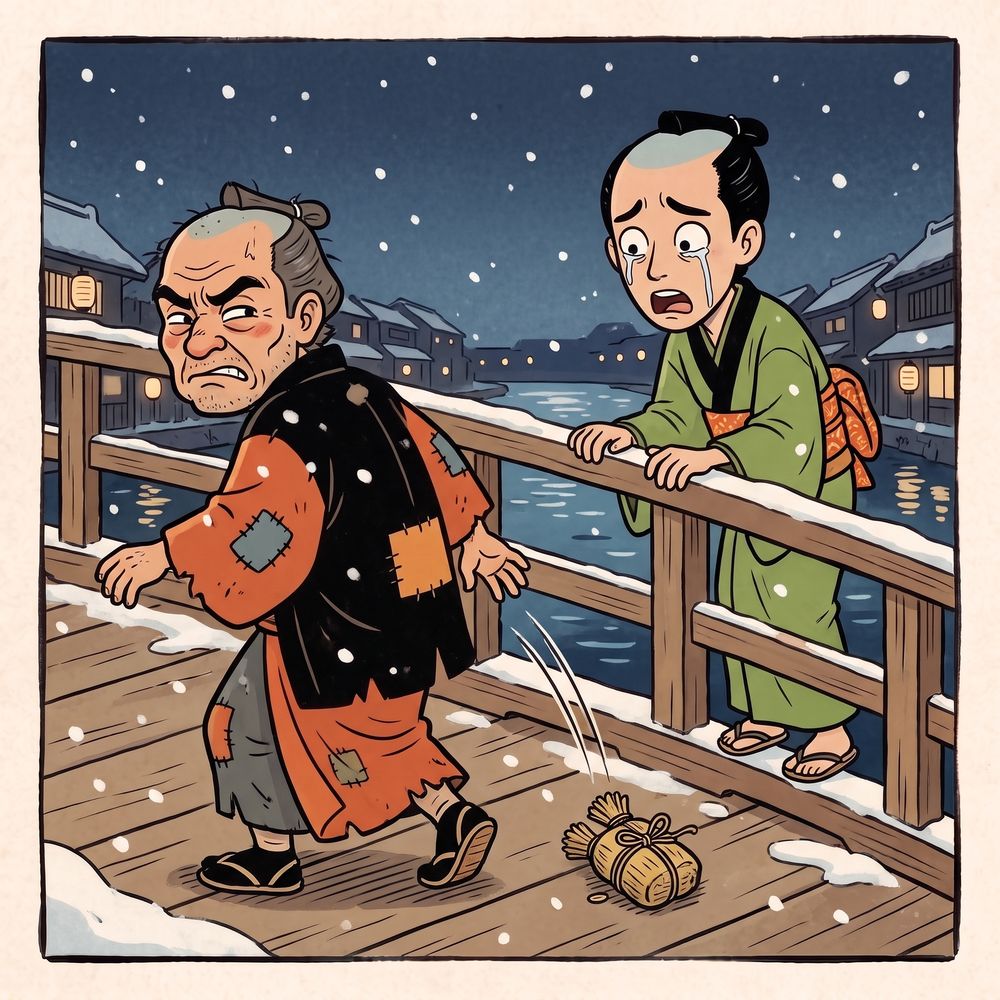
The hundredth day arrives. No matter how hard he prays, his eyes do not open. When Sadajiro lashes out at the Kannon and Jinbei scolds him, Sadajiro confides in tears. His mother has sewn him a kimono for this very day and is waiting with sekihan (festive red rice) and sake. If he comes home still unable to see, the disappointment will kill her. Jinbei comforts him, promising to look after mother and son from now on, and the two start down the stone steps of Kiyomizu.
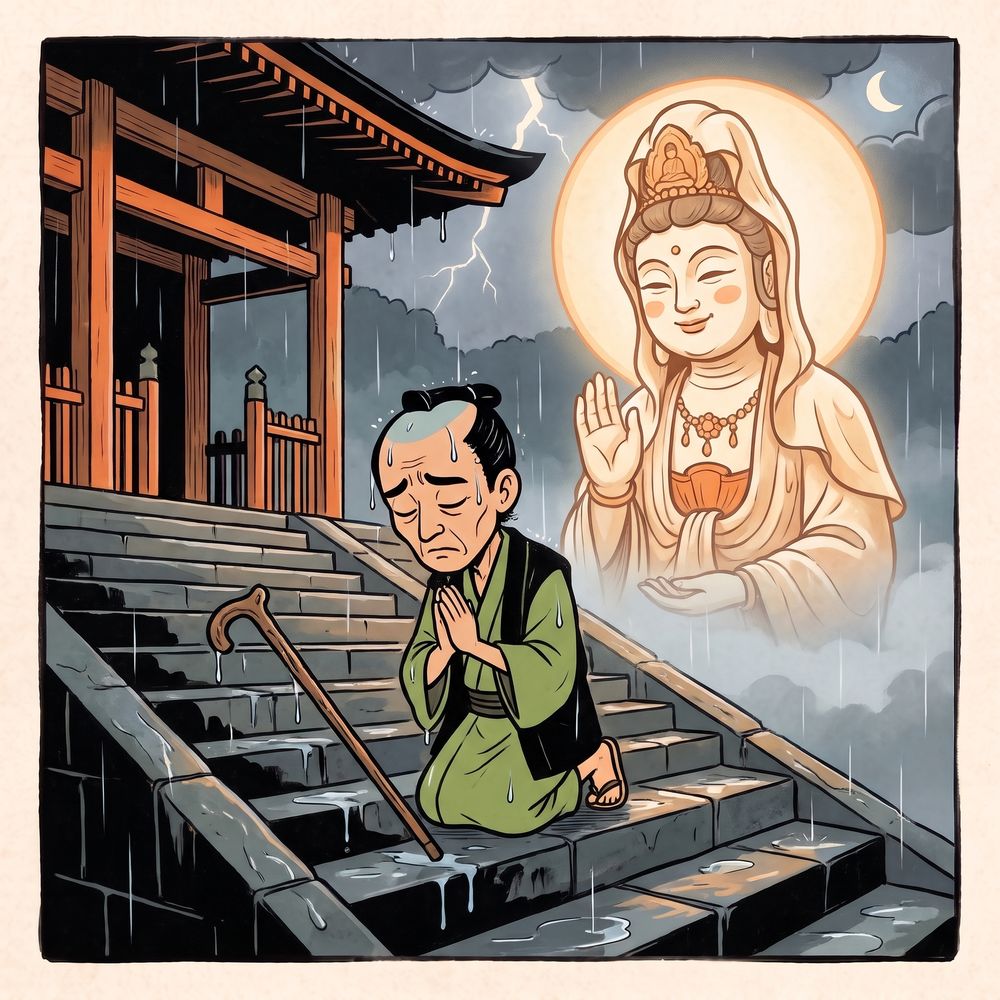
Suddenly the sky clouds over, and pouring rain and thunder follow. Jinbei, who hates thunder, runs home, leaving Sadajiro behind. Left alone, Sadajiro is struck by lightning and faints.
When he comes to, it is night, and the Kannon of Kiyomizu appears before him. Because of a bond from a past life, his eyes cannot be cured, but in recognition of his mother's faith, the Kannon will lend him the eyes Kagekiyo once offered. As he chants the sutra, he begins to see, and he is overjoyed. Then he looks down and finds his own old eyeballs, two of them, lying at his feet. When he tries to carry these home too, as something precious, the Kannon's voice comes from behind him...
The sage the punchline, contains spoilers
Tap to reveal the punchline
“Sadajiro, leave the trade-in eyes behind.”
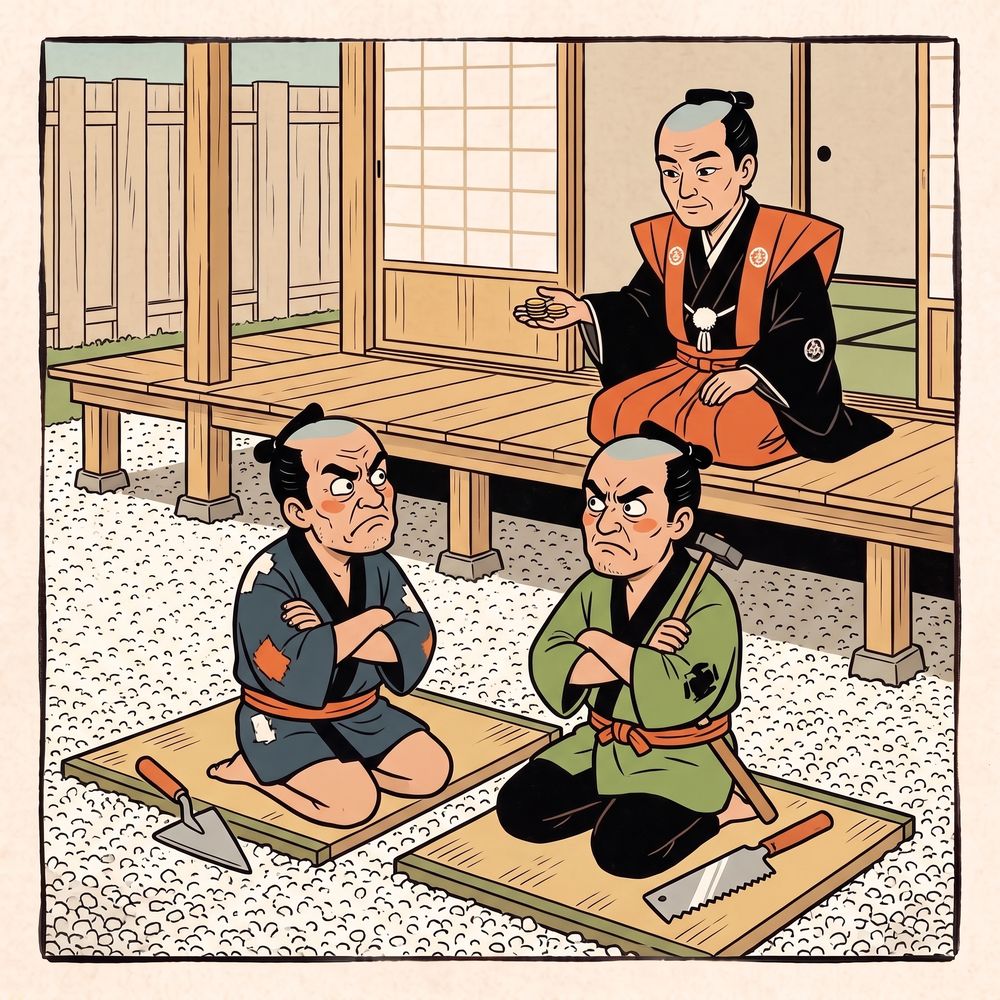
The sage (punch line) treats the exchange of eyes like a “trade-in,” where a shop takes back your old item when you buy a new one. It was devised by Katsura Yonedanji IV, the teacher of Katsura Beicho III. The original story went on further. Sadajiro, given Kagekiyo's eyes, is possessed by Kagekiyo's temper as well; on the way home he storms into a daimyo's procession and announces himself just like Kagekiyo in kabuki. The lord says, “Have you lost your mind?” and the original sage is his reply, “No, I've changed my eyes.” In Tokyo, Katsura Bunraku VIII used no sage and ended the story as a human drama with the joy of his eyes opening.
The old version, Yonedanji's sage, and the Tokyo version
A short tale that was only about receiving Kagekiyo's eyes became a full-length story in Kamigata, and took on the color of a human drama when it moved to Tokyo. The old Kamigata version was carried on by Hayashiya Somemaru III, and Katsura Beicho III performed it with several different endings. Other stories in which faith opens a person's eyes are Shingan (The Mind's Eye) and Kokkei Kiyomizu.
| Kamigata | Tokyo (Katsura Bunraku VIII and others) | |
|---|---|---|
| First vow | The Kannon of Yanagidani | Nitcho-sama in Akasaka |
| Where he goes for a hundred days | Kiyomizu-dera in Kyoto | The Kiyomizu Kannon-do in Ueno |
| The danna who helps him | Jinbei | Mr. Ishida |
| Ending | In the old version, Kagekiyo possesses him and he storms into a daimyo's procession, ending with the sage “No, I've changed my eyes.” From Katsura Yonedanji IV on, it ends with the Kannon's sage, “Leave the trade-in eyes behind” | It is cut off as a human drama when his eyes open |
| Performers | The old version was carried on by Hayashiya Somemaru III. Katsura Beicho III performed it with Yonedanji's sage, and also in the old version and in the cut-off form | Sanyutei Enba III brought it to Tokyo, and Katsura Bunraku VIII polished it |
Key scenes original dialogue written for this site
The blunder at Yanagidani
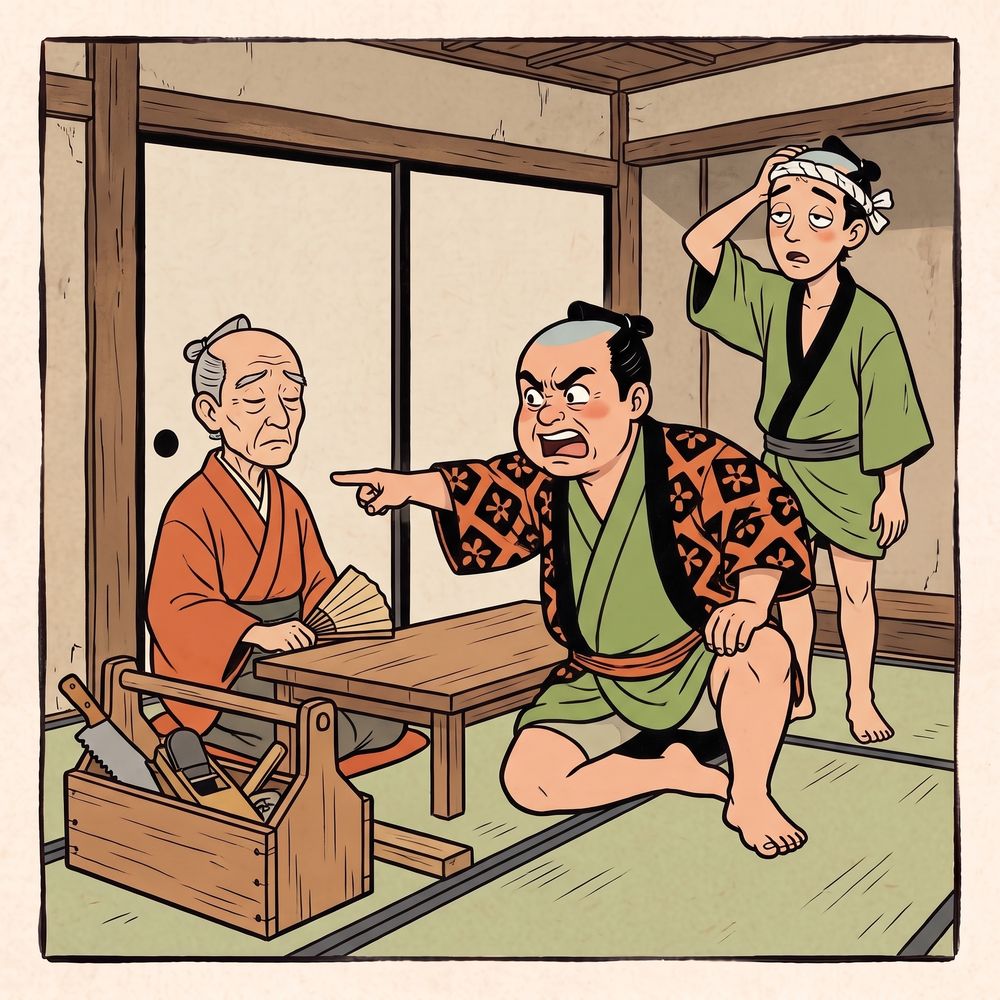
- JinbeiYou went to Yanagidani for twenty-one days, didn't you? So, how did it go?
- SadajiroWell, sir, on the last day, things started to get dimly bright.
- JinbeiOh? So it was working.
- SadajiroThere was a young lady praying right beside me, just like me. We got to talking, and at the foot of the mountain we had just one drink...
- JinbeiAnd the money for that one drink came from where?
- Sadajiro...From the Kannon's box, just a little.
- JinbeiNo wonder your eyes closed up again.
Tears on the hundredth day
- SadajiroKannon, today makes a hundred days. Not a word out of you? What do you mean by this?
- JinbeiHey, you'll be punished for that. This is where you put your hands together.
- SadajiroSir... my mother's been sewing me a kimono for today. She's cooked red rice, and she's waiting. And I can't even see the pattern.
- (He slowly wipes his unseeing eyes with his sleeve.)
- JinbeiAll right, all right. I'll take care of your mother, whatever it takes. From tomorrow, we'll come here together again.
After the thunder
- SadajiroSir... sir? Nobody's here. And where did my stick go?
- KannonSadajiro.
- SadajiroHuh? Who might you be?
- KannonIn recognition of your mother's faith, I shall lend you eyes. They are the eyes Kagekiyo offered long ago.
- SadajiroKagekiyo's... Well, those must be eyes with plenty of years on them.
This is not a transcription of any storyteller's performance. The plot and the sage follow the classic version. All lines were written for this site.
Notable performers
- Sanyutei Enba III1882–1945Kamigata and EdoBorn in Osaka. He brought the Kamigata Kagekiyo to Tokyo, and it is counted among the stories he was known for.
- Katsura Bunraku VIII1892–1971EdoHe polished this story in Tokyo and was known for it. He used no sage and ended it as a human drama, and in his later years he performed it without mentioning Kagekiyo's name.
- Katsura Yonedanji IV1896–1951KamigataHe devised the Kannon's sage, “Leave the trade-in eyes behind.”
- Hayashiya Somemaru III1906–1968KamigataHe carried on the old Kamigata version, in which Kagekiyo possesses Sadajiro and he storms into a daimyo's procession. It is counted among the stories he was known for.
- Katsura Beicho III1925–2015KamigataBesides using his teacher Yonedanji's sage, he also performed the old version and the form cut off as a human drama.