Jigoku Bakkei Moja no TawamureThe Dead at Play: Eight Views of Hell
地獄八景亡者戯(じごくばっけいもうじゃのたわむれ)
Kiroku, who died after eating bad mackerel sashimi, is trudging along the road to the land of the dead when he bumps into the old retired master of the Iseya, who died before him. A young master with a party of geisha and taikomochi (professional jesters who entertain at parties) joins them, and they travel from the ferry over the Sanzu River to Meido-suji, a street lined with theaters and yose (variety halls), and on to the court of King Enma. In the second half, four rascals sentenced to hell give the ogres no end of trouble. Performed in full it runs over an hour, one of the big stories of Kamigata.
The story
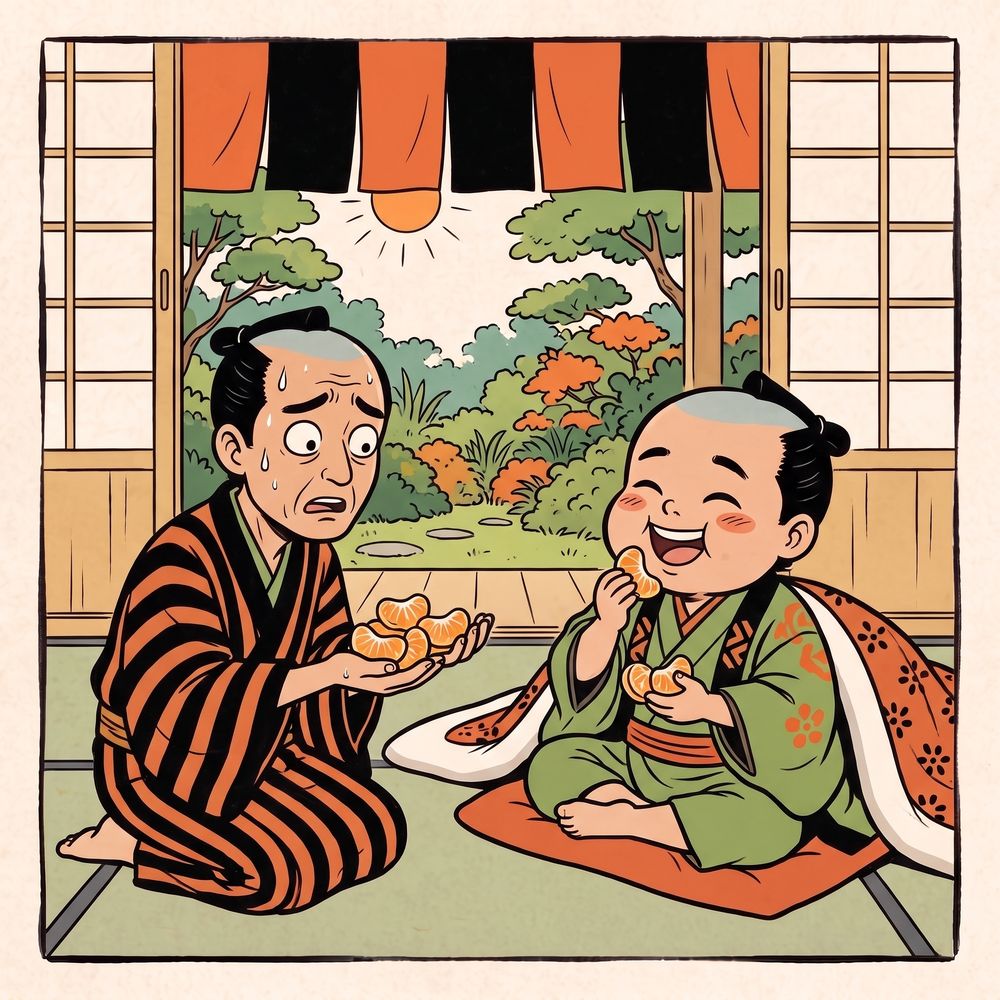
Kiroku, who died after eating bad mackerel sashimi, is trudging along the road to the land of the dead when he meets the old retired master of the Iseya, who died before him. Then along comes a noisy party: a young master with geisha, maiko (apprentice geisha), waitresses and taikomochi (professional jesters who entertain at parties). Wanting to go sightseeing in hell, they all ate fugu (pufferfish) together and came to the other world, a carefree bunch indeed.
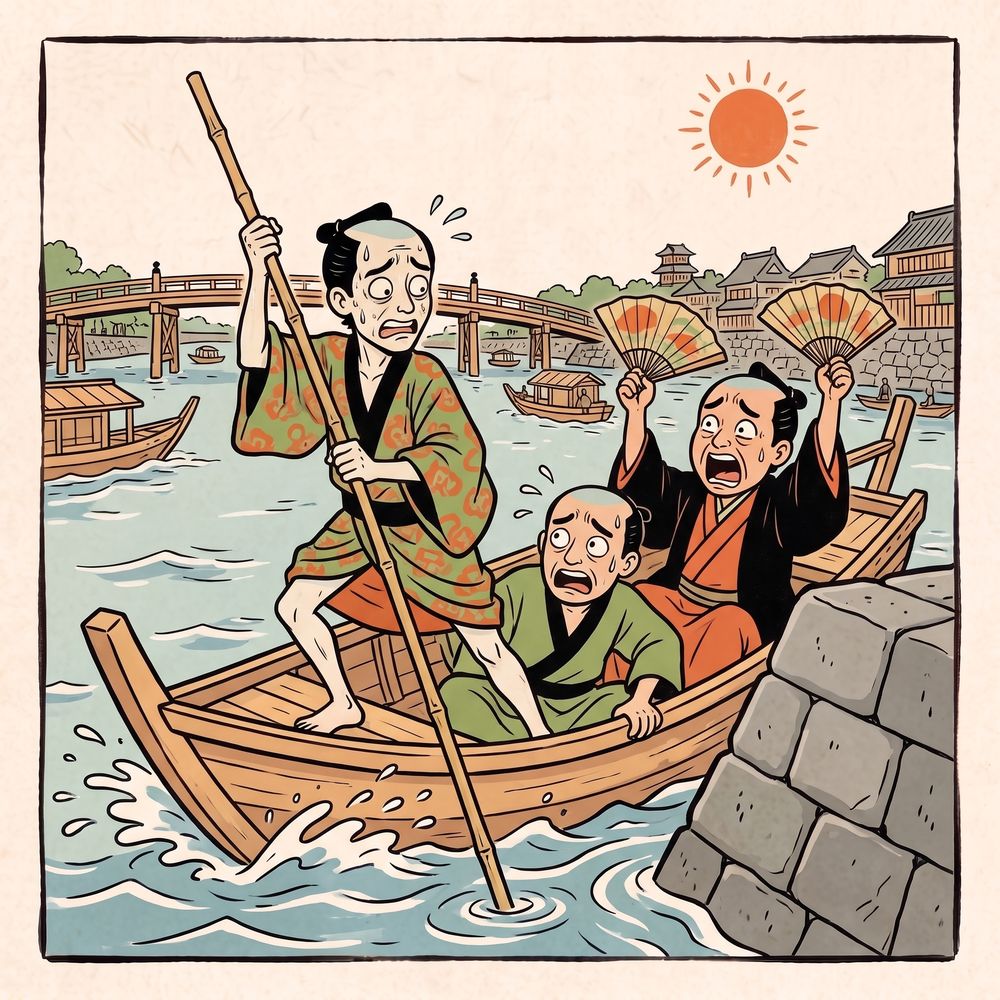
At a teahouse on the bank of the Sanzu River, a girl tells them the life story of Shozuka no Baba, the old woman of the river, and how the ferry has changed over the years. The fare depends on how you died, which causes quite a fuss among the dead. This is where performers get laughs by working in the events of the day.
Across the river, at the crossroads of the Six Paths, the main street of hell, “Meido-suji,” is lined with theaters and yose (variety halls). The theaters are full of great actors who have died, and the yose bill the names of master storytellers from east and west. A familiar gag is for the performer to put up his own name as “appearing soon.”
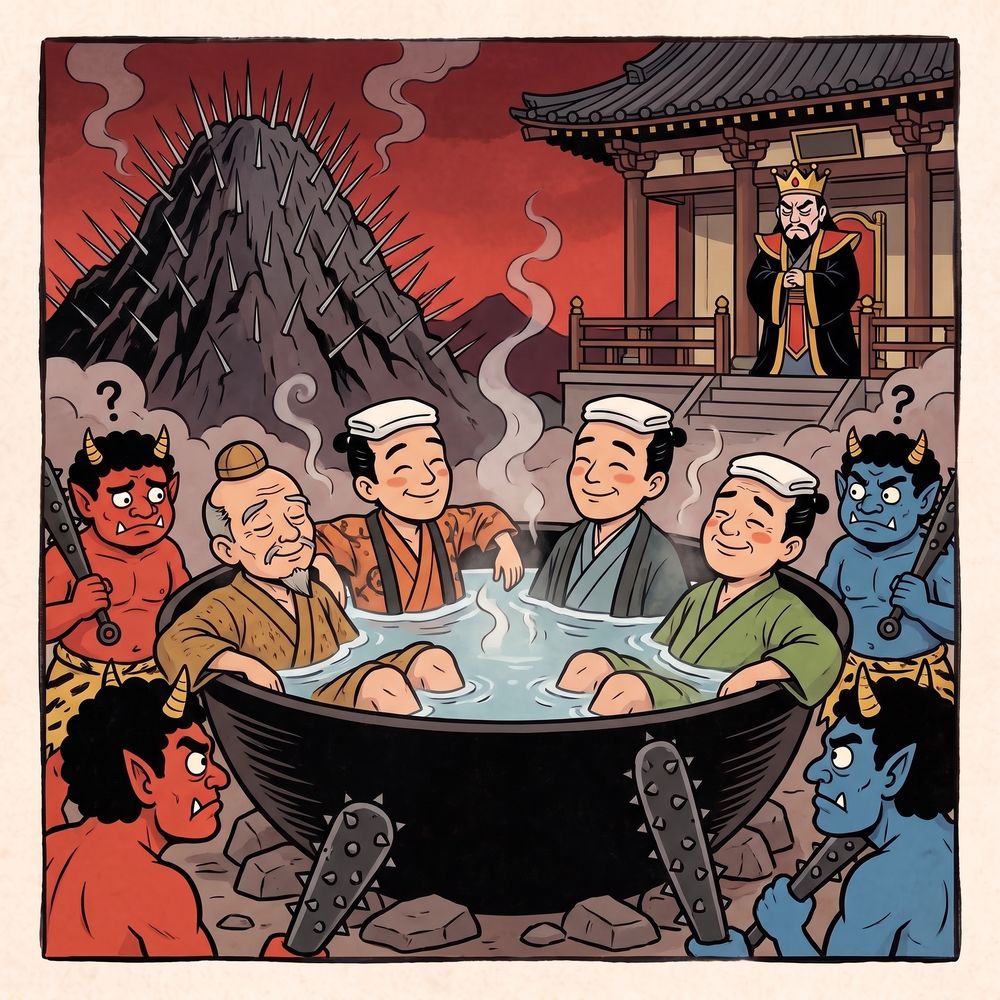
At last the party reaches the court of King Enma. Enma appears with a fearsome face and passes judgment on the dead one after another. Among them, four are sentenced to hell: Horao Fukukai the mountain ascetic, Wayatake no Noraichi the acrobat, Matsui Sensui the tooth-puller, and a doctor. From here on is the second half.
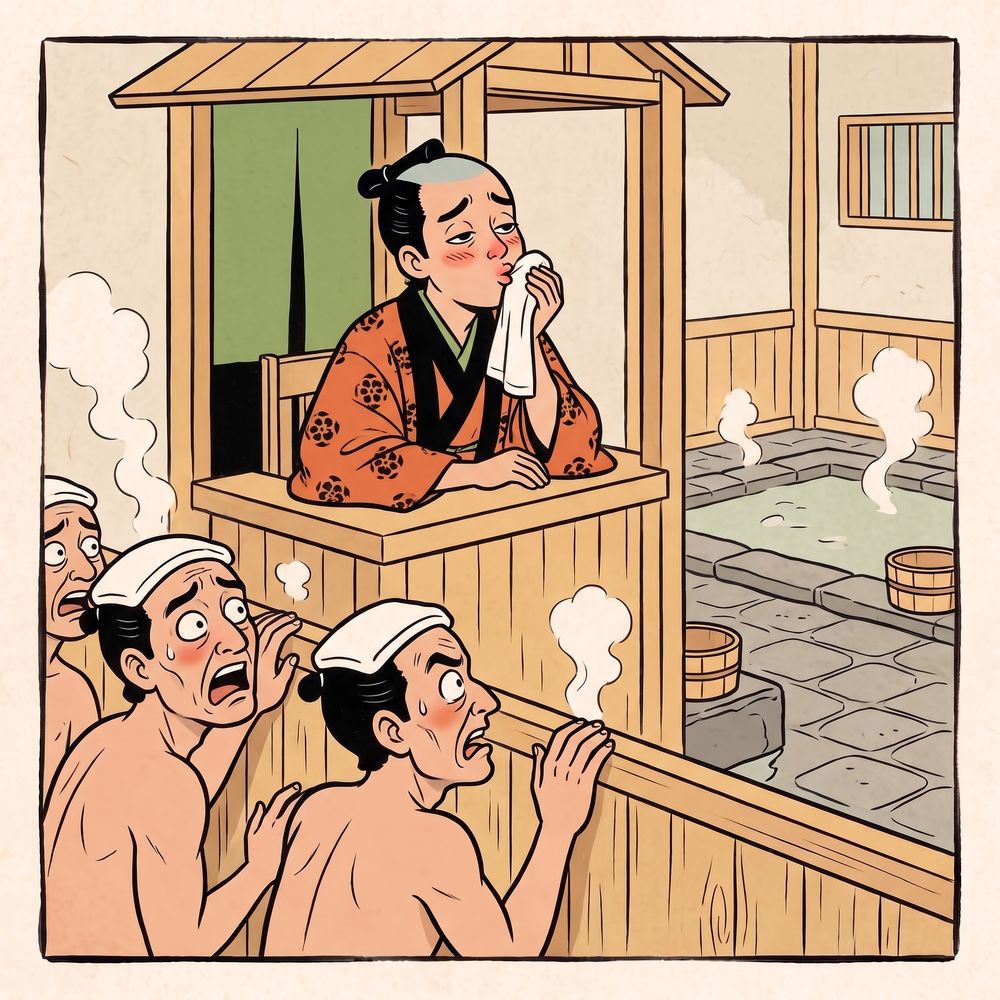
But these four are rascals, every one of them. Thrown into a cauldron of boiling water, the mountain ascetic chants a spell that brings the water to just the right temperature, and they relax as if at a hot spring. On the mountain of needles, the acrobat carries the other three and skips right across. Then the ogres try to feed them to Jindonki, a huge man-swallowing ogre, but the tooth-puller pulls out all of the ogre's teeth.
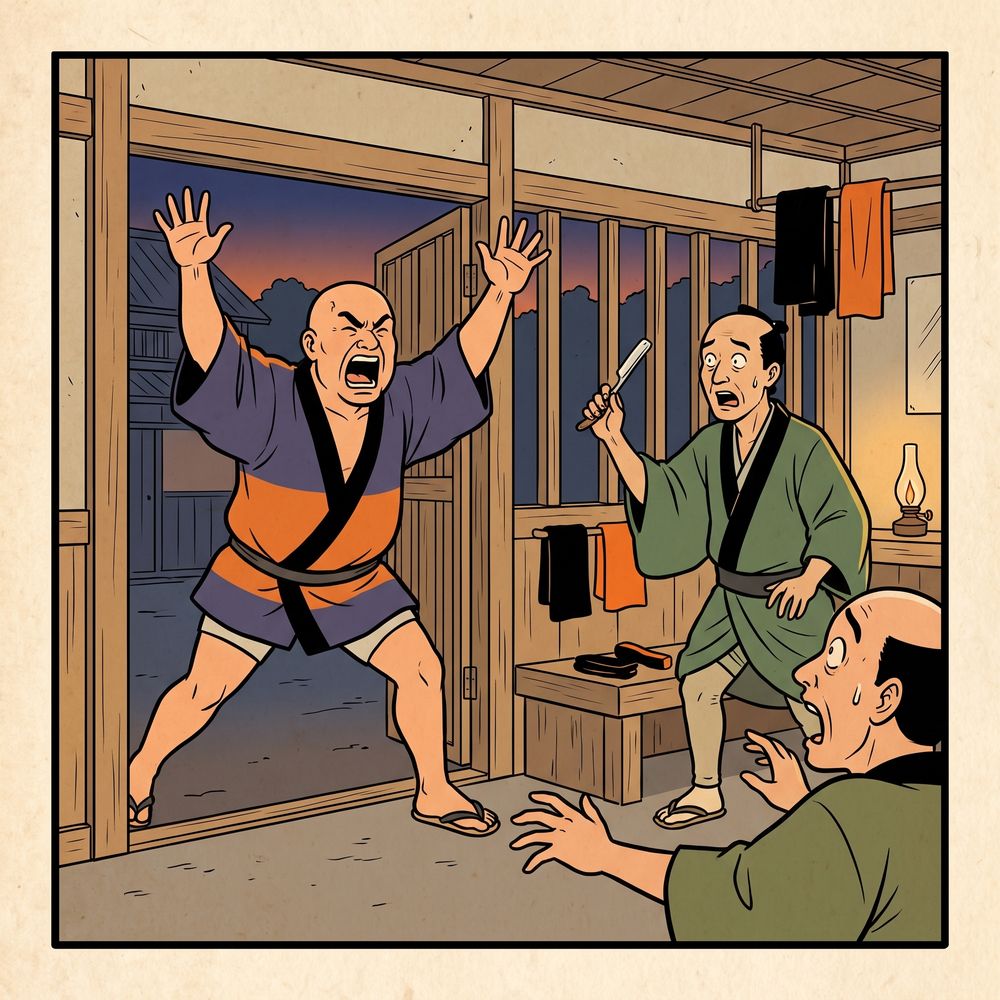
Furious, Jindonki swallows all four whole. But one of them is a doctor. Guided by the doctor, who knows all the cords inside the body, the four pull on cords here and there, and the ogre bursts out laughing, sneezes and breaks wind. Toyed with to his heart's content, Jindonki finally goes crying to King Enma. “It's come to this, Great King. There's nothing for it but to swallow you.” When Enma asks, “And what good will swallowing me do?”...
The sage the punchline, contains spoilers
Tap to reveal the punchline
“I'll swallow the Daio and purge them out!”
A pun on daio, the Great King Enma, and daio (rhubarb root), a Chinese herbal laxative. Because few people today know rhubarb root as a laxative, Katsura Shijaku II changed the ending to draw on the old saying that if you lie, Enma will pull out your tongue. Enma tricks the four into coming out by promising to send them to paradise, and then, for telling a lie, has his own tongue pulled out.
Jigoku Bakkei in Kamigata and Jigoku Meguri in Tokyo
Before the war only a few performers in Kamigata kept this story alive. Katsura Beicho III learned it from Shofukutei Fukumatsu III around 1954-55 and rebuilt it, and his version is the basis of today's “Jigoku Bakkei.” In Tokyo, Sanyutei Enyu I brought it over in the middle of the Meiji era, and the successive holders of the name Enyu performed it as “Jigoku Meguri.”
| Kamigata “Jigoku Bakkei Moja no Tawamure” | Tokyo “Jigoku Meguri” | |
|---|---|---|
| How it was handed down | From Shofukutei Fukumatsu III to Katsura Beicho III. Beicho rebuilt it, and it is carried on mainly by his school | Brought to Tokyo by Sanyutei Enyu I and became a story of the successive Enyu. A recording by Enyu IV survives |
| Opening | Kiroku, who died from bad mackerel, meets the retired master on the road to the land of the dead | In Enyu I's version, two friends take a medicine given to them by a retired master and travel to hell |
| Length | Over an hour when performed in full | Enyu IV's recording differs a little in content and is also shorter |
| Sage | The pun on swallowing the Daio (rhubarb root) and purging. Katsura Shijaku II changed it so that Enma's tongue is pulled out | In Enyu I's 1892 (Meiji 25) transcript, it is revealed that the medicine was “charred Daio,” and the story ends on a pun |
Key scenes original dialogue written for this site
The road to the land of the dead
- KirokuHey, isn't that the old master of the Iseya walking over there?
- Retired masterOh, Ki-san. So you've come this way too?
- KirokuYes, the mackerel sashimi was a bit past it. Master, you were so much help at the funeral... no, wait, I was the one helping at yours.
- Retired masterNever mind. It's not as if we're in a hurry. Let's take our time and go together.
The boiling cauldron
- OgreHere you go, a cauldron at a rolling boil. In you jump.
- Mountain asceticWait, wait. (He forms a sign with his fingers and mumbles a chant.) ...There, you may go in now.
- AcrobatOh, he's right. Not too cool, not too hot. Just the right temperature.
- DoctorThis is good for the body. Get in up to your shoulders and count to a hundred.
- Ogre...Hey, why do I hear humming?
Inside the ogre's belly
- Tooth-pullerIt's awfully dark in here. Doctor, whereabouts are we?
- DoctorAround the entrance to the stomach. Look, that cord hanging there. Give it a pull.
- (He mimes giving it a sharp tug. At once, from outside, comes the ogre's loud laughter.)
- Mountain asceticThat's fun. Then how about this one?
- (He pulls another, and this time an “Achoo!” shakes the whole belly.)
This is not a transcription of any storyteller's performance. The plot and the sage follow the classic version. All lines were written for this site.
Notable performers
- Sanyutei Enyu I1850–1907EdoHe brought this story to Tokyo as “Jigoku Meguri” in the middle of the Meiji era. A transcript of his telling from 1892 (Meiji 25) survives.
- Shofukutei Shokaku V1884–1950KamigataOne of the few performers who kept this story alive before the war. He left SP records of it under the title “Yaji Kita Jigoku no Tabi.”
- Katsura Beicho III1925–2015KamigataHe rebuilt the story he learned from Shofukutei Fukumatsu III into its present form. It is known as his specialty.
- Katsura Shijaku II1939–1999KamigataHe deliberately had King Enma appear with a gentle face, and changed the sage. At his 1984 solo show at the Kabukiza, he performed this story straight through.
- Katsura Kitcho1954–2005KamigataIn the talent show at Enma's court, he acted out his teacher Beicho and other senior storytellers walking onto the stage, complete with their entrance music.