Kubi ChochinThe Head Lantern
首提灯(くびぢょうちん)
Late at night in Shiba, a drunken townsman is asked for directions by a samurai. Taking him for a country bumpkin, the drunk hurls insult after insult, and finally even spits on him. The samurai's sword flashes. The cut is so clean that the man doesn't yet realize he has lost his head...
The story
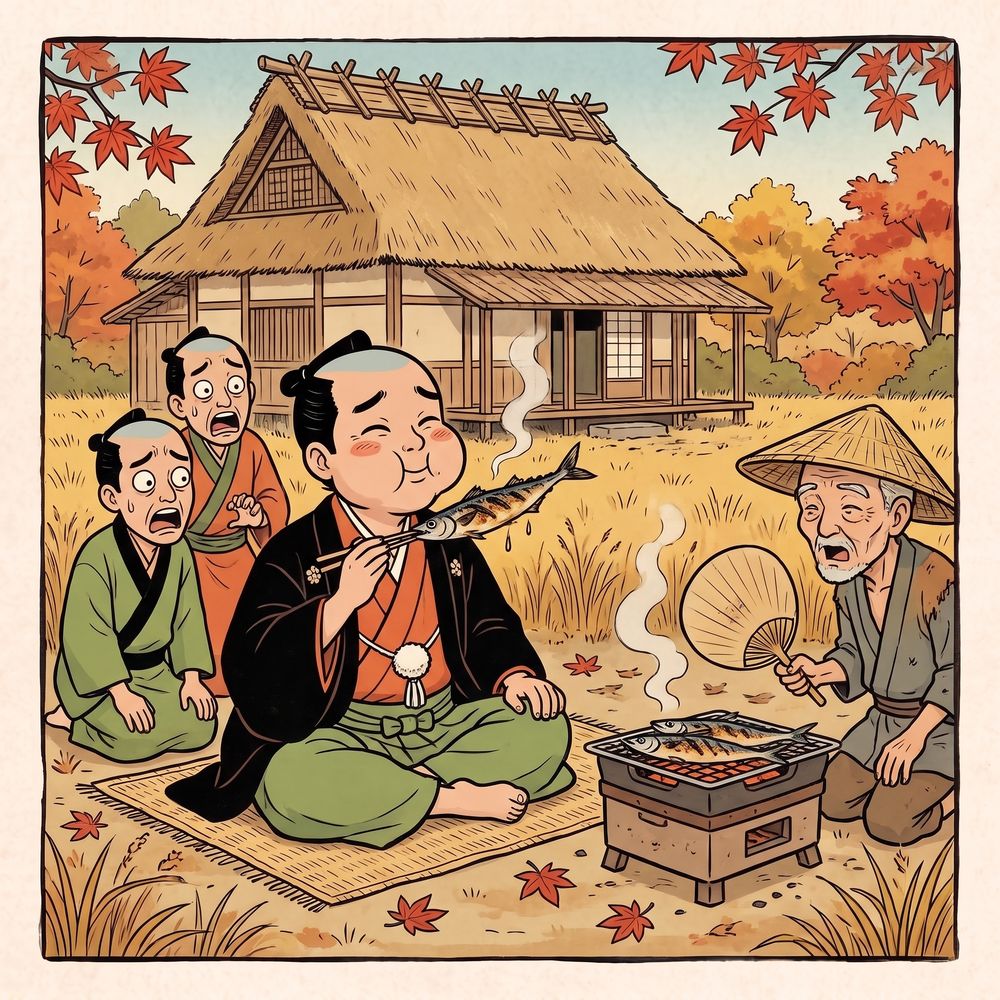
Late at night in Shiba, a happily drunk townsman is walking along when a big samurai asks him the way. Hearing his country accent, the drunk decides he's a bumpkin, and instead of giving directions, starts making fun of him.
The samurai holds his temper, which only encourages the drunk. He mocks everything from the man's clothes to his sword, and finally spits on his crested kimono. Without a word, the samurai draws his sword and returns it to the scabbard faster than the eye can follow, then walks away chanting a Noh song.
Convinced the samurai has backed down, the drunk struts off more pleased with himself than ever. But something feels off about his neck. He touches it and finds it slippery, and his head starts sliding little by little. At last he realizes he's been cut.
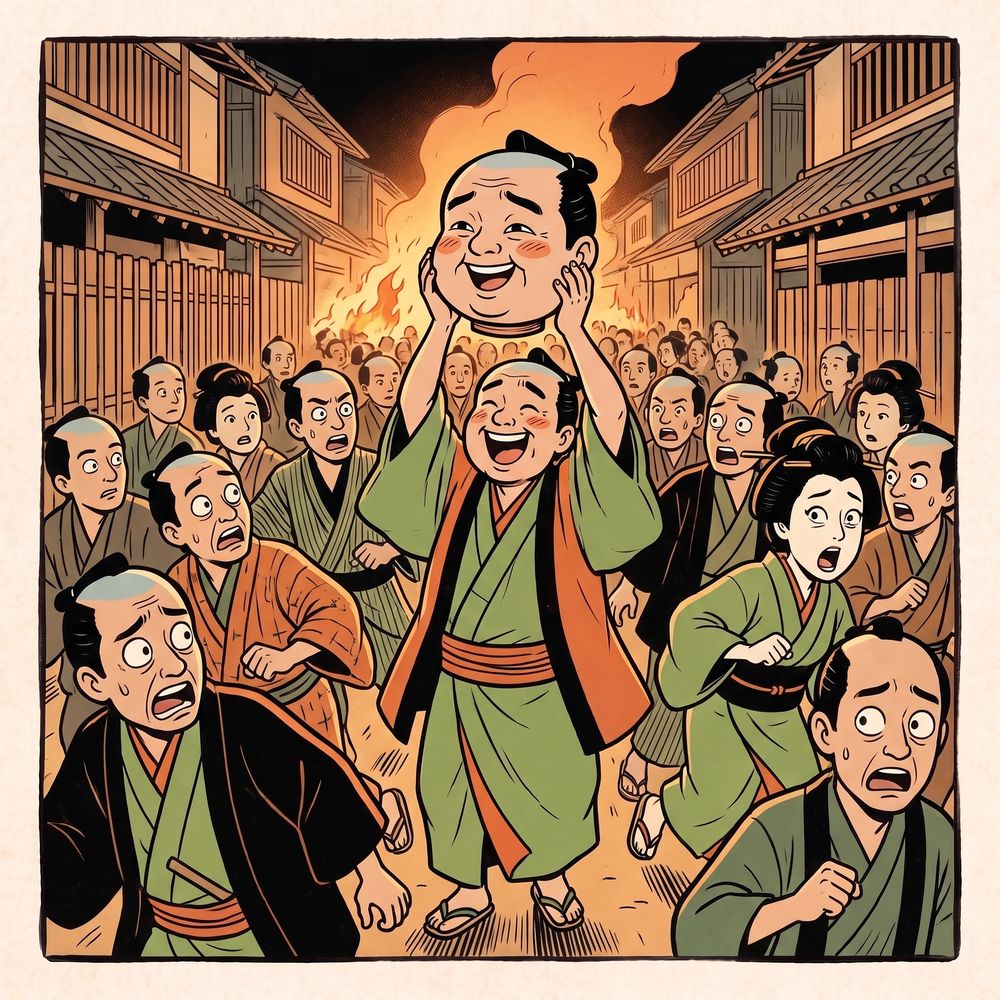
Just then a fire bell rings: there's a fire nearby. The street fills with people running away and people rushing to help, and every time someone bumps into him, his head nearly falls off. Not knowing what else to do, the man lifts his own head up with both hands and...
The sage the punchline, contains spoilers
Tap to reveal the punchline
“Coming through, sorry, coming through!”
The sage (the punchline) is shown through mime: the man holds his head high like a lantern and runs off, pushing through the crowd. In kamigata, the story follows “Jokanya,” in which a customer lingers at a cheap drinking stall; in that version he cuts off a burglar's head with a sword hidden in a cane, and in some tellings the head itself cries out “Fire! Fire!” at the scene of the blaze.
Edo and Kamigata
Both versions share the same gag of not noticing your head has been cut off, but the setup leading to it is completely different in Tokyo and Osaka.
| Edo (Kubi Chochin) | Kamigata (continuing from Jokanya) | |
|---|---|---|
| Setup | A drunk is asked for directions by a samurai at night and insults him | A drunk lingers at the Jokanya drinking stall, then buys a sword-cane at a secondhand shop |
| Who cuts whom | The angry samurai cuts off the drunk's head | The drunk cuts off the head of a burglar who sneaks in |
| Sage | He holds up his head like a lantern and makes his way through the crowd | At the fire, the head serves as a lantern |
Key scenes original dialogue written for this site
A Samurai Asks the Way
- SamuraiYou there, townsman. I wish to ask the way. How might one proceed from here?
- TownsmanOoh, “how might one proceed,” he says. Which mountain did you crawl down from?
- SamuraiHow rude. I am asking you for directions.
- TownsmanDirections? There's plenty of road right under your feet.
A Flash of the Sword
- (The townsman spits. The samurai drops his hips, uses a fan as his sword, and draws and sheathes it in a single instant, with a little “click” of the sword guard made by mouth.)
- Samurai......
- TownsmanHa, he ran off! All talk and no action.
A Wobbly Neck
- TownsmanMy neck feels kind of wobbly. Did I sleep on it funny last night? ...Huh, there's a line running across it.
- (He slides his head sideways bit by bit, his eyes popping in alarm.)
- TownsmanUh-oh. Looks like he got me after all.
This is not a transcription of any storyteller's performance. The plot and the sage are as handed down in the classical tradition; the dialogue was written for this site.
Notable performers
- Tachibanaya Enzo IV1864–1922EdoKnown for expanding a short joke (kobanashi) into a full-length story.
- Sanyutei Ensho VI1900–1979EdoWon the Arts Festival Award for this story.
- Hayashiya Shozo VIII (Hayashiya Hikoroku)1895–1982EdoOne of the performers whose recordings survive.
- Kokontei Shincho III1938–2001EdoOne of the performers whose recordings survive.
- Katsura Shijaku II1939–1999KamigataOne of the performers who told it in the kamigata form.