Toki SobaSoba and the Time Trick
時そば(ときそば)
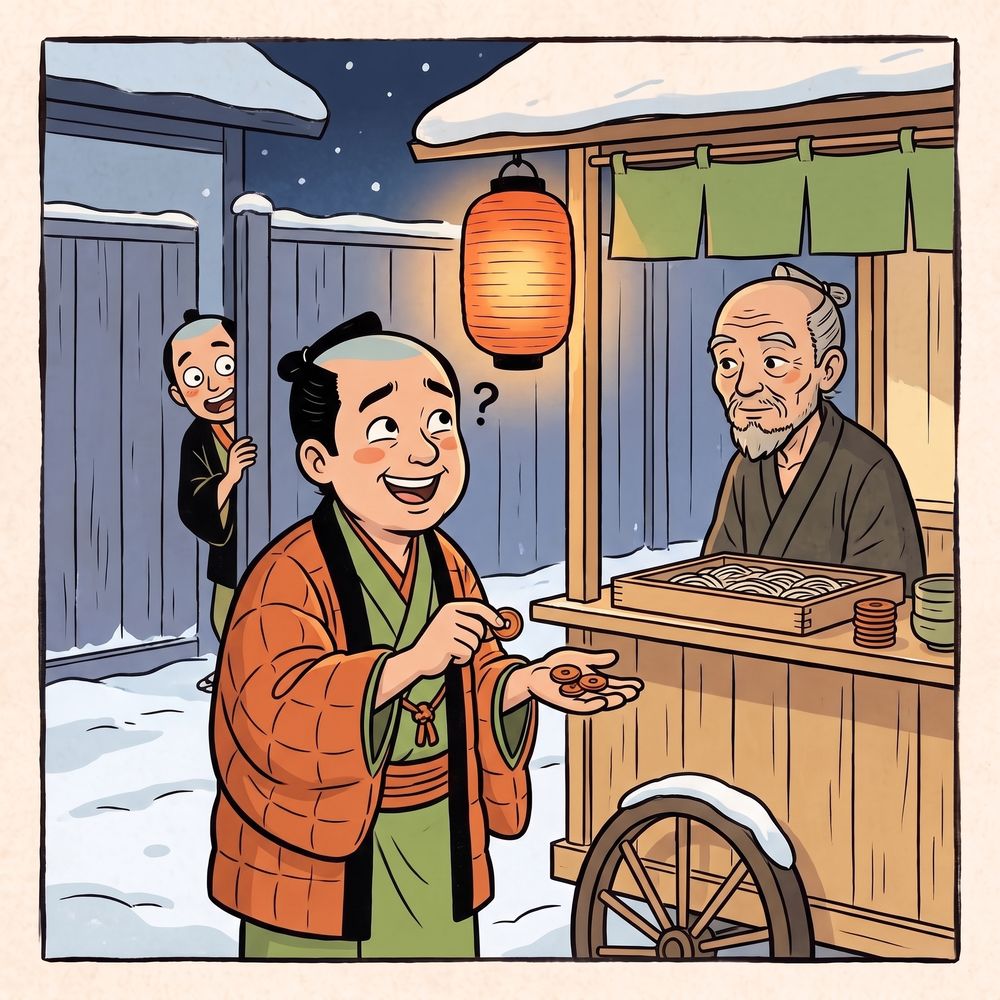
Late on a winter night, a man paying at a soba noodle stall asks "What time is it?" in the middle of counting out his coins, and cheats the seller out of one coin. Another man who saw it all is so impressed that he goes out the next night to copy the trick, but...
The story
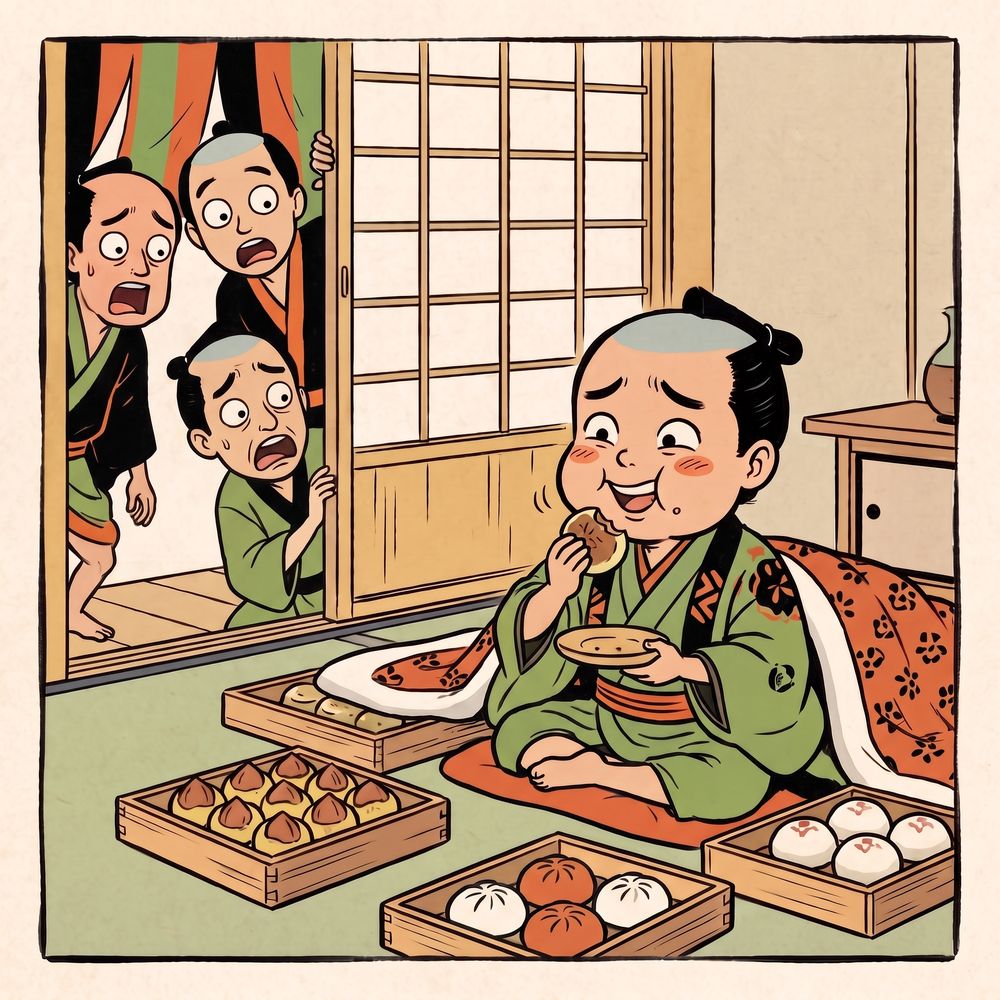
Late on a cold winter night, a man stops a passing nihachi soba stall (a street-side noodle stand). He praises everything: the sign is nice, the chopsticks are fresh disposable ones, the bowl is nice, the broth is nice, the chikuwa (fish cake) is cut thick. Praising all the while, he finishes a bowl.
The bill is sixteen mon. "My change is all small coins, hold out your hand," he says, and counts one-mon coins into the seller's palm one at a time. At eight, he asks, "What time is it?" The seller answers, "It's nine," and the man carries right on, "ten, eleven..." up to sixteen, and is gone. He has cheated the seller out of one coin.
Another man was watching from the shadows. Seeing through the trick, he is deeply impressed, and the next day, unable to wait, he heads out early with a fistful of small coins.
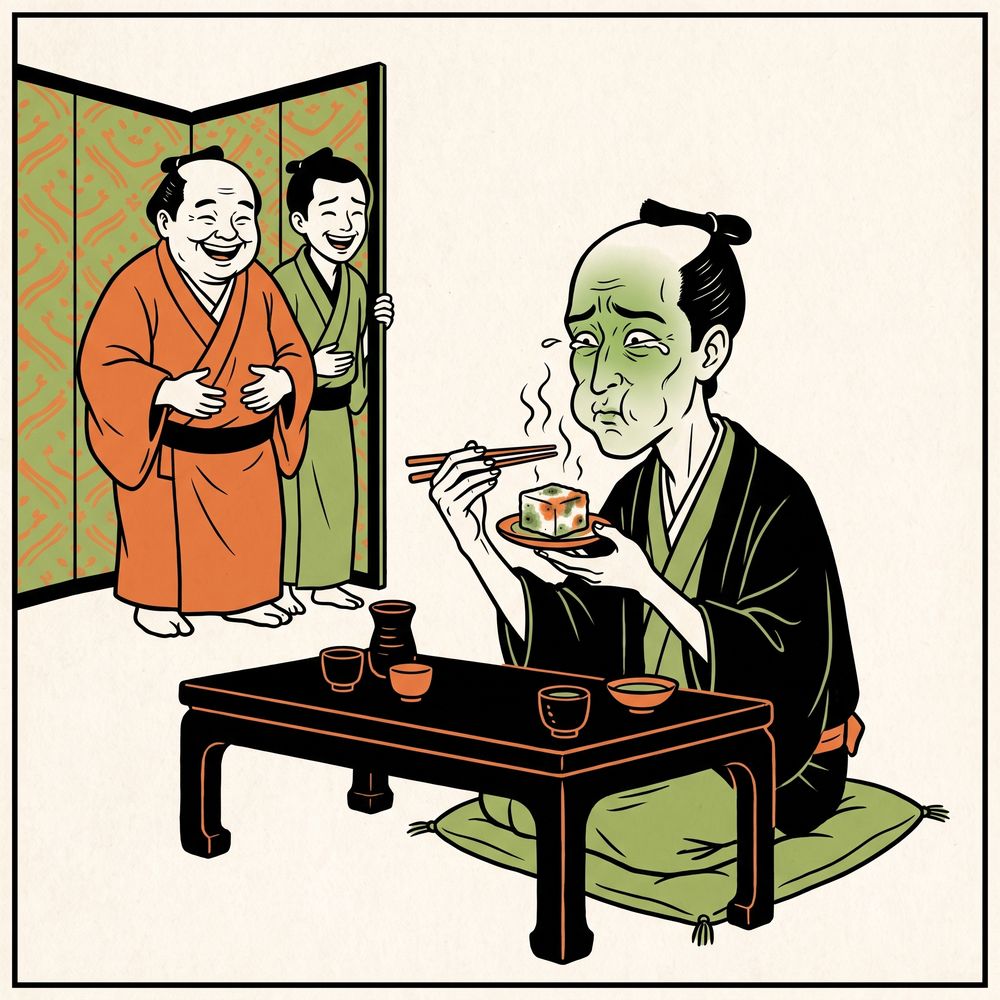
But the stall he finds is awful. The chopsticks have been used before, the bowl is chipped, the broth is too salty, the noodles are soggy, and what he took for chikuwa is a cheap imitation called chikuwabu. Still, he starts counting coins just like the night before, and at eight he asks, "What time is it?"...
The sage the punchline, contains spoilers
Tap to reveal the punchline
"It's four, sir." "Five, six, seven, eight..."
The sage (the punchline) works because Edo-period hours were called by numbers, and at night "four" (around 10 p.m.) came just before "nine" (around midnight). Having gone out too early, the man hears "four," has to keep counting from five, and ends up paying extra instead of cheating. The Kamigata Toki Udon has the same sage.
Toki Soba in the east, Toki Udon in the west
The story was originally the Kamigata Toki Udon, and the setup of the characters changed when it moved to Tokyo. The Kamigata version is distinctive for having two men go to the stall together.
| Toki Soba (Edo) | Toki Udon (Kamigata) | |
|---|---|---|
| What they eat | Nihachi soba from a stall | Udon from a stall |
| First night | One man cheats the seller while another watches from the shadows | Two men, an older and a younger. The older one eats almost all of it and cheats on the bill |
| Second night | The man who watched copies the trick at a terrible soba stall | The younger one goes alone and tries to reenact everything, even his exchange with the older one the night before |
| History | Yanagiya Kosan III is said to have brought it to Tokyo in the Meiji era | There was a time when no one performed it; Katsura Bunshi V is said to have revived it |
Key scenes original dialogue written for this site
The smooth talker
- The manHey, these chopsticks haven't been split yet? Nice. Fresh ones for every customer, that's the way to do it.
- (Using a folded fan as chopsticks, he blows on the hot noodles and slurps them.)
- The manGreat broth too. And you cut the chikuwa this thick? You making any money at all?
Counting the coins
- The manAll I've got is small change, hold out your hand. One, two, three, four, five, six, seven, eight... what time is it?
- Soba sellerIt's nine, sir.
- The manTen, eleven, twelve... sixteen. Thanks for the meal.
The second stall
- The man...The tips of these chopsticks are wet. Has somebody used these?
- Soba sellerSaves me the trouble of washing them.
- The manDon't save trouble there! ...Man, finding something to praise is going to be hard work.
This is not a transcription of any storyteller's performance. The plot, the sage and the way the coins are counted are traditional; the dialogue is written by this site.
Notable performers
- Yanagiya Kosan III1857–1930EdoThe performer said to have brought the Kamigata Toki Udon to Tokyo.
- Katsura Bunshi V1930–2005KamigataSaid to have learned Toki Udon when it was close to dying out and to have revived it.
- Yanagiya Kyotaro1963–EdoHis makura (the opening talk before the story) about croquette soba became a hit.
- Shunputei Shota1959–EdoPerforms it with the plot of the Kamigata Toki Udon; also released on CD.