Funa TokuTokubei the Boatman
船徳(ふなとく)
Tokubei, a disowned young master living as a freeloader at a boat house, announces out of boredom that he will become a boatman. On the Shiman Rokusen Nichi festival day of Asakusa’s Kannon temple, with all the boatmen out, he rows off with two regular customers. But the boat refuses to go straight.
The story
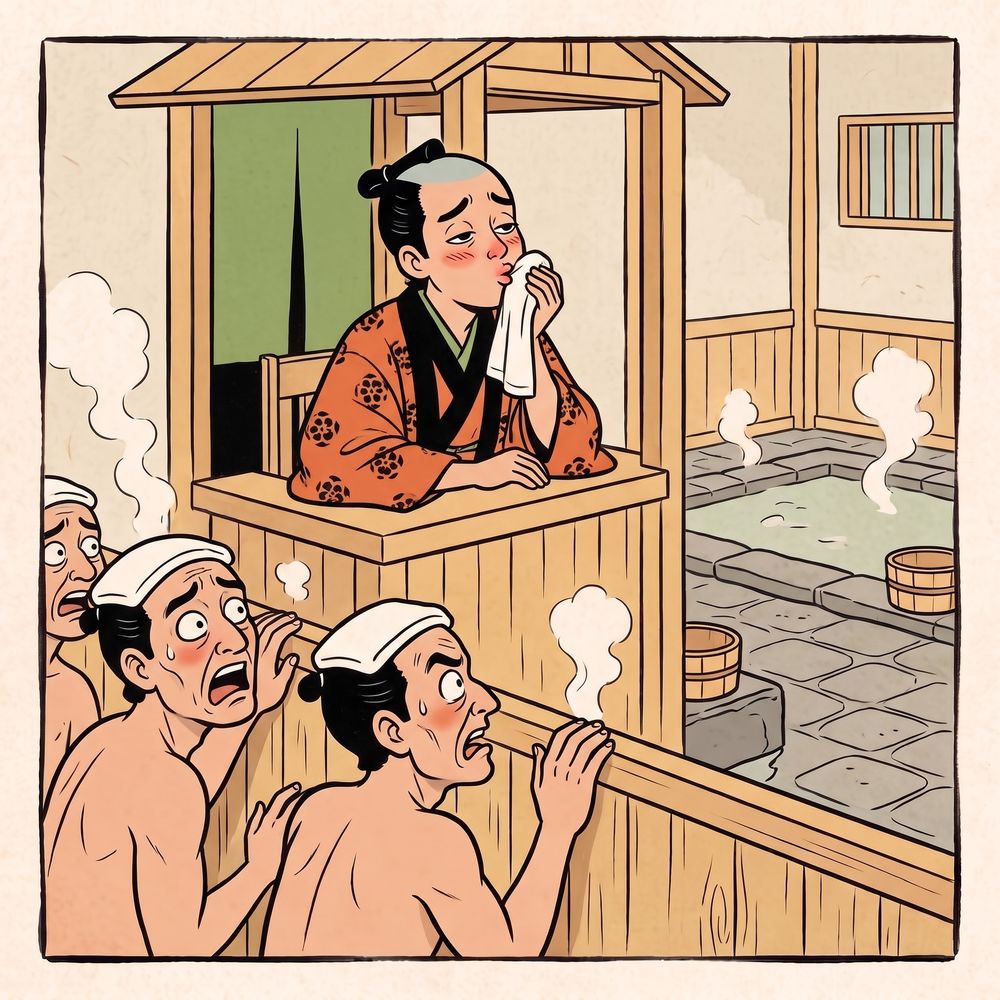
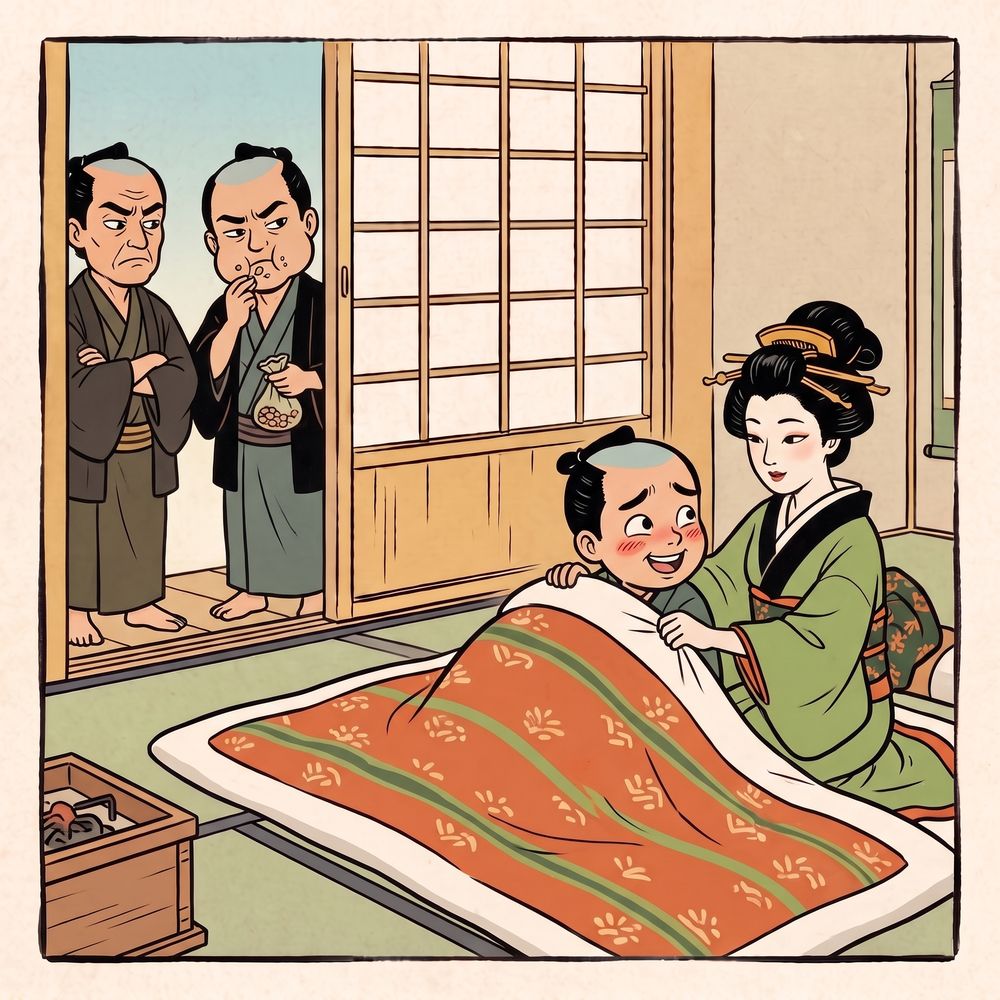
Disowned for his extravagant ways, Tokubei is living as a freeloader at a boat house on the banks of the Okawa. Bored every day, and feeling he owes something to the owner who is putting him up, he begs to be made a boatman. The owner is reluctant, but the boatmen are all for it, so he agrees.
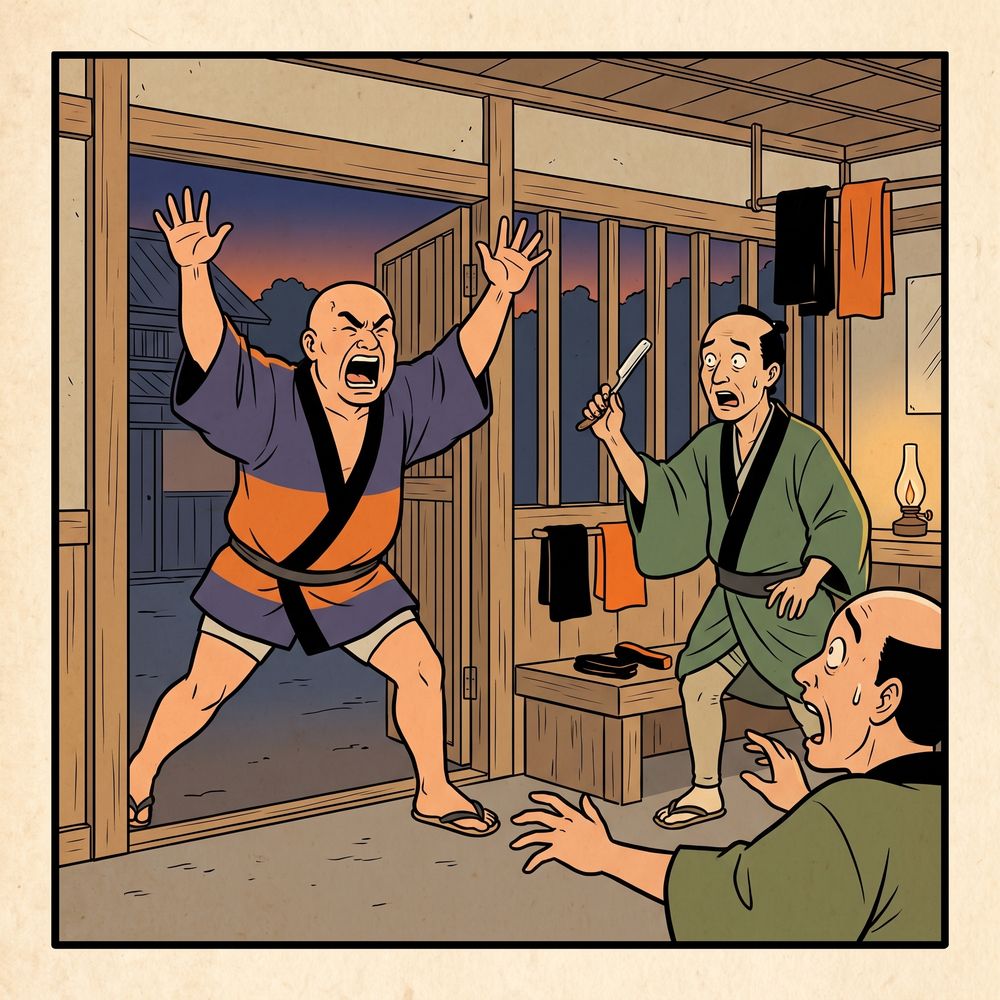
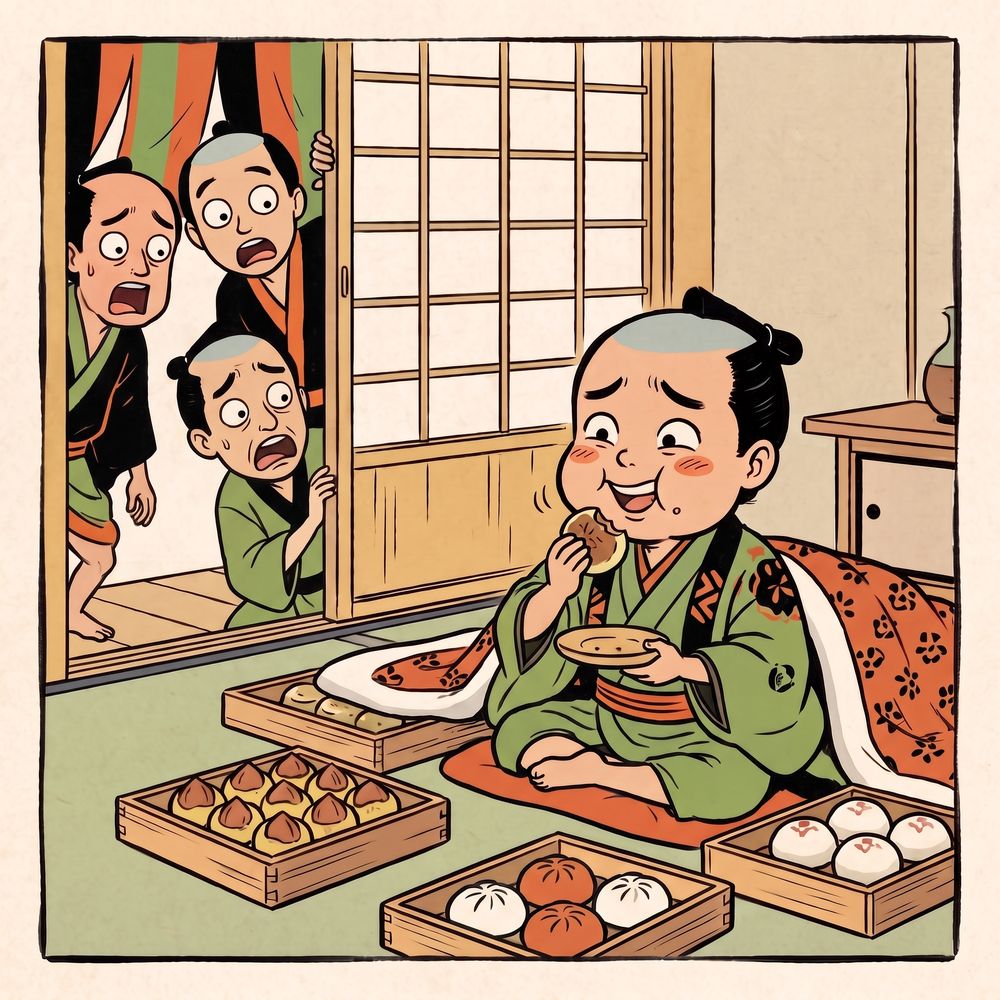
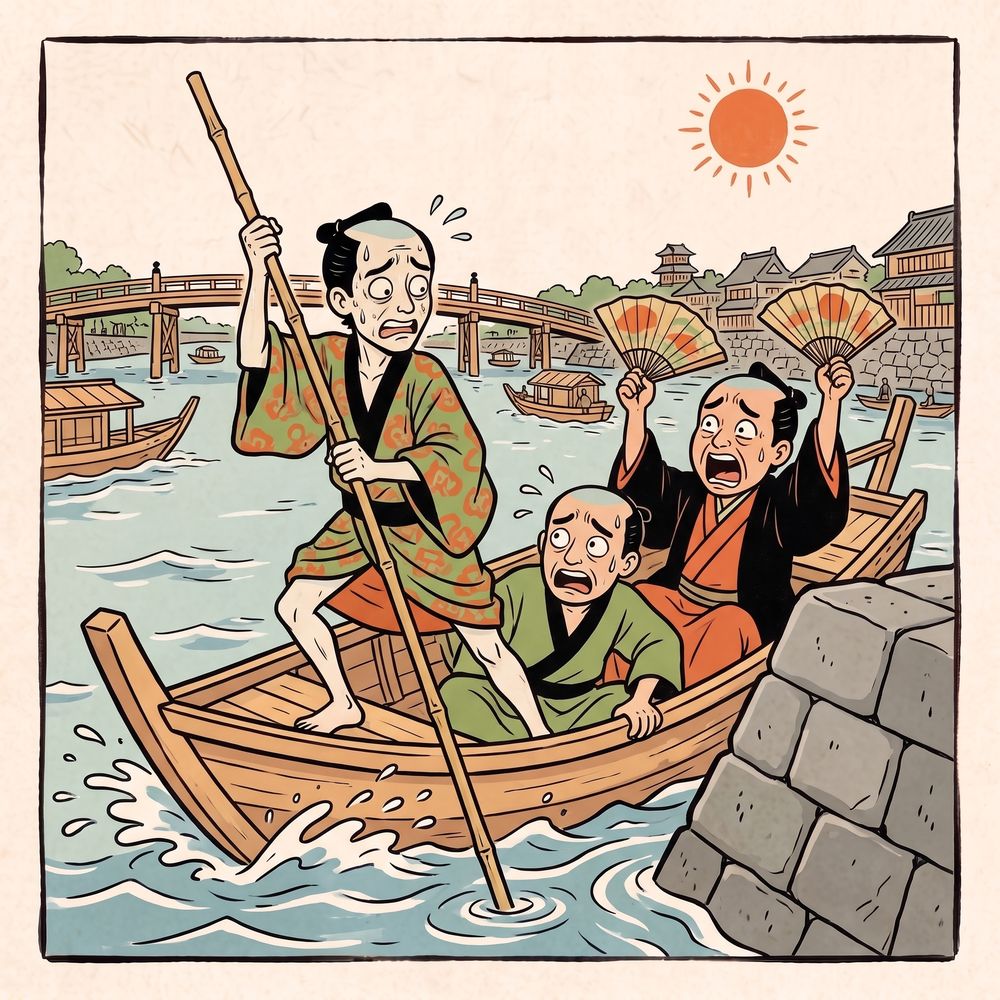
Still, no one wants to hire a young master with no muscle. Then one day at the height of summer comes Shiman Rokusen Nichi, the “46,000 Days” festival at Asakusa’s Kannon temple. All the boatmen are out when two regular customers show up. Ignoring the worried wife, Tokubei eagerly pushes off.
Every time he plants the pole, the boat spins in circles and drifts toward the stone embankment. When a customer asks if they’ll be all right, he answers that last time he dropped a passenger in the river, but today should be fine. The customers are soaked in sweat from the heat and the fear.
At last they make it to the far bank, but Tokubei is exhausted. He helps the customers ashore and, gasping for breath, makes one request...
The sage the punchline, contains spoilers
Tap to reveal the punchline
“Once you’re ashore, sir, could you please hire a boatman?”
The sage (the punchline): though he himself is the boatman, Tokubei has no strength left to row back, so he begs the customers to hire another boatman for him. In another version, he loses the oar, and when a customer wades into the river, Tokubei tries to get a piggyback ride. Takigawa Rissho sets up Tokubei as the young master of a pawnshop from the start, and ends with a customer, seeing Tokubei abandon his job, saying, “He let his customers lapse, too.” This plays on nagasu, which means both “to wash away” and “to let a pawned item lapse.”
From Sentimental Story to Comic Story
Funa Toku grew out of a long ninjo-banashi, or sentimental story, that borrowed the names of characters from Chikamatsu Monzaemon’s The Love Suicides at Sonezaki. In the Meiji era, Sanyutei Enyu I took out the opening section and added the gags popular at the time, turning it into a comic story.
| Ohatsu Tokubei Ukina no Sanbashi | Funa Toku | |
|---|---|---|
| Type | Ninjo-banashi (sentimental story) | Kokkei-banashi (comic story) |
| Length | Long, multi-part | A single performance |
| Names | Borrows the names Ohatsu and Tokubei from The Love Suicides at Sonezaki | Keeps the name Tokubei for the young master hero |
| How it came about | The original long story | Sanyutei Enyu I reworked the opening section |
Key scenes original dialogue written for this site
Wanting to be a boatman
- TokubeiBoss, make me a boatman.
- OwnerYoung master, a boatman’s job is hard labor. Have you ever lifted anything heavier than chopsticks?
- TokubeiI used an abacus every day.
Shiman Rokusen Nichi
- CustomerHot, isn’t it? Missus, can you give us a boat?
- Owner’s wifeI’m afraid our young men are all out at the moment...
- TokubeiI’m here!
- Owner’s wifeThat’s what worries me.
Out on the river
- CustomerHey, haven’t we been going around in the same spot for a while?
- TokubeiThe boat won’t do what I tell it.
- (He grips the pole with both hands, drops his hips and sways his whole upper body with the rocking of the boat.)
- CustomerThe wall! We’re going to hit the stone wall!
This is not a transcription of any storyteller's performance. The plot and the sage follow the classic version. The dialogue was written for this site.
Notable performers
- Katsura Bunraku VIII1892–1971EdoHis performances were highly praised for their portrayal of boat house life and the heat of an Edo summer, and he is also known for his opening lines evoking the heat of Shiman Rokusen Nichi.
- Kokontei Shincho III1938–2001EdoOne of the performers whose audio and video recordings survive.
- Yanagiya Kosanji X1939–2021EdoOne of the performers whose recordings survive.
- Yanagiya Sankyo1948–EdoKnown as one of his signature pieces.