DouguyaThe Junk Dealer
道具屋(どうぐや)
Yotaro is twenty and still does nothing but loaf around, so his uncle puts him to work running his secondhand side business. Everything on display is useless. And with every customer who comes along, Yotaro's answers drift further off the mark...
The story
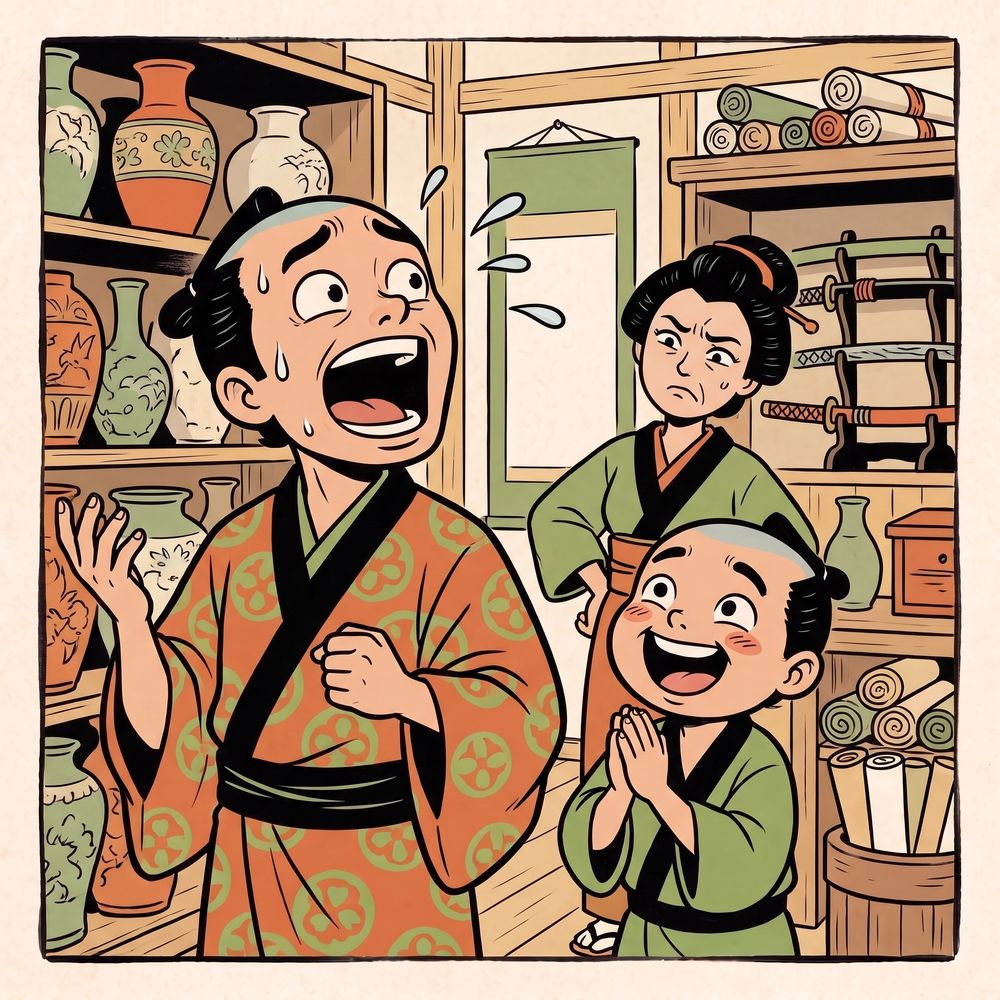
Yotaro's uncle, a landlord in Kanda, worries about his nephew, who does nothing but loaf around, so he decides to let him run the secondhand business he keeps on the side. If Yotaro sells things for a little more than they cost, he can keep the difference as pocket money.
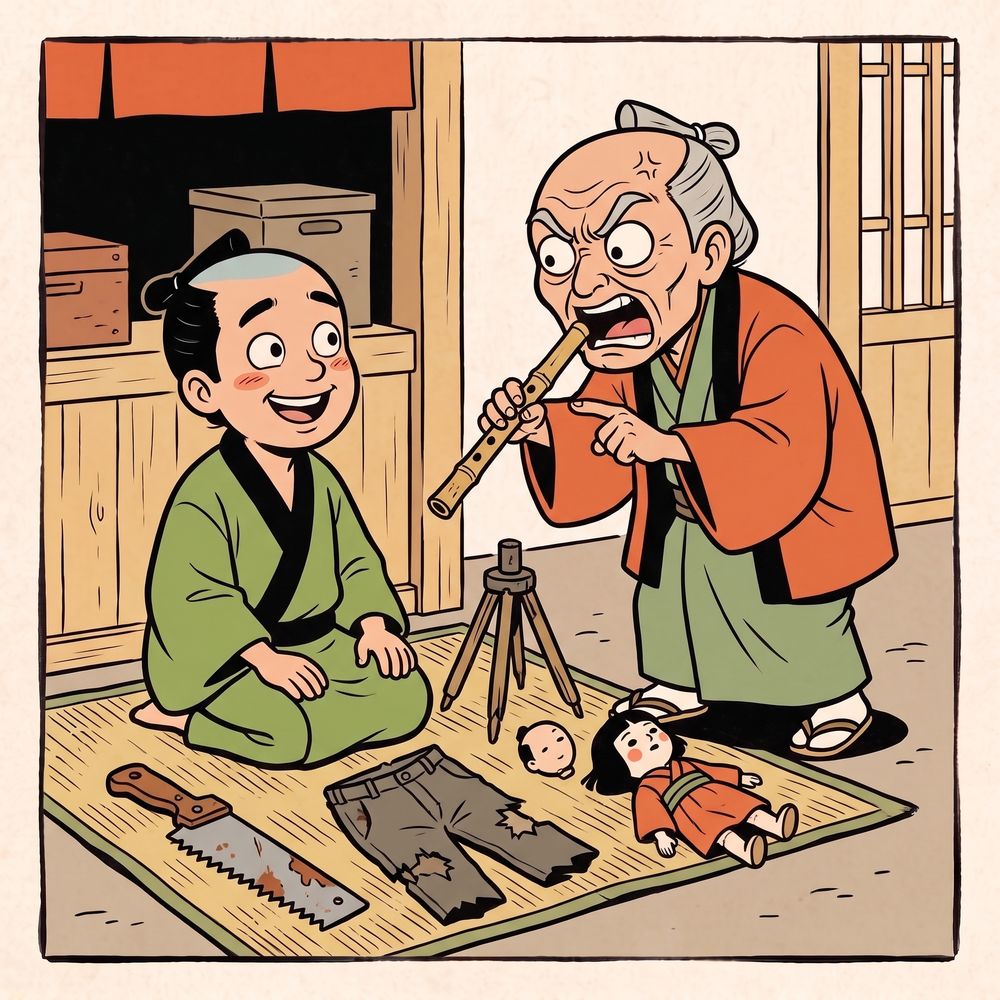
But the goods he's handed are all junk: a saw picked up at the site of a fire, a pair of workman's tights that rip at the slightest strain, things with broken-off legs, a hina doll whose head is about to come off. Yotaro lays them out at a street stall in Kuramae, and the dealer next door teaches him the tricks of the trade.
A carpenter leaves without buying after Yotaro blurts out where the saw came from. A cart puller is driven off by a single remark, “No peeing.” With a gentleman from the country, the talk of prices never connects at all. Finally an old man picks up a flute, sticks his finger in a hole and can't get it out. The old man resigns himself to buying it, and Yotaro names an outrageous price. Furious, the old man says, “You looked at my feet!” (ashimoto wo miru, “to look at someone's feet,” means to take advantage of their weak spot). To which Yotaro replies...
The sage the punchline, contains spoilers
Tap to reveal the punchline
“No, sir. I looked at your hand.”
The sage (the punchline) takes the idiom ashimoto wo miru (look at someone's feet, meaning to exploit their weakness) and swaps “feet” for temoto, “hand,” since it's the old man's finger that's stuck. Because the story can be cut off anywhere, some performers end it with the cart puller or the gun scene instead.
Customers and goods
This story strings together old kobanashi, so each customer brings a self-contained laugh. A typical run in the Edo version goes like this.
| Customer | Item | The gag |
|---|---|---|
| A master carpenter | Saw | Yotaro confesses he picked it up at a fire, and the carpenter leaves without buying |
| A cart puller | Workman's tights | Takes “tako” in “show me the tako” to mean an octopus. His line “No peeing” causes a misunderstanding |
| A gentleman from the country | A sword, a gun and more | The sword that won't come out is a wooden sword. Asked the price of a gun, he takes the words in a different sense |
| A retired old man | Flute | Names a sky-high price to a customer whose finger is stuck |
Key scenes original dialogue written for this site
Uncle's merchandise
- UncleThis saw, now. I found it at a fire and had the teeth sharpened again.
- YotaroHuh, a saw that got burned out of its home. It's had a hard life.
- UncleAnd watch those tights. If you stumble, they'll go riiip.
- YotaroYou're selling those?
The sword that won't budge
- GentlemanI'd like a look at the blade of that sword.
- (Each grabbing one end of the scabbard, the two of them heave and tug.)
- GentlemanMy, it's tight. Is it rusted in?
- YotaroNo, sir, it's made of wood.
The flute and the finger
- Old manIt's covered in soot. Let me just clean it out... oh? My finger's stuck.
- YotaroIf it won't come out, I guess you're buying it.
This is not a transcription of any storyteller's performance. The plot and sage follow the classic version; the dialogue was written for this site.
Notable performers
- Sanyutei Kinba III1894–1964EdoKnown as one of the stories in his repertoire.
- Katsura Bunji X1924–2004EdoOne of his favorite pieces. He was known as a master of comic stories.
- Katsura Shijaku II1939–1999KamigataKnown as one of the stories in his repertoire.
- Hayashiya Kikuo1937–EdoAlso known for working in whatever was popular at the time.