NozarashiBleached Bones
野ざらし(のざらし)
Late at night, a woman's voice comes from the room of the masterless samurai next door, a man known to have no interest in women. When Hachigoro presses him, he learns that a skull the samurai gave a memorial to at Mukojima came to thank him. Ghost or not, Hachigoro doesn't care. He borrows a fishing rod and races off to the Sumida River...
The story
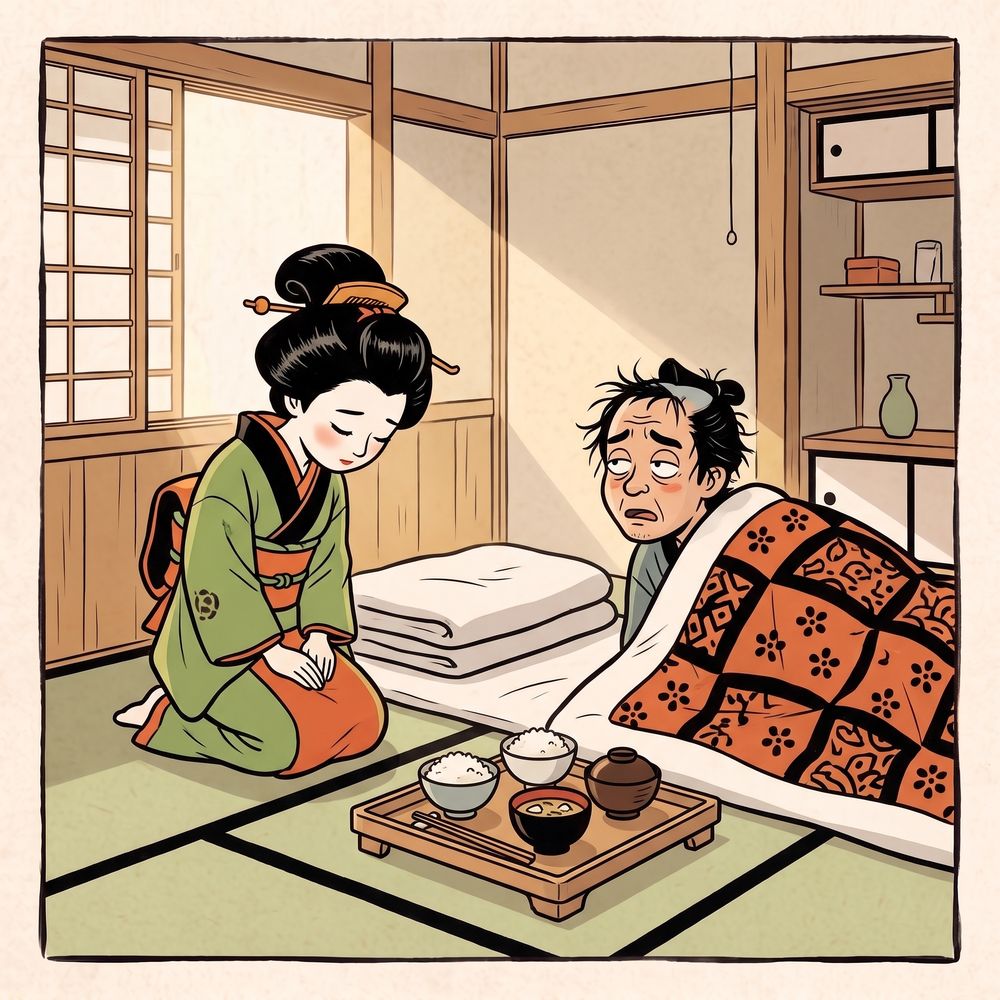
One night as Hachigoro is lying in bed, he hears a woman's voice from the room of his neighbor, Ogata Seijuro, a masterless samurai known for disliking women. The next morning, Hachigoro confesses that he peeked through a hole in the wall and grills him about it, and Ogata reluctantly explains.
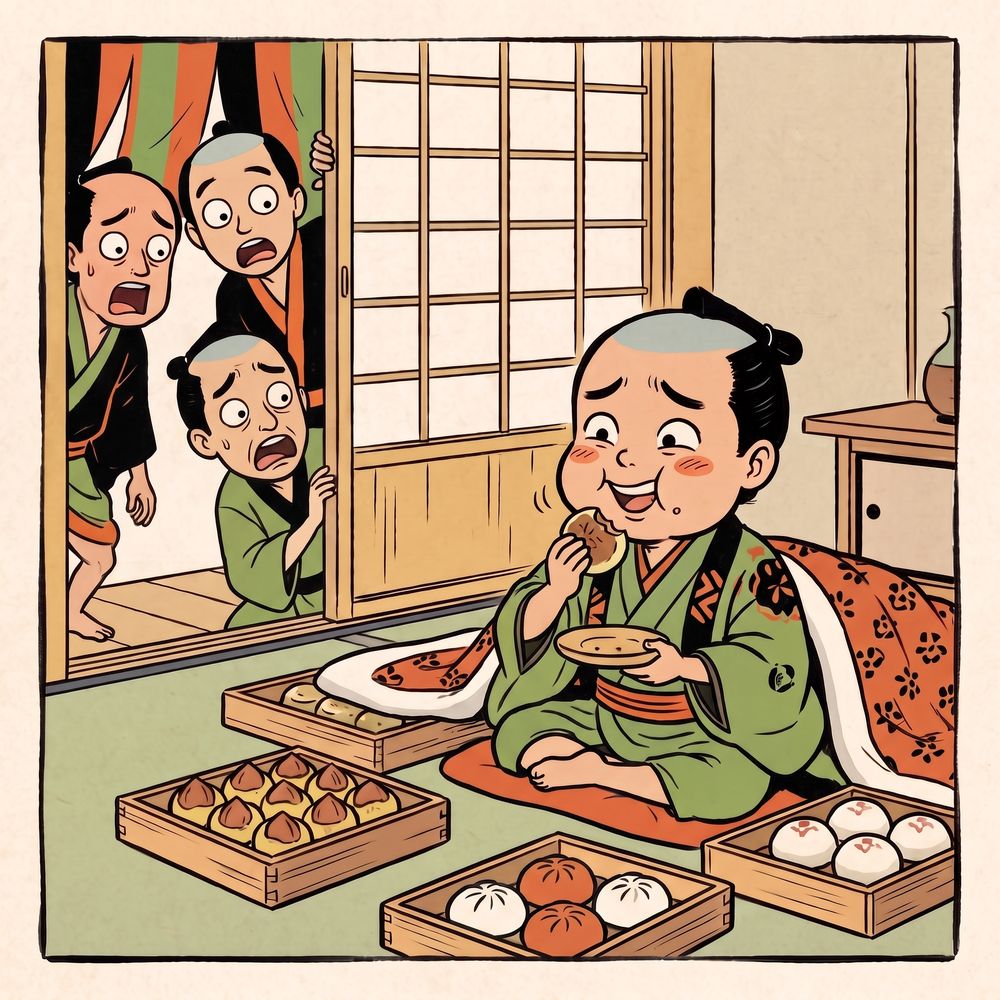
On his way back from fishing at Mukojima, he found a skull lying exposed in the field. He poured sake over it, composed a memorial verse and gave it a proper send-off. And then, he says, the owner of those bones came to thank him.
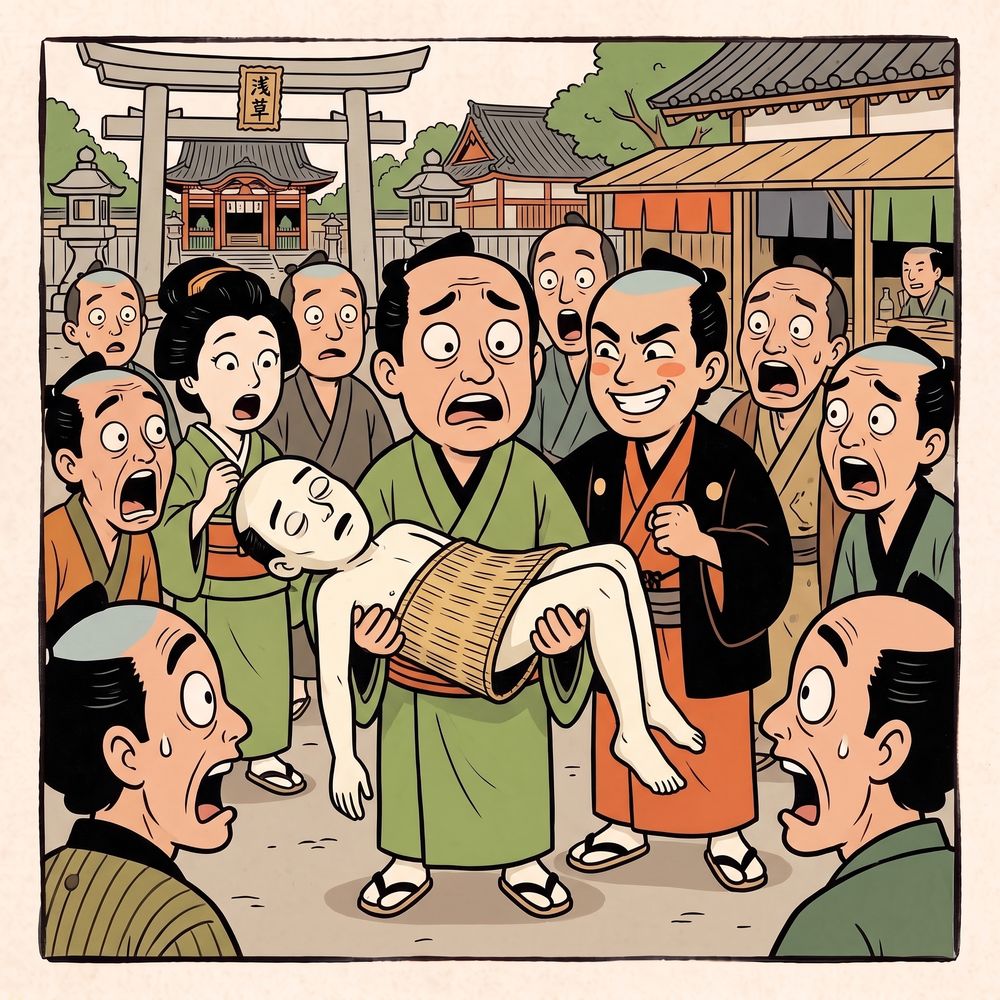
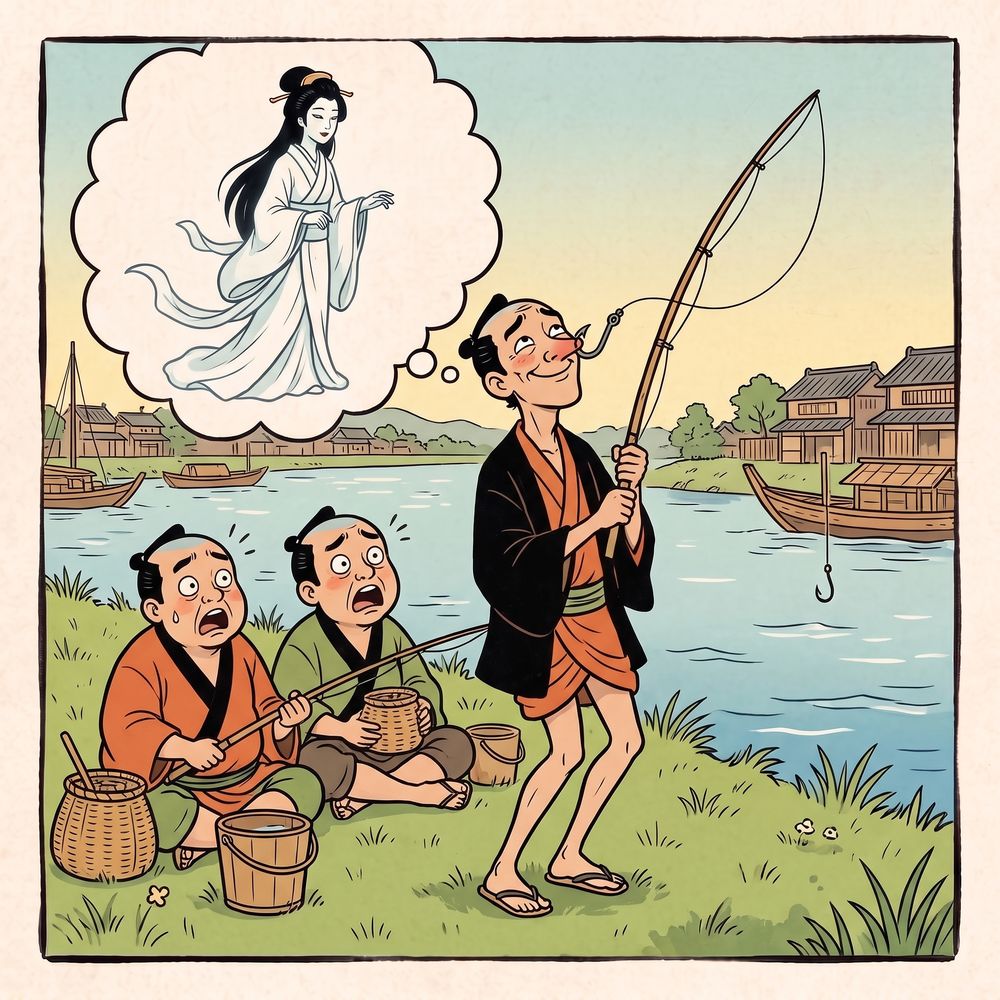
If a beautiful woman would come to visit, Hachigoro doesn't care if she's a ghost. He borrows Ogata's fishing gear, buys some sake and heads to Mukojima. He asks the anglers on the bank, “Are the bones biting?” and gets puzzled looks. Dangling his line, he gets wildly excited imagining a woman coming to call on him. Most performers end the story around here.
When the whole story is performed, Hachigoro finally finds a bone, pours sake on it and tells it where he lives. A taikomochi (a professional jester who entertains at parties) on a nearby pleasure boat overhears and, thinking it's a rendezvous with a woman, heads to Hachigoro's place hoping to make some money. Hachigoro is waiting, and when he asks, “Who's there?” the visitor introduces himself: “Shincho, a taiko”...
The sage the punchline, contains spoilers
Tap to reveal the punchline
“A taiko from Shinmachi? Oh, so it was a horse's bone.”
Hachigoro mishears “Shincho, a taiko” (short for taikomochi, a jester) as “a taiko (drum) from Shinmachi,” a district of Asakusa full of drum makers. Drums were covered in horsehide, which leads to “uma no hone” (a horse's bone), an expression for a nobody of unknown origins. Because this sage (the punchline) is hard to follow, it is rarely performed all the way to the end today.
Edo and Kamigata
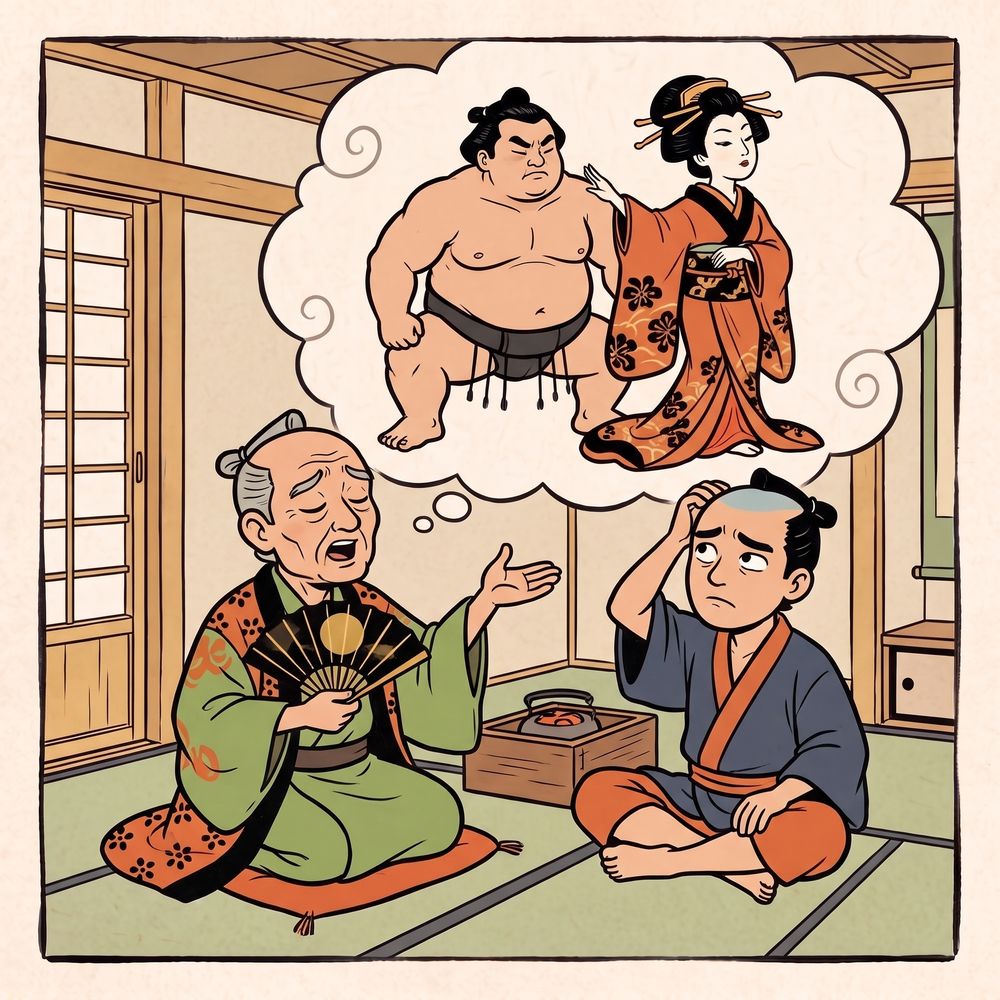
The Edo version, Nozarashi, is said to have been fashioned from Shofu by Hayashiya Shozo II and turned into a cheerful comic story by Sanyutei Enyu I. In the kamigata version, Kotsu-tsuri, both the visitor and the sage are different.
| Edo: Nozarashi | Kamigata: Kotsu-tsuri | |
|---|---|---|
| Who finds the bones | Ogata Seijuro, a masterless samurai | Mohachi, a taikomochi |
| Who copies him | Hachigoro, the neighbor | The man next door |
| Where | The Sumida River at Mukojima | The Kizu River and the Okawa |
| Who comes at night | Shincho, a taikomochi | Ishikawa Goemon |
| Sage | “A horse's bone” | “Kama ni en ga aru” (I have a connection with the kama) |
Key scenes original dialogue written for this site
A voice through the wall
- HachigoroSir, who was that woman last night?
- OgataHmm? Whatever do you mean?
- HachigoroDon't play dumb. I poked a hole in the wall and saw everything.
- OgataA hole... That is hardly how a tenant ought to behave.
Daydreams on the riverbank
- HachigoroCome on out, bones. Tonight, maybe, there'll be a little tap-tap at my door...
- (Still holding the rod, he wriggles about, switching to a woman's voice and back.)
- HachigoroAnd if she says, “Hachi, I came to see you,” what am I gonna do?
- AnglerHey, mister, your rod's stirring up the water.
A hook in the nose
- HachigoroOw, ow, it caught my nose. It's this thing's fault for being on here.
- (He rips off the hook and tosses it into the river.)
This is not a transcription of any storyteller's performance. The plot and sage follow the classic version; the dialogue was written for this site.
Notable performers
- Shunputei Ryuko III1887–1956EdoKnown as “Ryuko of Nozarashi.” It is said that when he took the stage, the audience would call out “Nozarashi!”
- Shunputei Ryushi VIII1905–1959EdoKnown as one of the stories in his repertoire.
- Kokontei Shincho III1938–2001EdoOne of the performers whose recordings survive.
- Yanagiya Kosanji X1939–2021EdoOne of the performers whose recordings survive.