Yume-kinDream Gold
夢金(ゆめきん)
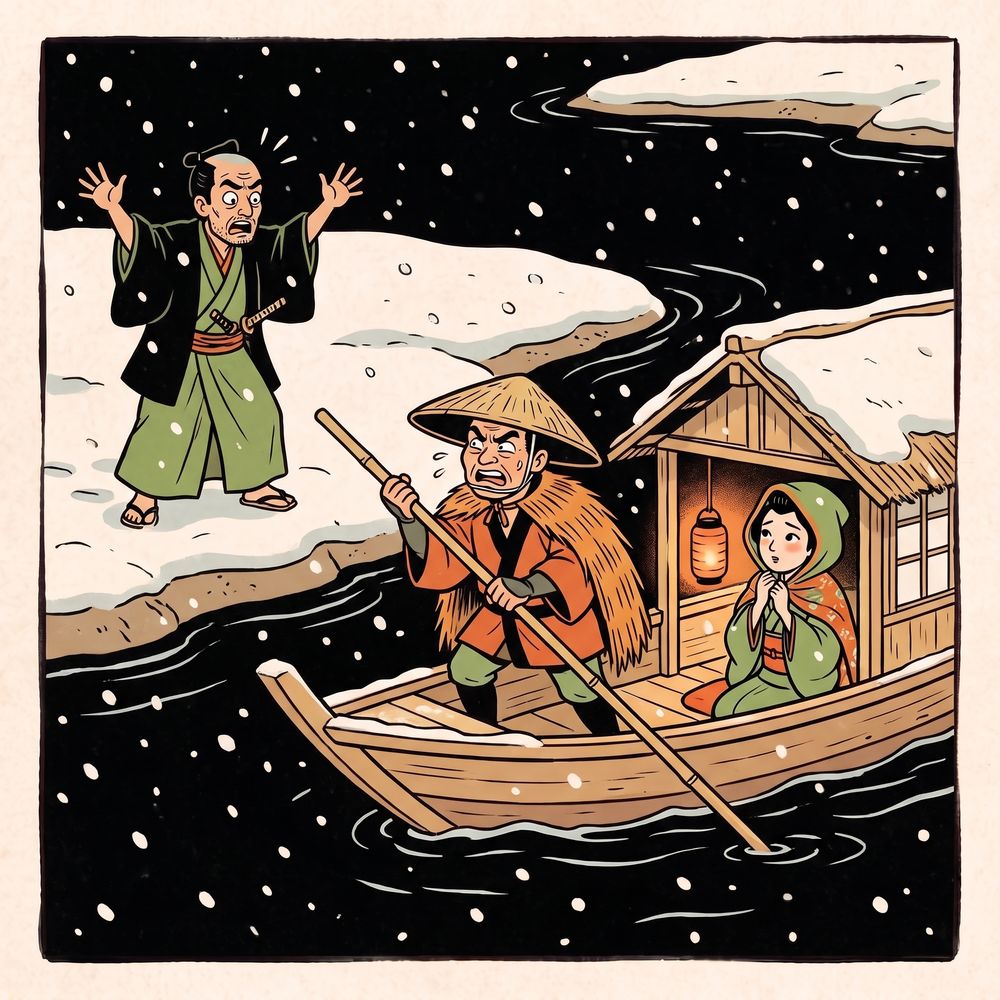
On a night of heavy snow, the boatman Kumagoro sleeps upstairs at a funayado (boathouse inn), muttering “Gimme money” in his sleep. A man who looks like a ronin (masterless samurai) comes with a young woman and asks for a boat. Told the tip will be generous, Kumagoro grudgingly rows out onto the Okawa, and there the man quietly puts a terrible proposal to him...
The story
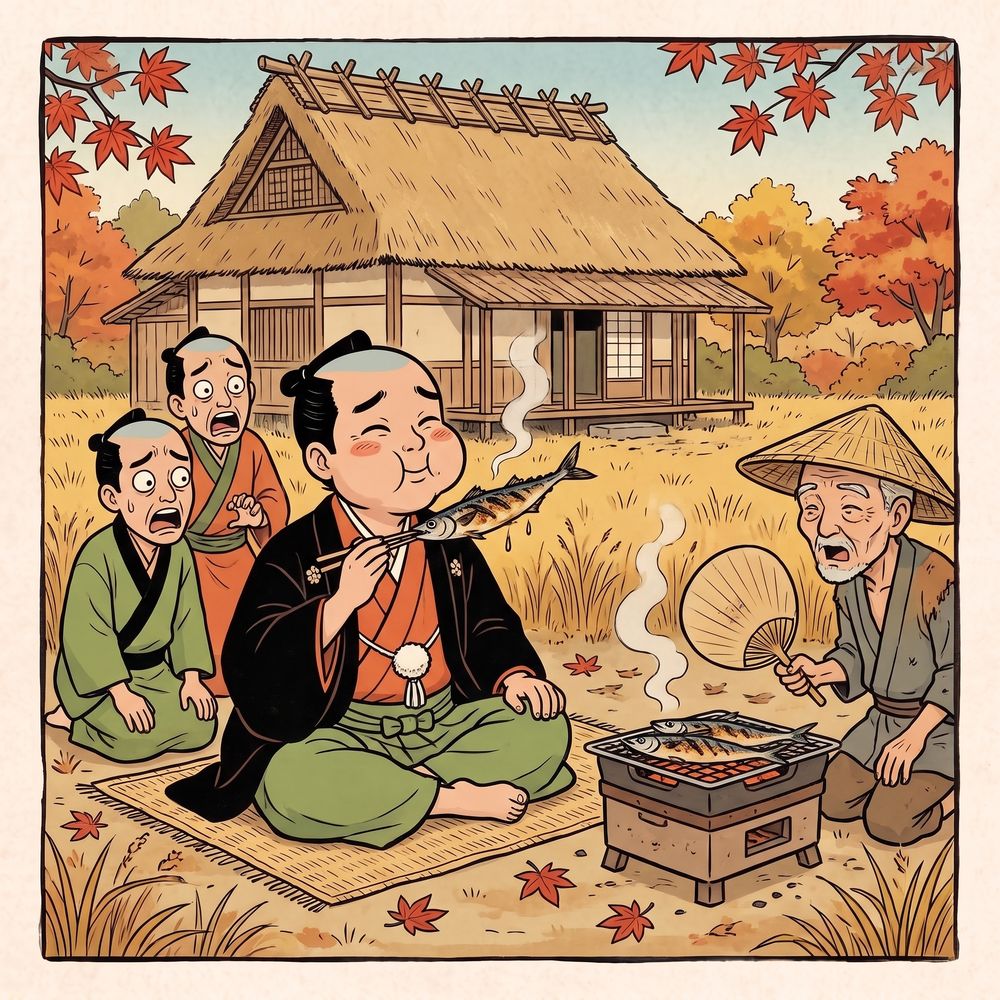
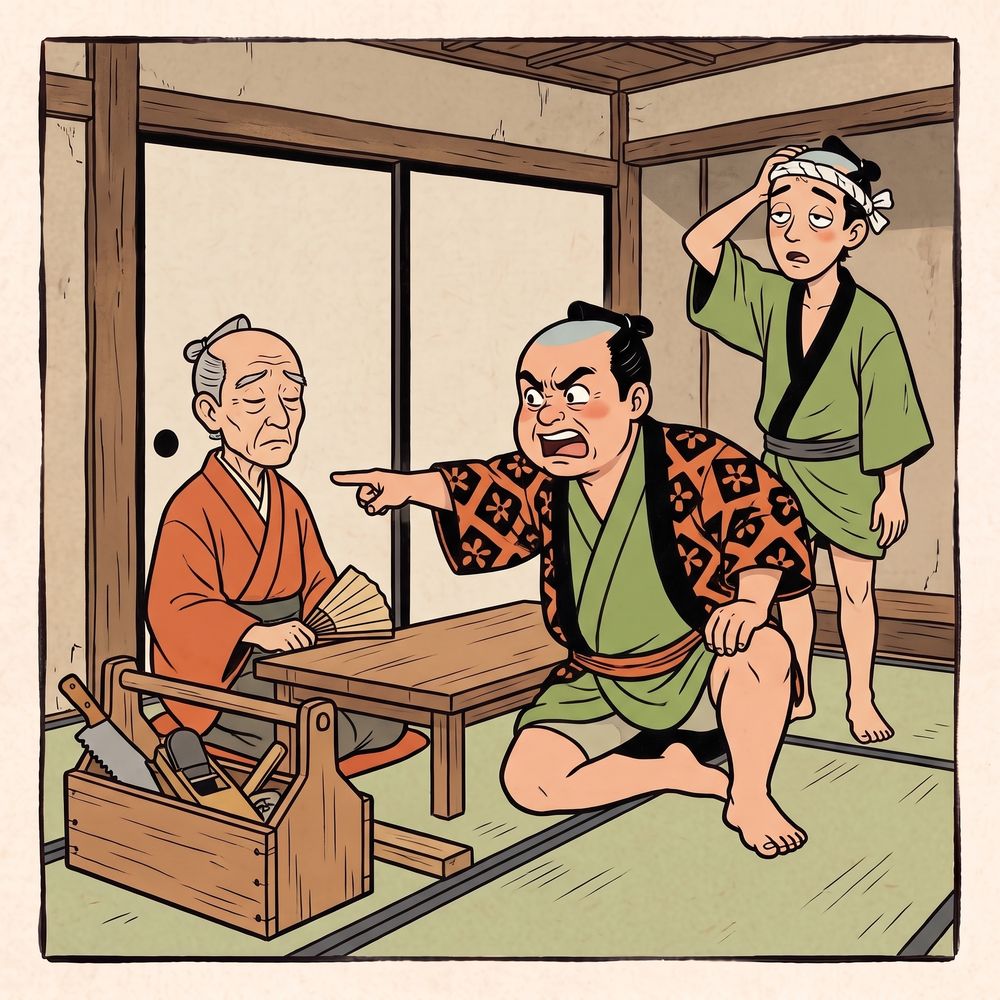
On a night of heavy snow, Kumagoro the boatman (some books call him Kumazo) is asleep upstairs at a funayado (boathouse inn). He is known for being greedy about money, so much so that he says “Gimme money” even in his sleep. The master of the inn and his wife can only shake their heads.
Then a rough-looking man who seems to be a ronin (masterless samurai) arrives with a well-dressed young woman. Saying they are brother and sister, he asks for a boat. No boatman wants to go out on a snowy night like this, but when Kumagoro hears the tip will be generous, he gets up and takes the job.
Once they are out on the water, Kumagoro decides the two are eloping lovers. Annoyed, he grumbles to himself and handles the oar roughly. Saying he will add to the tip, the man comes over toward the stern, has him stop the boat, and starts talking in a low voice.
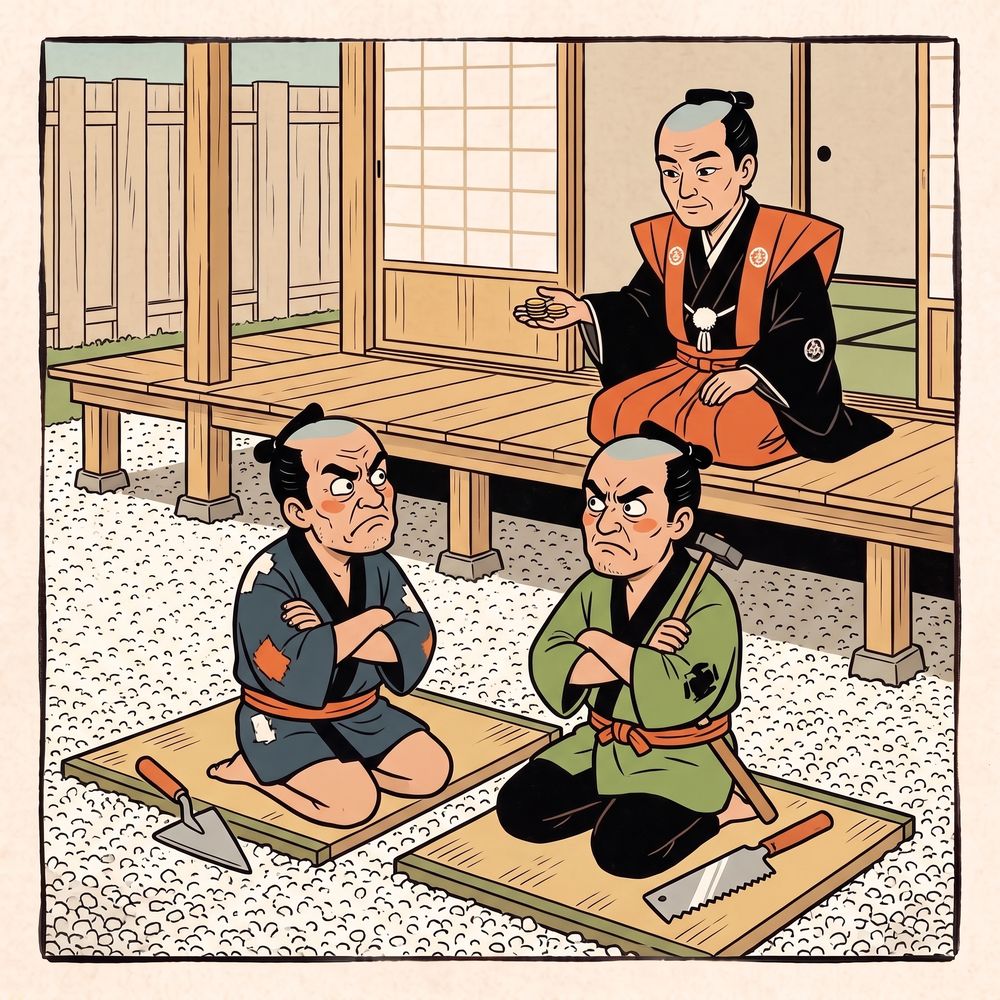
The man says the brother-and-sister story is a lie, and the woman is the daughter of a large shop. When she left home she took two hundred ryo with her, and that money is what he is after. If he killed her in town, it would be traced back to him, so he wants to dispose of her on the boat. If Kumagoro lends a hand, he will get fifty ryo as his share.
Kumagoro refuses, but when the man threatens him, he pretends to give in, says he knows a place where no one will see, and brings the boat up to a sandbar in the river. As soon as the man steps off onto the sandbar first, Kumagoro pushes the boat away and leaves him stranded on the snowy sandbar.
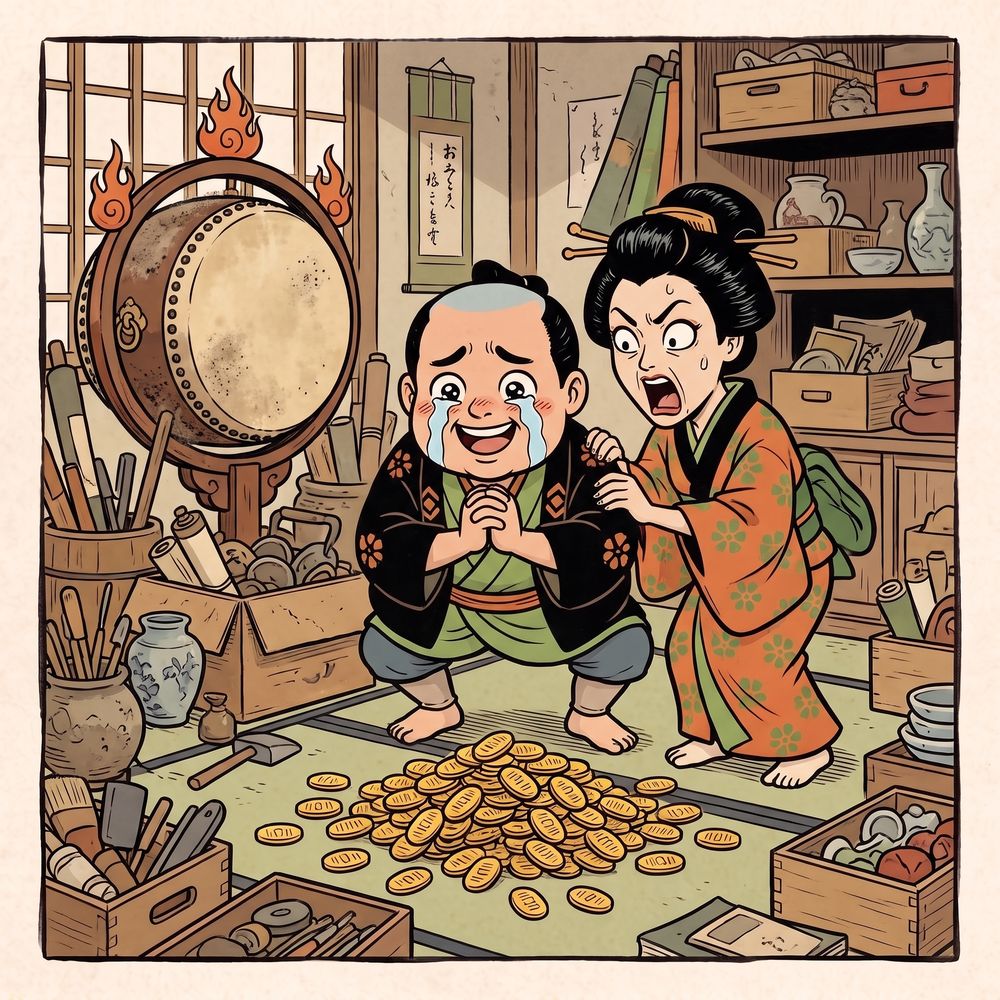
Kumagoro brings the young woman back to the funayado and tells the master and his wife what happened. They praise his quick thinking, and the woman is safely returned to her parents. Some days later, a package of thanks arrives for Kumagoro from her family. Inside are two kirimochi (packets of twenty-five ryo each), fifty ryo in all, a huge sum. Just as Kumagoro is about to savor the weight of it...
The sage the punchline, contains spoilers
Tap to reveal the punchline
When he wakes up, what Kumagoro is gripping tightly is his own most precious parts.
The sage (the punchline): it is a yume-ochi, an it-was-all-a-dream ending, and the original sage reveals this through what is actually in the hand that he thought was holding the money. Sanyutei Kinba III is said to have simply had Kumagoro wake from the dream, to keep the ending clean. The title Yume-kin, “dream gold,” comes from this ending.
The original tale and similar stories
The original tale is said to be “Shichifukujin” in Dehodai, a joke book published in 1773 (An'ei 2). Jokes on the same idea, where a man wakes from a dream of holding a fortune to find he was gripping his own body, also appear in several books from around the same period.
| Book | Published | |
|---|---|---|
| Kino wa Kyo no Monogatari | Told as an anecdote about Sorori Shinzaemon | 1636 (Kan'ei 13) |
| Showa Shutsushiroku | A collection of jokes written in classical Chinese style. “Kitsumu no Kyo” (The Bad Luck of a Good Dream) | 1755 (Horeki 5) |
| Dehodai | An Edo joke book. “Shichifukujin” (said to be the original tale) | 1773 (An'ei 2) |
| Karukuchi Yoake Garasu | A collection of short Kamigata (Osaka-Kyoto) jokes. “Hitotsu wa Hon no Koto” (Only One Thing Was Real) | 1783 (Tenmei 3) |
Key scenes original dialogue written for this site
Upstairs at the funayado
- KumagoroMmm... money... gimme...
- WifeMy, he's talking about money even in his sleep, this one.
- MasterLeave him be. On a snowy night like this, no more customers will come.
- RoninHello there. Sorry to trouble you so late, but I would like a boat. I will pay whatever tip you ask.
- Kumagoro(Jumping up) Yes, sir, I'll take you, I'll take you. When I hear the word tip, snow means nothing to me.
The snowy Okawa
- (Working the oar, he looks up at the falling snow.)
- KumagoroTch, so I'm the escort for a runaway couple. My nose is about to freeze and they're having a fine old time.
- RoninBoatman, a word with you. Stop the boat for a while... Keep your voice down.
- KumagoroYes, sir, what is it? If it's about the tip, you can say it as loud as you like.
- RoninThat girl has a great deal of money on her. Lend me a hand and fifty ryo of it is yours.
The sandbar
- Kumagoro...Sir, if that's how it is, I know just the place. Not a soul goes to the sandbar up ahead.
- RoninGood, you're a sharp one. Then I'll step off first and check the footing.
- KumagoroGo right ahead, mind your step... And there you go!
- (He shoves the boat off hard with the pole.)
- KumagoroSir, you can spend the night there enjoying the snow with a drink. Miss, you're safe now. Hold on tight.
This is not a transcription of any storyteller's performance. The plot follows the classic version. All lines were written for this site.
Notable performers
- Sanyutei Kinba III1894–1964EdoOne of the performers known for this story in the Showa era. He is said to have performed it with a simple wake-from-the-dream ending to keep the sage clean.
- Sanyutei Ensho VI1900–1979EdoOne of the performers known for this story in the Showa era.
- Kokontei Shincho III1938–2001EdoOne of the performers whose recordings survive.