Mekauma (Hachigoro Shusse)The Concubine's Horse (Hachigoro Moves Up in the World)
妾馬(八五郎出世)(めかうま)
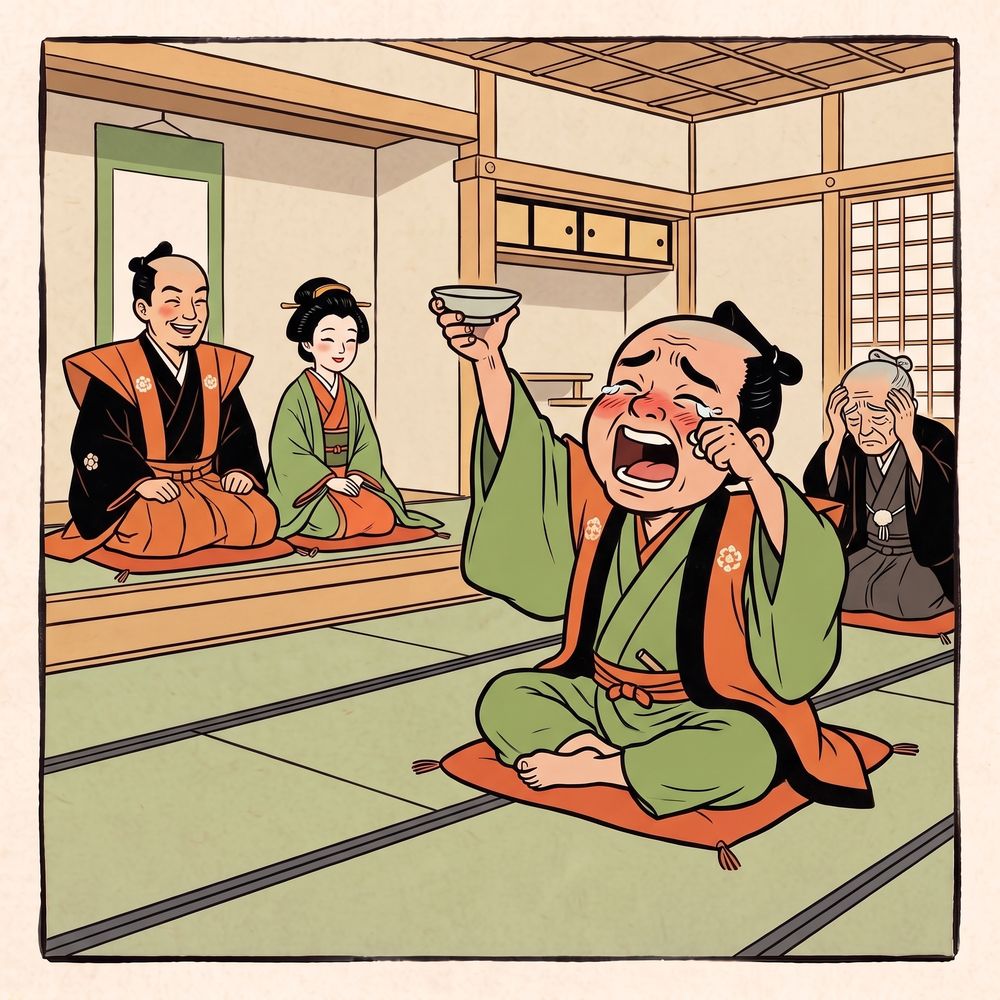
Otsuru, a girl from a tenement, catches a lord's eye, enters his household and gives birth to his heir. Her brother Hachigoro is summoned to the mansion, but he is a blunt craftsman who knows nothing of polite speech or etiquette. He crams a few polite phrases and marches in, but...
The story
Passing by a tenement, the feudal lord Akai Gomon-no-kami takes a fancy to Otsuru, a seventeen-year-old girl, and has her taken into service at his mansion. Otsuru gives birth to a baby boy, the lord's heir, and rises to the rank of oheya-sama, a recognized consort.
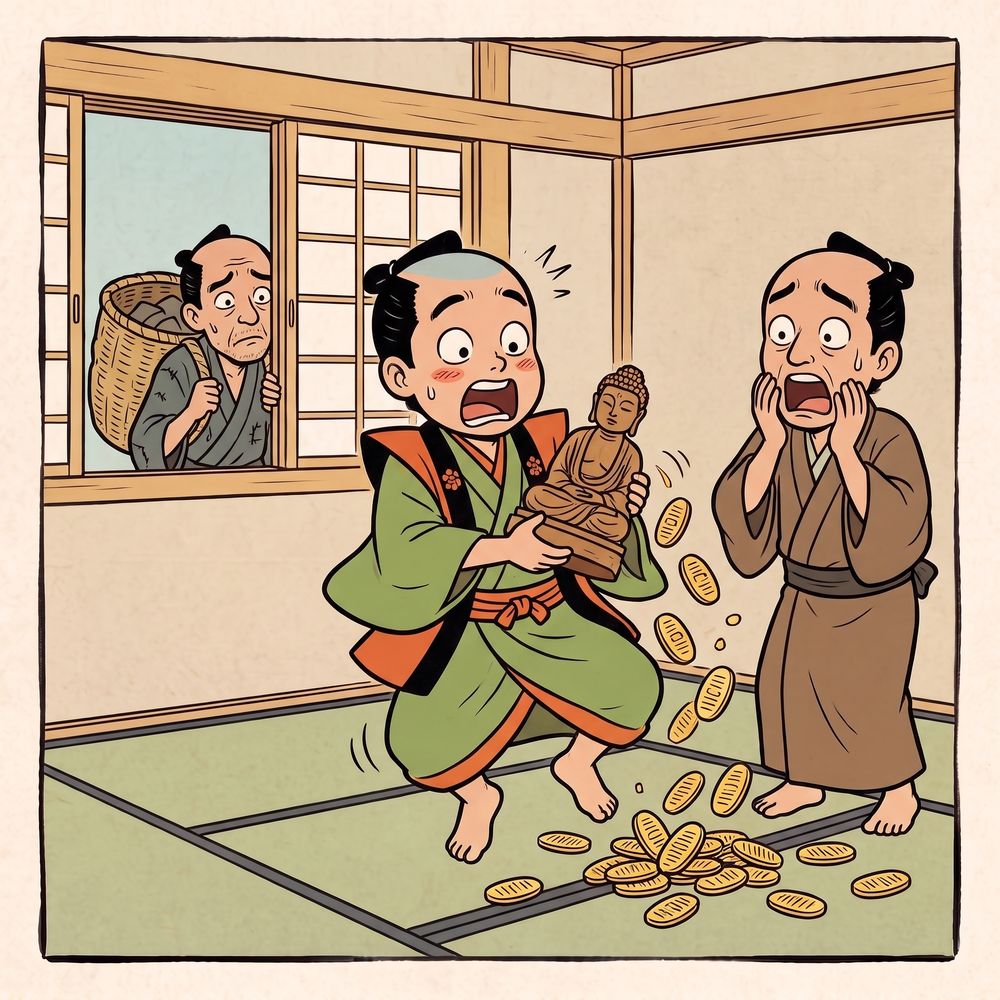
The lord decides to invite Otsuru's brother, Hachigoro, to the mansion. Coached in polite speech by his landlord, Hachigoro sets out in a borrowed crested kimono, but faced with Santayu, the steward who receives him, he fires off one garbled polite phrase after another.
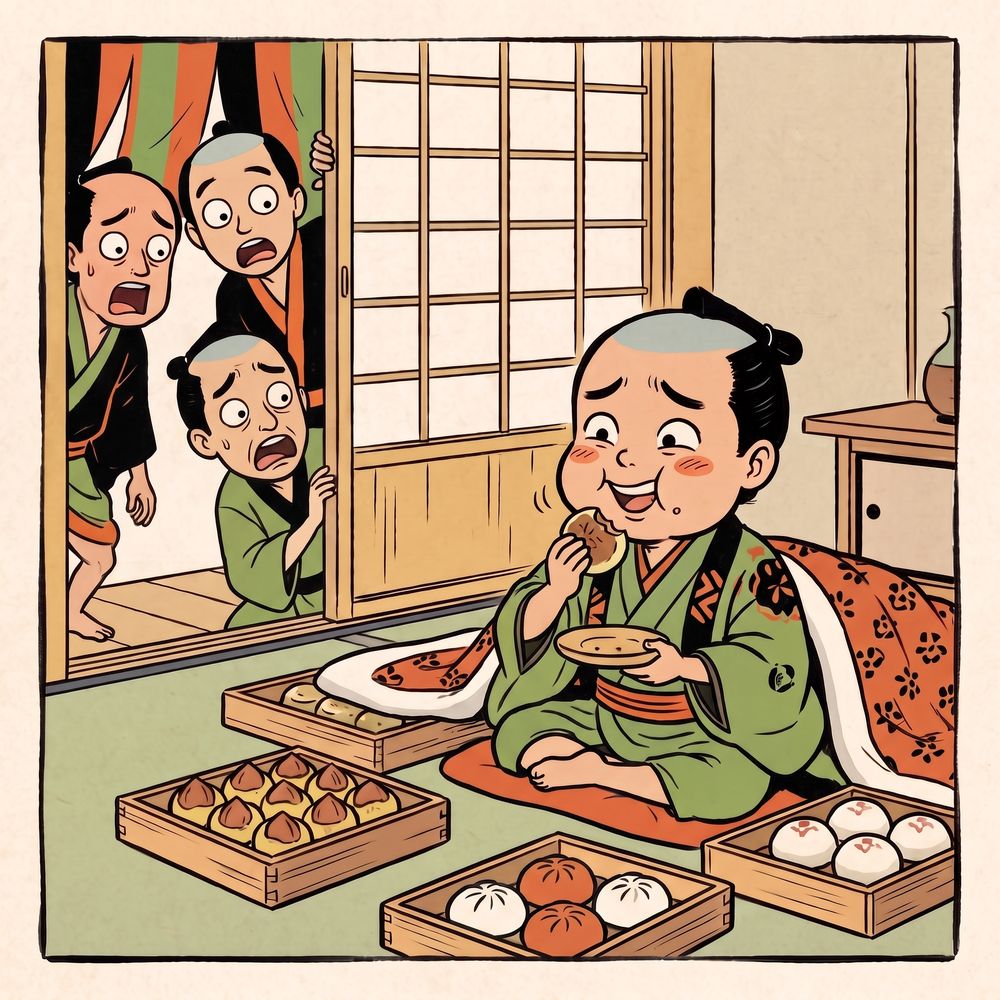
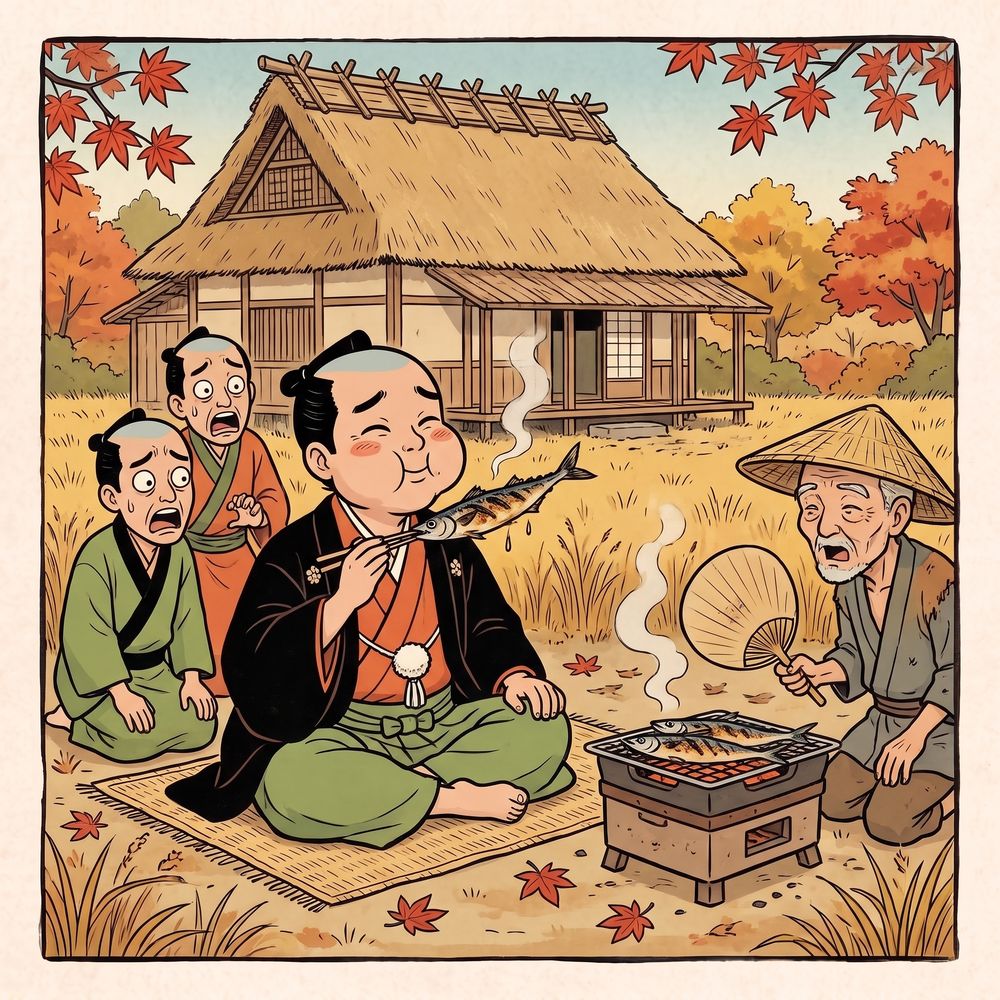
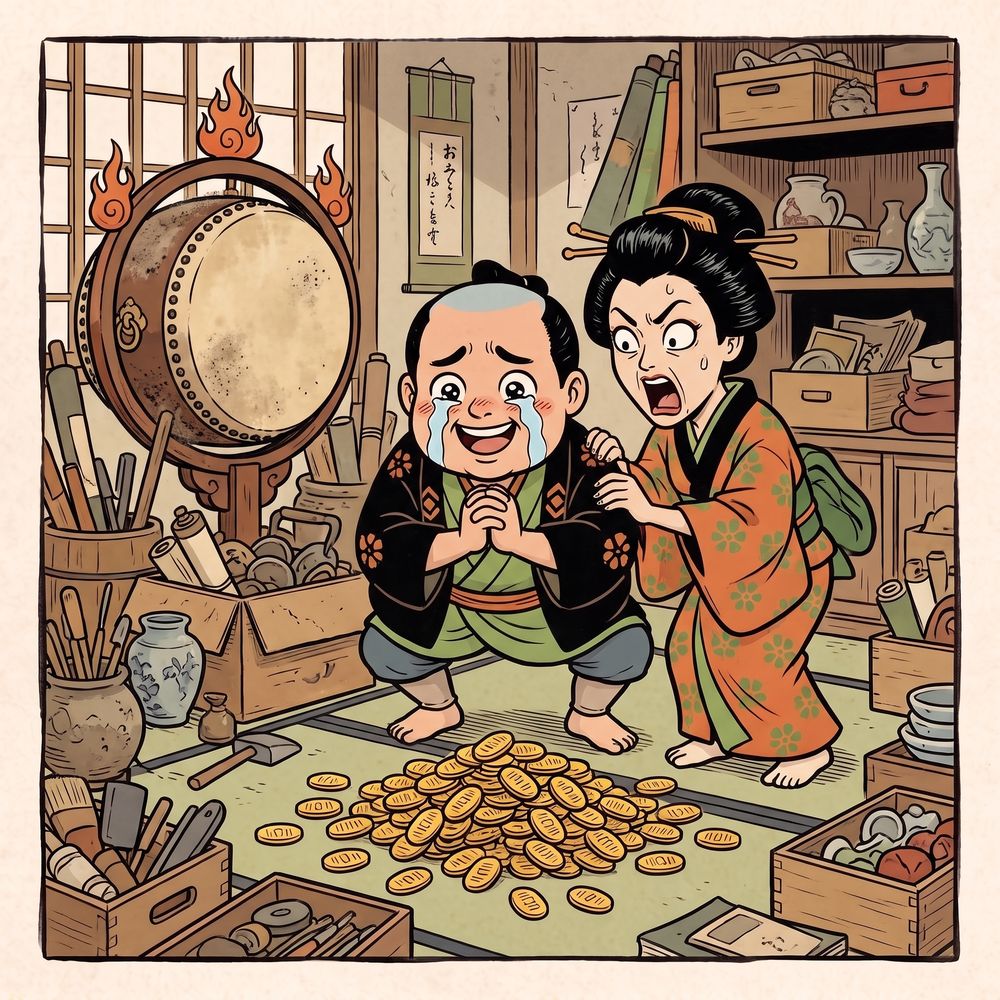
Even in front of the lord, Hachigoro's bluntness doesn't let up. But the lord finds his plain way of talking refreshing and treats him to sake. Tipsy, Hachigoro sees his sister in her fine clothes and is overcome. Talking about their mother, who longs to see her grandchild, he bursts into tears, then belts out a dodoitsu, a short popular song, to lift the mood.
The lord takes such a liking to Hachigoro that he makes him a samurai. Most performers today end the story here, but in the second half, Hachigoro, renamed Ishigaki Mokuzo, is sent on an errand for the lord on horseback and...
The sage the punchline, contains spoilers
Tap to reveal the punchline
“Where am I going? Ask the horse!”
The horse he can't ride bolts, and when someone asks, “Where are you off to?”, Hachigoro gives this answer, the sage (the punchline). Only when the second half is performed, in which the brother of a “mekake” (concubine) comes to grief on an “uma” (horse), does the title make sense. The second half is also said to be weaker, and almost all performers stop at the point where Hachigoro is made a samurai, ending with a gesture.
First Half and Second Half
“Mekauma” is the title for the full story, and “Hachigoro Shusse” is the title used when only the first half is performed. Today it is almost always the first half that you will hear.
| First half (Hachigoro Shusse) | Second half | |
|---|---|---|
| What happens | Hachigoro is invited to the mansion, wins the lord over and is made a samurai | Now Ishigaki Mokuzo, Hachigoro rides a horse and causes a commotion |
| Highlights | Bungled polite speech, the dodoitsu song, tears for his mother | The comedy of being thrown around by a horse he can't ride |
| Ending | Stops when he is made a samurai, ending with a gesture | Ends with the sage “Ask the horse!” |
Key scenes original dialogue written for this site
The Landlord's Lesson
- LandlordListen, Hachi. Put “honorable” in front and “humbly” at the end. Do that, and almost anything comes out polite.
- HachigoroGot it. Like, “My honorable belly is humbly hungry,” right?
- Landlord...Well, keeping your mouth shut would be best.
Meeting Santayu
- SantayuAre you Hachigoro, elder brother of Lady Otsuru?
- HachigoroYep, I'm the honorable Hachigoro, humbly.
- (Santayu puts a hand to his forehead and looks up at the heavens.)
Before the Lord
- LordHachigoro, is it? Be at ease. Speak your mind freely.
- HachigoroYeah? Then I won't hold back. ...Hey, Tsuru. They've got you in some nice clothes, huh?
- HachigoroYou know, Mom says every night she wants to see her grandkid's face. ...Sorry, my lord. The sake's getting in my eyes.
This is not a transcription of any storyteller's performance. The plot and the sage are as handed down in the classical tradition; the dialogue was written for this site.
Notable performers
- Sanyutei Ensho VI1900–1979EdoMade this story one of his signature pieces.
- Sanshotei Karaku VIII1898–1964EdoKnown as one of his specialties.
- Kokontei Shinsho V1890–1973EdoOne of the performers whose recordings survive.
- Kokontei Shincho III1938–2001EdoOne of the performers whose recordings survive.