Kaji MusukoThe Fireman Son
火事息子(かじむすこ)
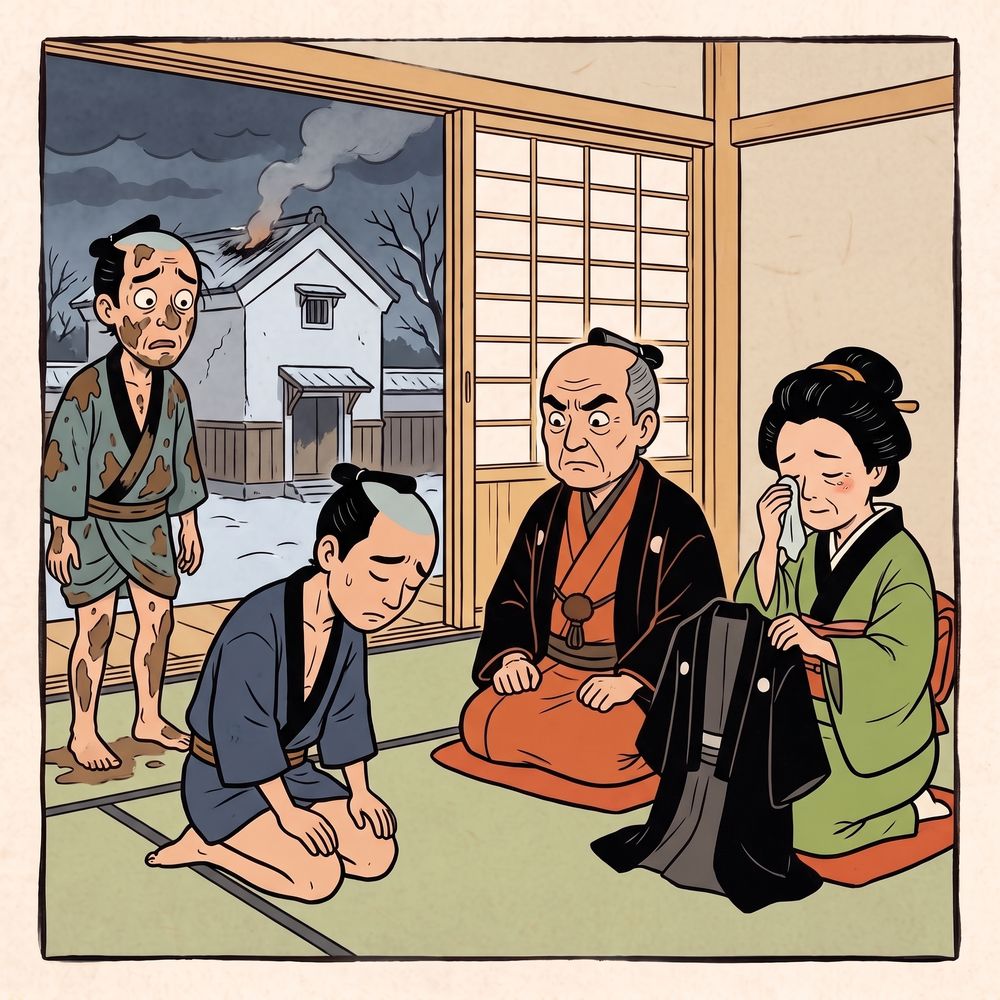
The only son of Iseya, a pawnshop in Kanda, has loved fires ever since he was a child. In the end he becomes a gaen (a fireman in the shogunate’s jobikeshi, or standing fire brigade), covers his whole body in tattoos, and is disowned by his parents. One cold winter day, with a strong north wind blowing, a fire breaks out near the shop. While the head clerk, who is not used to such work, struggles to seal the storehouse, a fireman appears across the rooftops...
The story
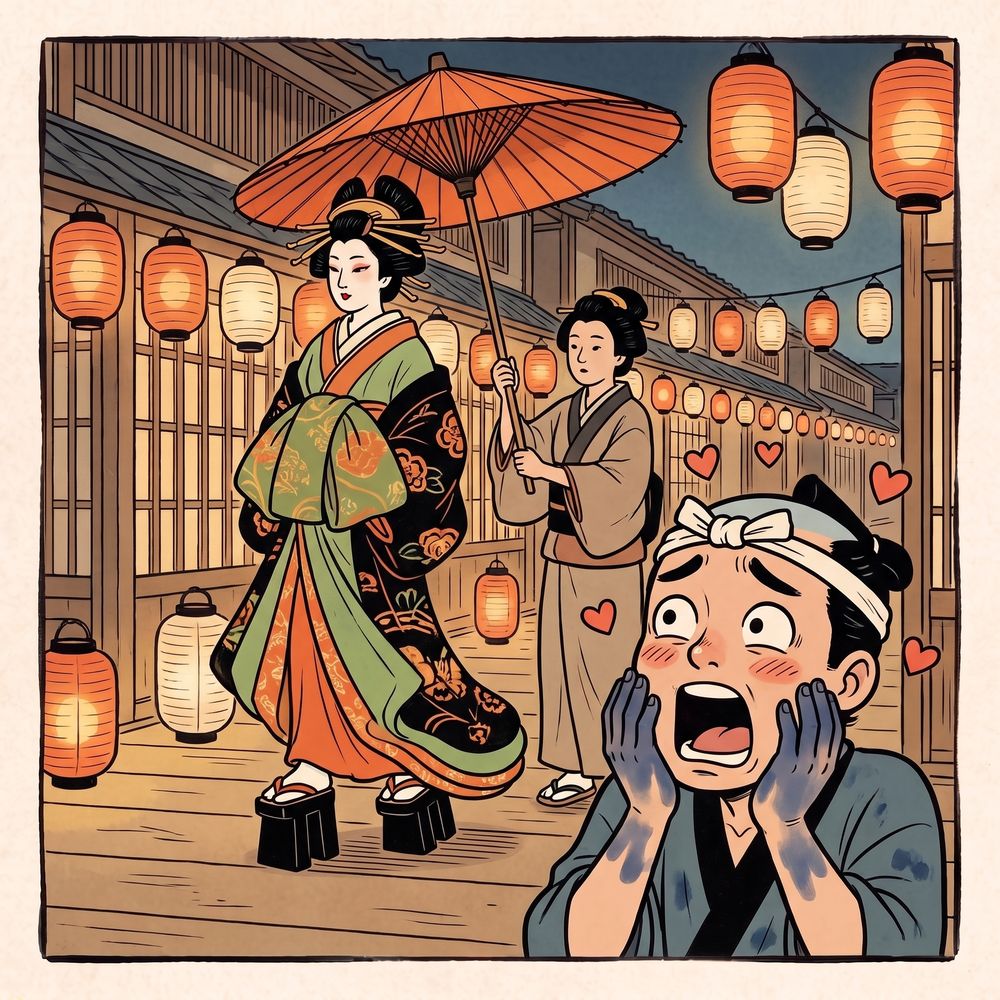
The only son of Iseya, a pawnshop in Kanda (Tozaburo, Tokusaburo or another name, depending on the performer), has loved fires more than anything since he was a child. He asks the tobi-gashira, the head of the neighborhood fire brigade, to let him become a fireman, but his parents have gotten there first, and no brigade will take him.
So the young master becomes a gaen, a fireman kept at one of the shogunate’s fire stations. Gaen covered their bodies in tattoos, and the trade was not seen as respectable. The master disowns his only son.
Several years later, on a winter day with a strong north wind, a fire breaks out near Iseya. For a pawnshop nothing matters more than the storehouse that holds the pledged goods. The master wants to do the meburi, sealing the storehouse doors with clay so the fire cannot get in, but no plasterer is free. With no other choice, the head clerk, who is terrified of heights, climbs onto the storehouse roof, and the shop boy tosses up clay he has mixed below. The clerk can’t catch it, and mud flies everywhere.
Just then a fireman comes running across the rooftops. He hooks the clerk’s sash on a bent nail on the storehouse so the clerk’s body is held in place. With both hands free, the clerk finishes sealing the storehouse, and before long the fire dies down.
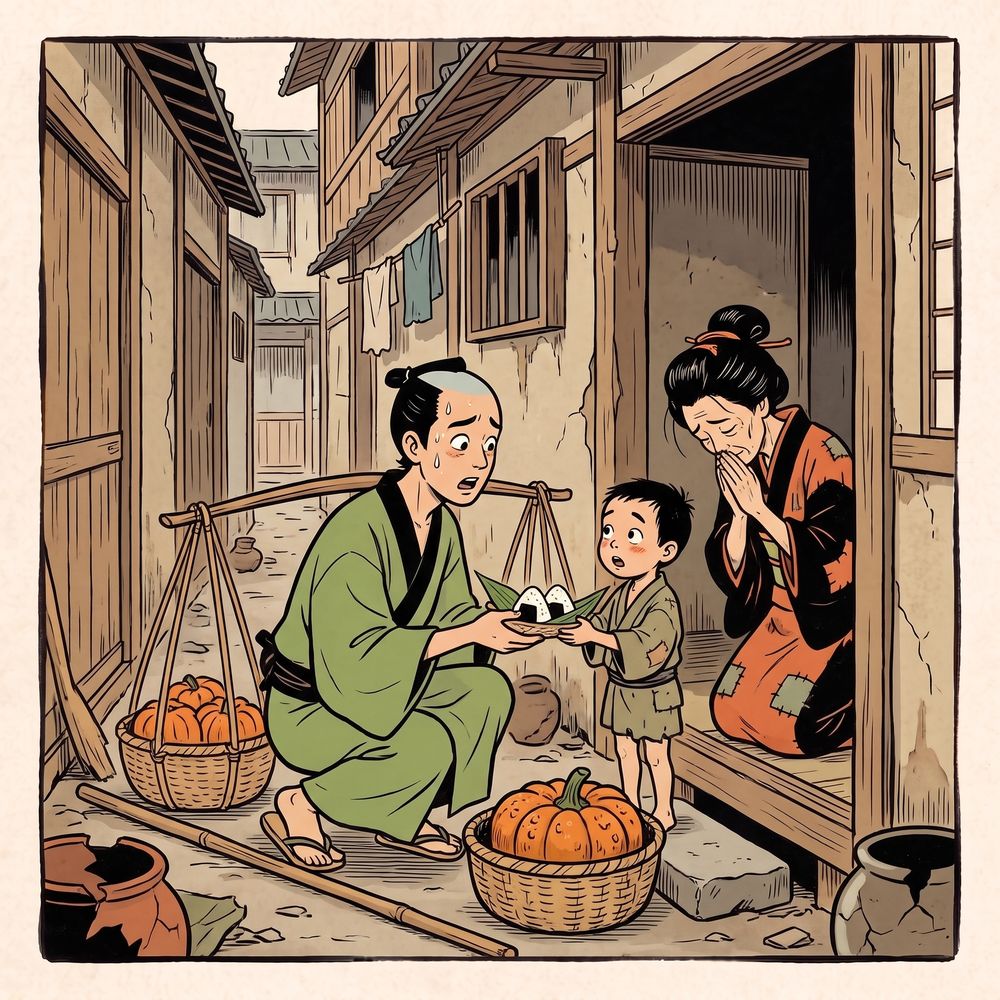
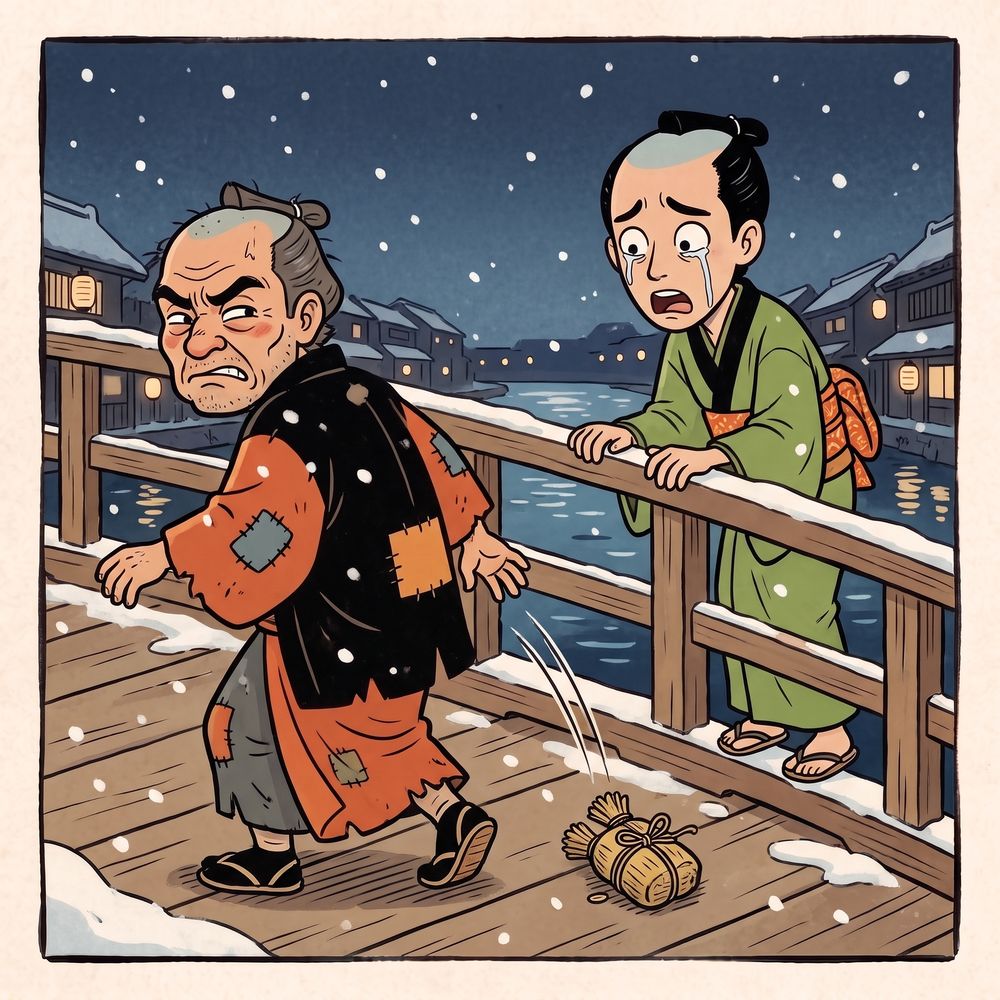
The fireman the clerk stops to thank is none other than the disowned young master. The master refuses at first: “There’s no reason for me to meet someone I’ve disowned.” But through the clerk’s good offices, they meet. Facing his son, covered in tattoos and wearing only a thin hanten coat in the cold, the master thanks him stiffly, as if he were a stranger, yet he can’t stop lecturing him about how he has failed his parents.
Then the mother rushes in, openly overjoyed to see her son. When she says she wants at least to give him a kimono, the master stubbornly says, “Throw that sort of thing away. If you throw it away, someone will pick it up.” The mother understands what he really means, and she starts saying she will throw away this and throw away that, laying out kimono, pocket money and even a formal crested kimono of black habutae silk...
The sage the punchline, contains spoilers
Tap to reveal the punchline
“We got to see him thanks to the fire, so let’s send him to the house where it started, to thank them.”
The sage (the punchline): the mother is about to dress her son in a fine crested kimono and even send the shop boy along with him, so the master asks, “Where are you sending him, dressed up like that?” Her answer ends the story. The house where the fire started should be the one that caused everyone trouble, yet she wants to go there to thank them. The humor is in how her love for her son wins out and turns things topsy-turvy. Dictionaries classify it under different types of sage, such as buttsuke-ochi or kangae-ochi (a punchline you have to think about for a moment).
Gaen and Town Firemen
The young master did not join the machi-bikeshi, the townspeople’s fire brigades, but became a gaen kept by the shogunate’s jobikeshi. His parents had gotten to the town brigades first, so they would not take him, and by becoming a gaen he ended up disowned. Knowing the difference between the two helps you understand the father’s grief.
| Gaen (jobikeshi) | Machi-bikeshi (town firemen) | |
|---|---|---|
| Kept by | The shogunate’s jobikeshi (fire stations led by hatamoto, direct retainers of the shogun) | Self-governing brigades of townspeople (such as the Iroha 48 brigades) |
| Made up of | Fire laborers who lived in the fire stations | Craftsmen such as tobi (scaffolding workers) and carpenters |
| How people saw them | A rough trade with tattoos, not seen as respectable | Relied on as leading figures of the neighborhood |
Key scenes original dialogue written for this site
Sealing the storehouse
- Head clerkMaster, I’m the kind whose knees shake even going up to the drying platform...
- MasterStop dithering. If the fire gets into the storehouse, everything we’re holding for our customers will turn to ash.
- (On the roof, he mimes grabbing for the clay flying up from below and missing.)
- Head clerkSadakichi, go easy when you throw it. What’s the use of plastering my face?
The fireman on the rooftops
- FiremanHold still, clerk. Hook your sash on this bent nail and you won’t fall.
- Head clerkOh, thank you. Both my hands are free... I don’t know who you are, but I’m in your debt.
- FiremanNo need for thanks. The sealing was your work, clerk. I didn’t do a thing.
Parents and son meet
- MasterI don’t know who you are, but thank you for your help today... Aren’t you cold, dressed like that?
- Young masterYes, sir. In this trade it’s one hanten coat, even in winter.
- MotherOh, you’ve grown into a man... Dear, please let him take at least one kimono with him.
- MasterI have no kimono to give someone I’ve disowned... If you must, throw it away. If you throw it away, someone will pick it up.
This is not a transcription of any storyteller's performance. The plot follows the classic version. All lines were written for this site.
Notable performers
- Sanyutei Ensho VI1900–1979EdoOne of the performers whose recordings survive. He named the young master Tozaburo.
- Hayashiya Shozo VIII (Hayashiya Hikoroku)1895–1982EdoOne of the performers whose recordings survive. He named the young master Tokusaburo.
- Kokontei Shinsho V1890–1973EdoOne of the performers whose recordings survive. He named the young master Tokusaburo.