HyakunenmeThe Hundredth Year
百年目(ひゃくねんめ)
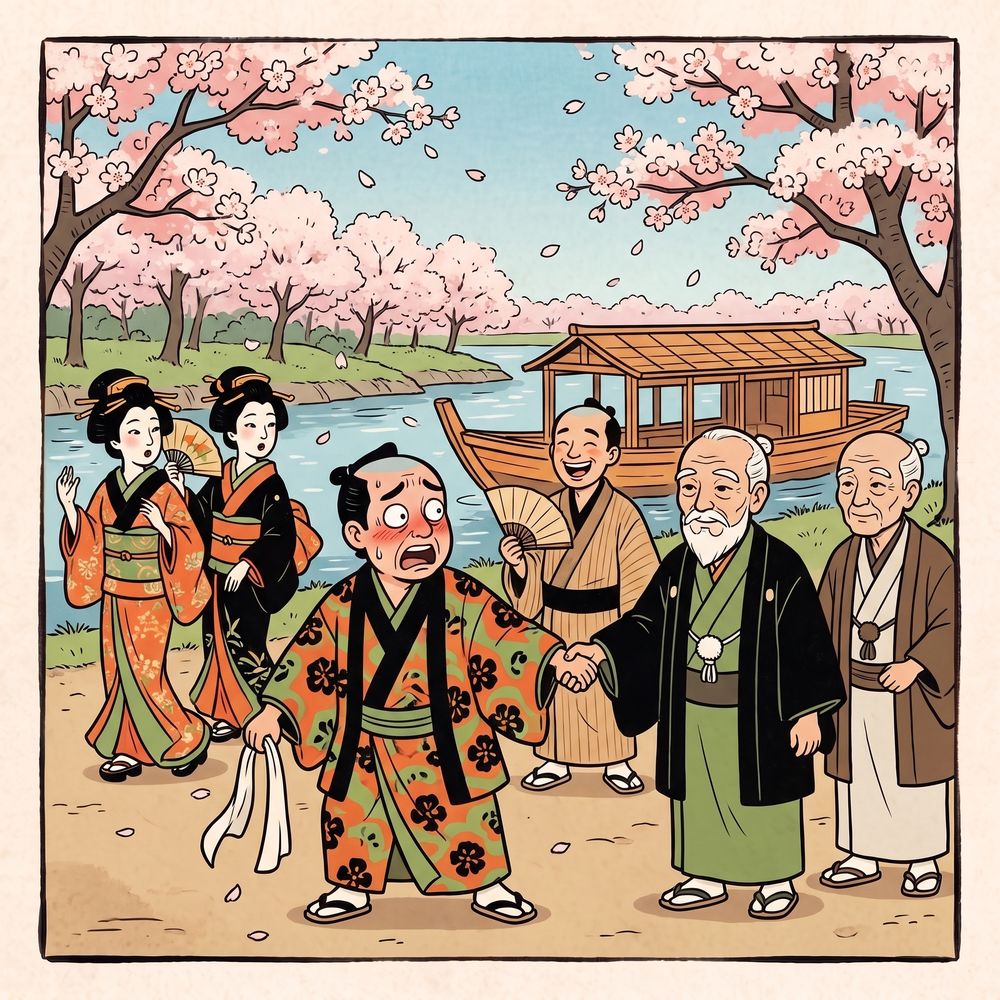
The head clerk of a large merchant house is known as a stiff, strict man who does nothing but scold the staff. But in truth he is a great pleasure-seeker. Pretending to make the rounds of customers, he slips out of the shop, hires a yakatabune (a roofed pleasure boat) with geisha and taikomochi (professional jesters), and sets out to view the cherry blossoms. In the middle of his merrymaking, the person he runs into is, of all people, the master of the shop. The head clerk expects to be dismissed, but the next morning the master begins to tell him... This ninjo-banashi (human-drama story) is known as a big story that is hard to perform because of its many characters.
The story
The head clerk of a large merchant house is an old hand who has worked there for decades. Seated at the counting desk, he lectures the staff on even the smallest things. He is a nagging stickler, and the people in the shop find him hard to bear.
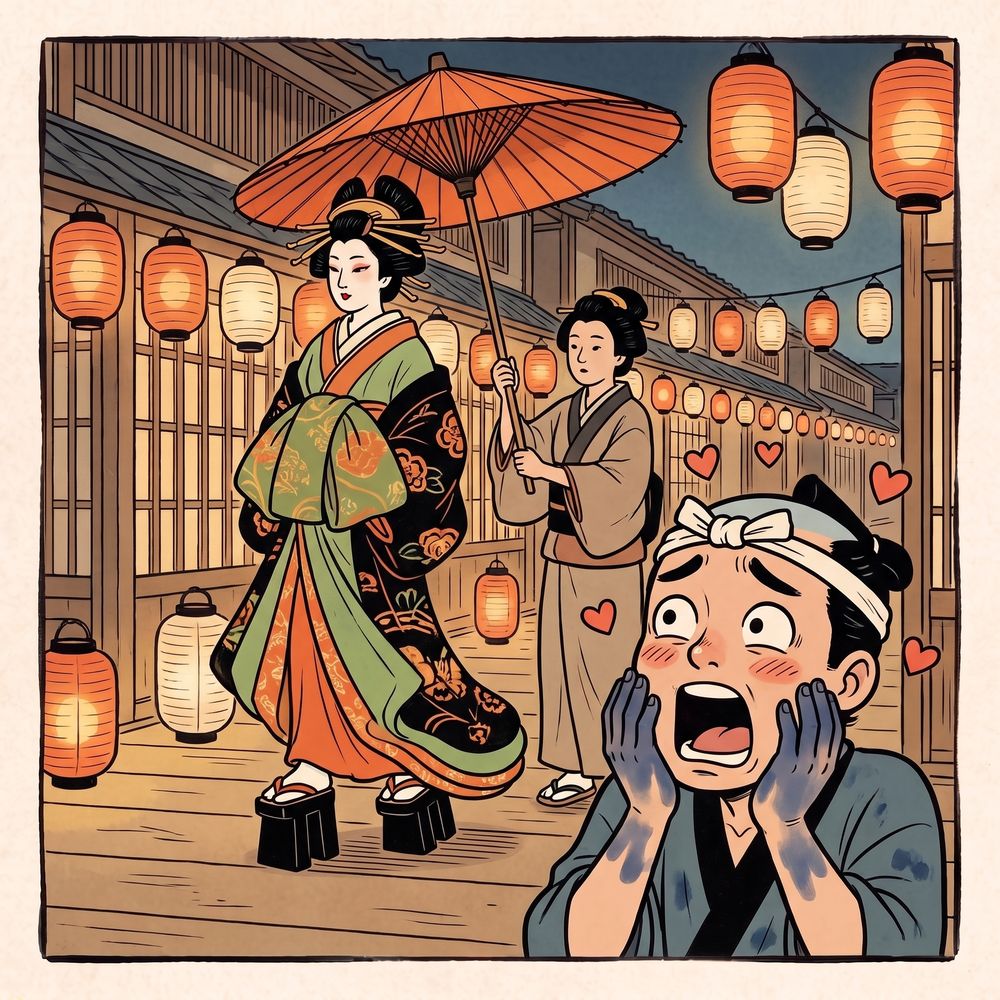
But this head clerk is in fact a great pleasure-seeker. On this day too, he leaves the shop saying, “I'm going to make the rounds of our customers,” then secretly changes into a stylish kimono and heads for the yakatabune (a roofed pleasure boat) he has arranged. With geisha and taikomochi (professional jesters) on board, he sets out in high spirits to see the cherry blossoms in full bloom. Once the sake takes hold, he gets completely carried away, leaves the boat and starts playing games on the riverbank.
At just that time, the master of the shop has also come to the same spot to see the blossoms, together with a doctor who calls on the household. Noticing the head clerk, the master tactfully tries to slip away without being seen. But as the head clerk chases the geisha around, the person he catches is the master himself. In Kamigata, this happens in the middle of a game of Menai Chidori, in which a blindfolded player chases the others, and when he takes off the blindfold, the master is standing right in front of him.
Instantly sober, the head clerk throws himself to the ground and blurts out, “It has been a long time since I last had the pleasure of seeing you.” So as not to spoil the party, the master says only a few words and leaves.
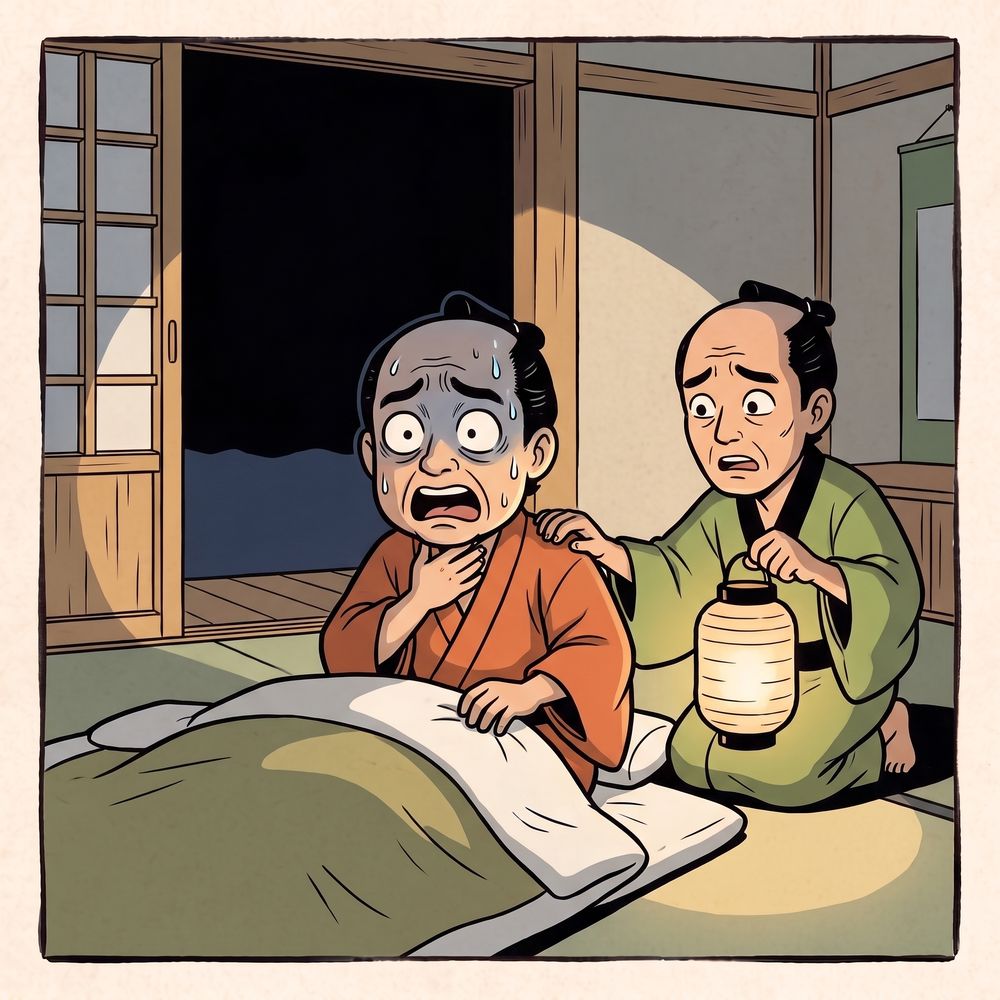
The head clerk flees back to the shop and goes to bed saying he feels unwell, but of course he cannot sleep. He is sure to be dismissed. Perhaps he should run away while he still can. As he agonizes, the night gives way to morning.
The next morning the head clerk is called by the master and goes, ready for the worst. Calmly, the master begins a story about a splendid tree in Tenjiku (India) called the shakusendan, and a grass called the nan'enso that grows thick around its roots. The grass grows on the dew from the tree, and the tree grows on the withered grass as fertilizer. From this give-and-take relationship, he says, came the word danna, “master.” The master praises the head clerk's daily work and tells him that in the shop the head clerk is the tree and the staff are the grass, so he should give those under him some room to breathe. And he says that if the money is earned honestly by the head clerk's own ability, he should not hold back when spending it. As the head clerk sits there humbled, the master asks him one last thing. Why yesterday did he greet him as if they had not seen each other in a long time?
The sage the punchline, contains spoilers
Tap to reveal the punchline
“When you saw my face, I thought, ‘Ah, this is my hundredth year (the moment my luck ran out).’”
Hyakunenme, “the hundredth year,” means the moment one's luck runs out, the final moment with no escape. It is the same expression as in the line from vendetta stories, “Now that we've met here, this is your hundredth year.” The point of the ending is that his feeling of “it's all over” on being found by the master slipped out as the greeting “It has been a long time.”
Kamigata and Edo
The plot and the sage are almost the same, but the shop and the cherry-blossom spot change to fit each region. In Kamigata, the head clerk of a large merchant house in Senba, Osaka, goes up the Okawa River by yakatabune, while in Edo the cherry-lined riverbank at Mukojima is the place for the blossom viewing.
| Kamigata | Edo | |
|---|---|---|
| The shop | A large merchant house in Senba, Osaka | A large merchant house in Edo |
| Cherry-blossom spot | Sakuranomiya, reached by yakatabune up the Okawa River | The riverbank at Mukojima on the Sumida River |
| Well-known performers | Katsura Beicho III | Sanyutei Ensho VI |
Key scenes original dialogue written for this site
Scolding at the counting desk
- Head clerkYou there, boy. How many times have you wiped that same spot? Your mouth works harder than your hands.
- Apprentice boyYes, sir. I'm sorry.
- Head clerkAnd I'll be making the rounds of our customers today, so I'll be back late. Mind you all do your work properly while I'm out.
- (The shop staff exchange looks and quietly breathe a sigh of relief.)
On the riverbank
- Head clerkCome on, come on, where are you? Whoever I catch has to drink a cup... There, got you!
- Master...Well, well, if it isn't the head clerk.
- Head clerkM-m-master... I-it has been a long time since I last had the pleasure of seeing you.
- MasterNo, I'm sorry to interrupt. Everyone, please take your time.
The next morning
- MasterYou look as if you didn't sleep last night. Well, have some tea.
- Head clerkYes, sir... I'm prepared for whatever punishment you see fit.
- MasterThis isn't about punishment. If it's money you earned yourself, spend it when you need to. But tell me just one thing. Why yesterday did you greet me as if we hadn't seen each other in ages?
- Head clerkWell, sir. When you saw my face, I thought, ‘Ah, this is my hundredth year.’
This is not a transcription of any storyteller's performance. The plot and the sage follow the classic version. All lines were written for this site.
Notable performers
- Katsura Yonedanji IV1896–1951KamigataThe teacher of Katsura Beicho III. Beicho recalled that although he was never properly taught this story, his teacher's performances and the stories his teacher, who grew up in a merchant family, told about life in a shop were a help to him.
- Katsura Beicho III1925–2015KamigataOne of the performers who excelled at this story, and it is counted among his major works.
- Sanyutei Ensho VI1900–1979EdoOne of the performers who excelled at this story.
- Kokontei Shincho III1938–2001EdoOne of the performers whose recordings survive.