Tonasuya SeidanThe Pumpkin Seller and the Magistrate
唐茄子屋政談(とうなすやせいだん)
Tokusaburo, a young master, has spent so much time in the Yoshiwara pleasure quarter that his family disowns him. With nowhere to turn, he is about to throw himself off Azuma Bridge when his uncle stops him, and the next day he is sent out to sell tonasu (pumpkins). Staggering under a shoulder pole he has never carried before, he comes upon a starving mother and child in a back-alley tenement...
The story
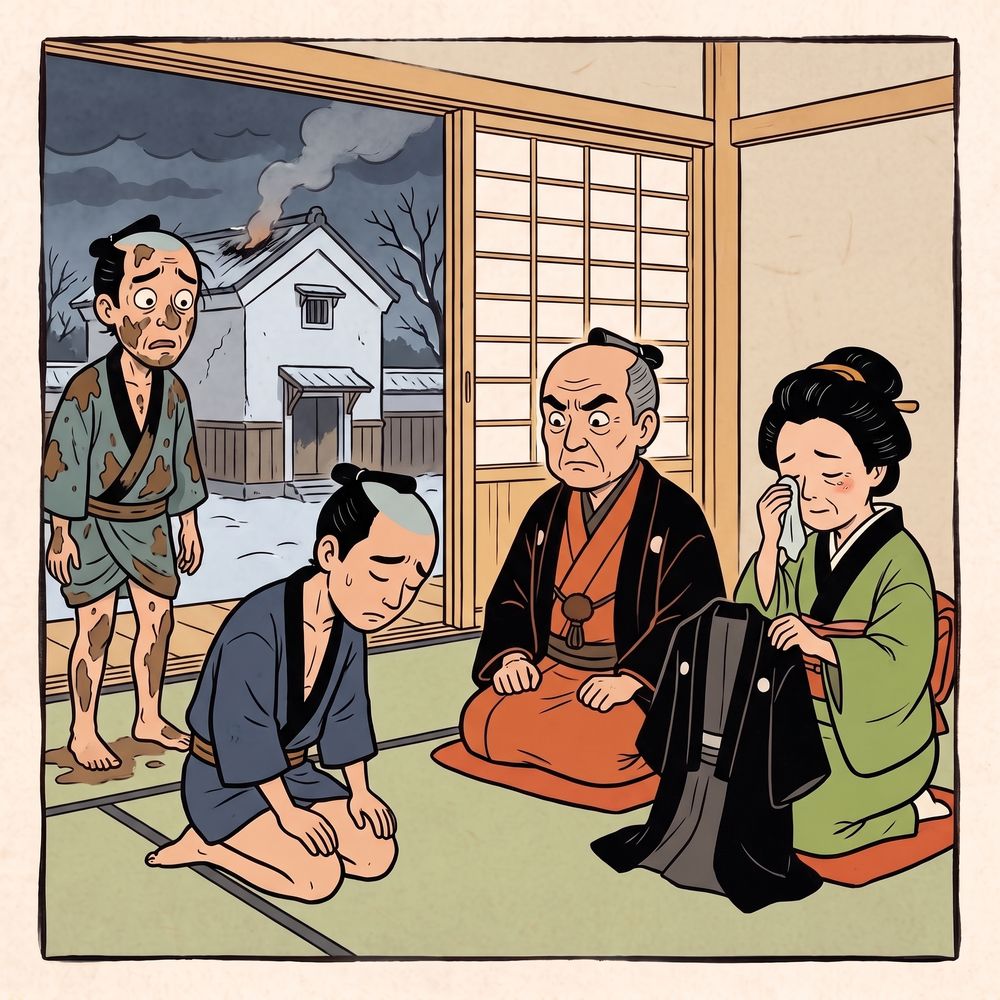
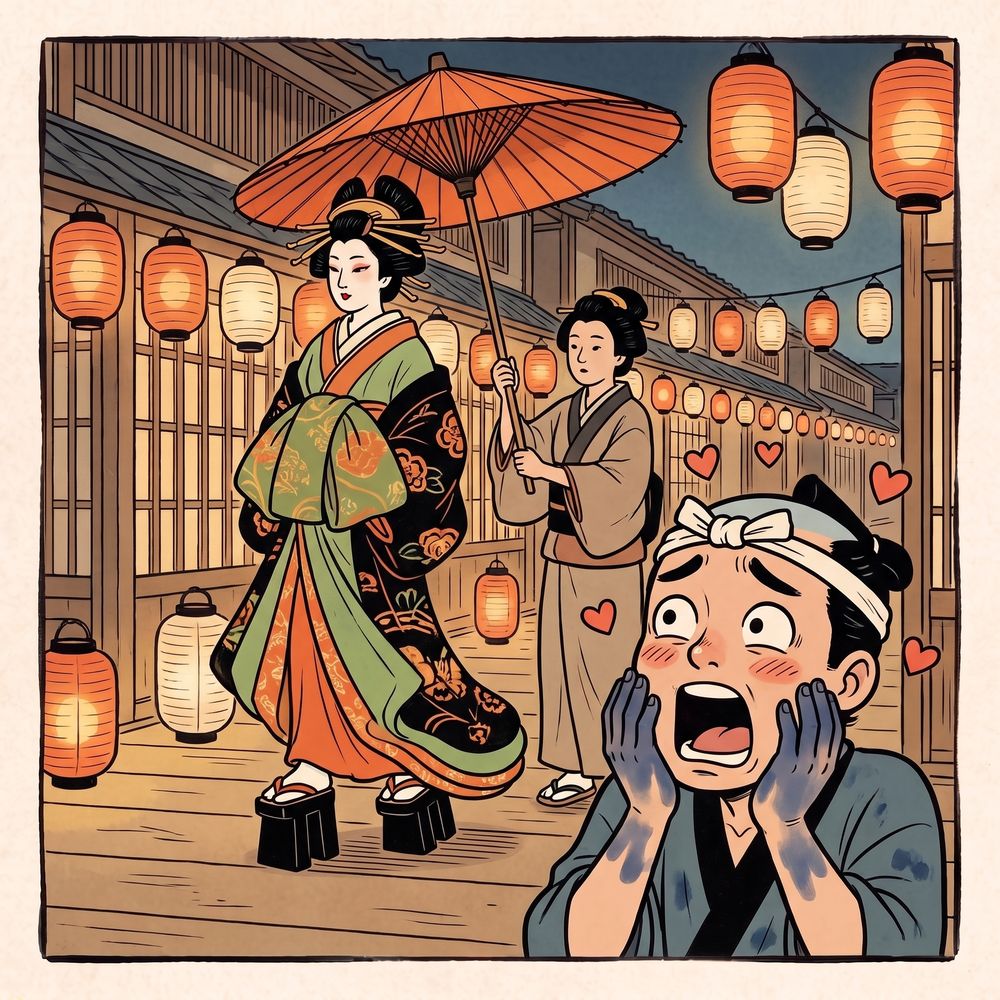
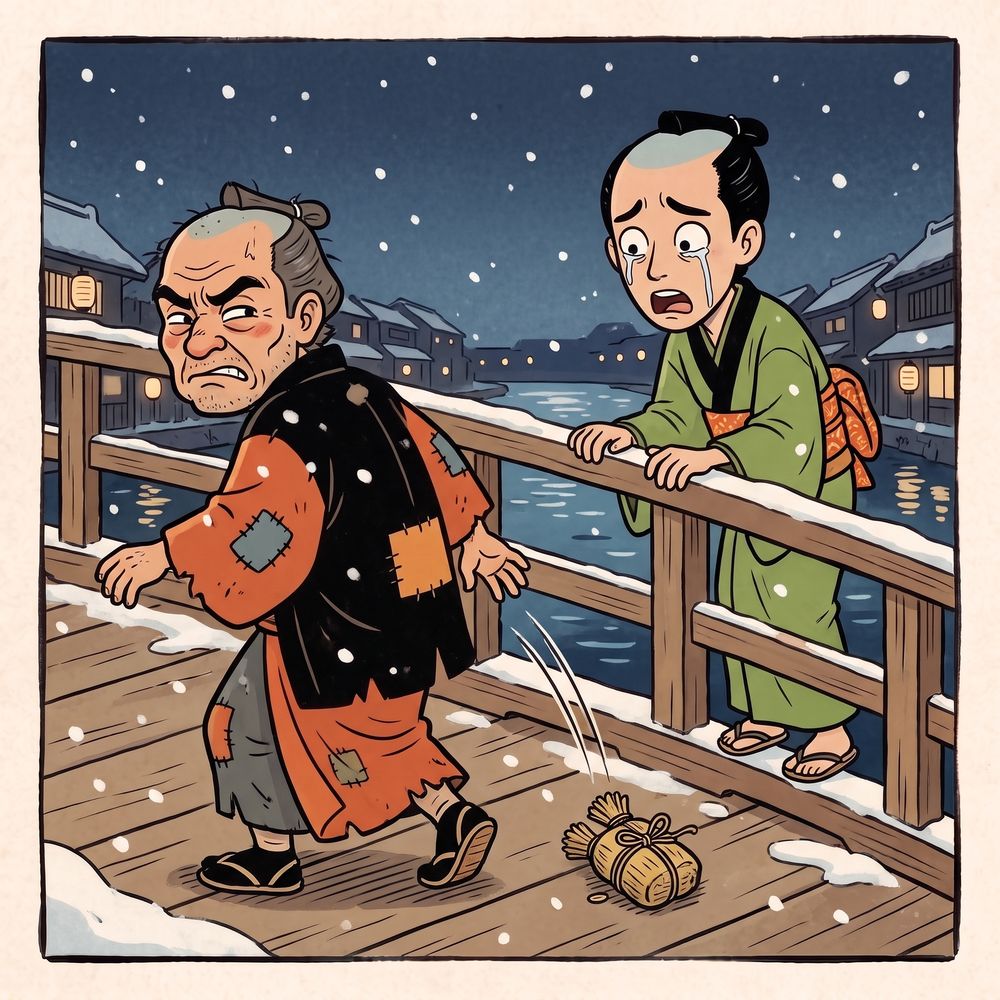
Tokusaburo (some performers call him Tokubei), the young master of a large shop, loses his head over a courtesan in the Yoshiwara and is disowned by his parents. The courtesan and the relatives who flocked around him in his free-spending days now want nothing to do with him. After wandering for about three days with hardly anything to eat, he tries to throw himself off Azuma Bridge.
The man who happens by and grabs him is his uncle, who lives in Daruma Yokocho in Honjo. Saying, “If you’re ready to die, you’re ready to do anything,” the uncle sends Tokusaburo out the next morning with a shoulder pole piled high with tonasu (pumpkins) to sell.
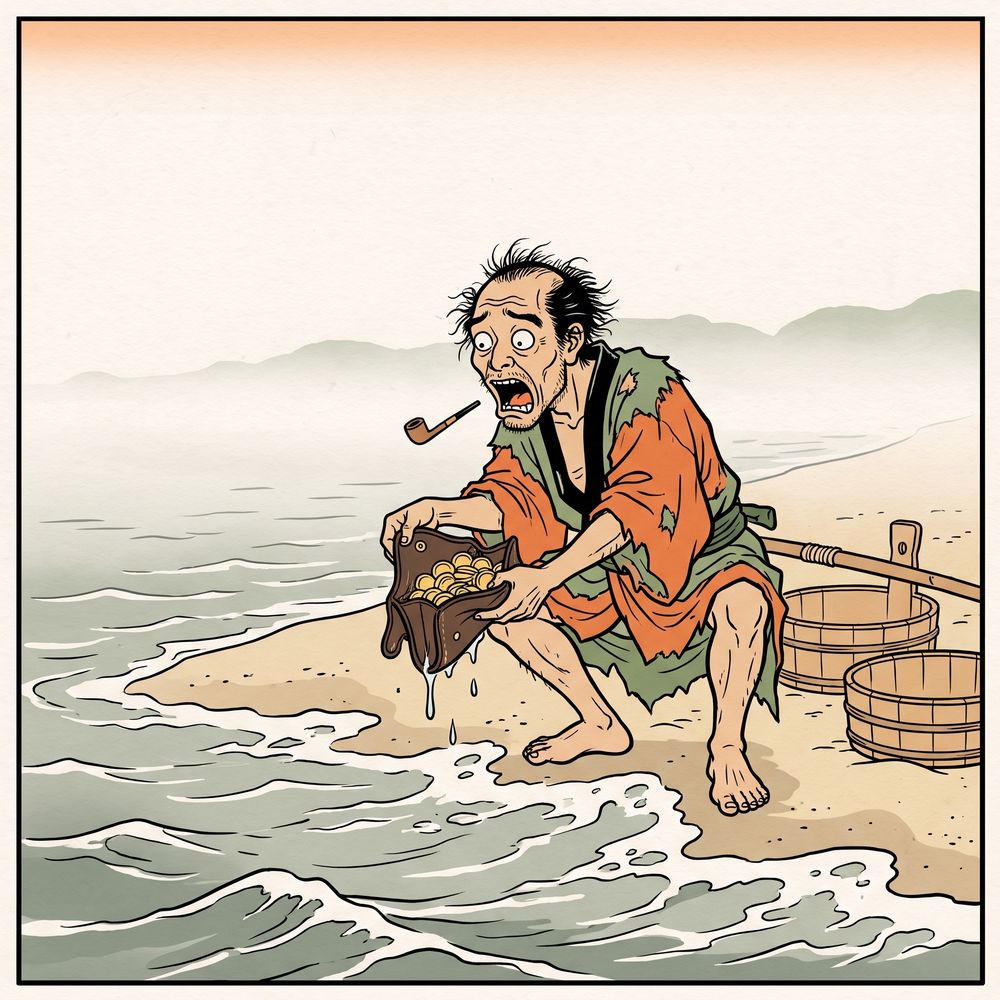
Tokusaburo has never carried a heavy load or sold anything in his life. Unable even to call out his wares, he totters along under the blazing sun until, around Tawaramachi in Asakusa, he drops his load and collapses. A passerby who cannot bear to watch asks what is wrong, calls out to the people of the neighborhood, and sells off almost all the pumpkins for him.
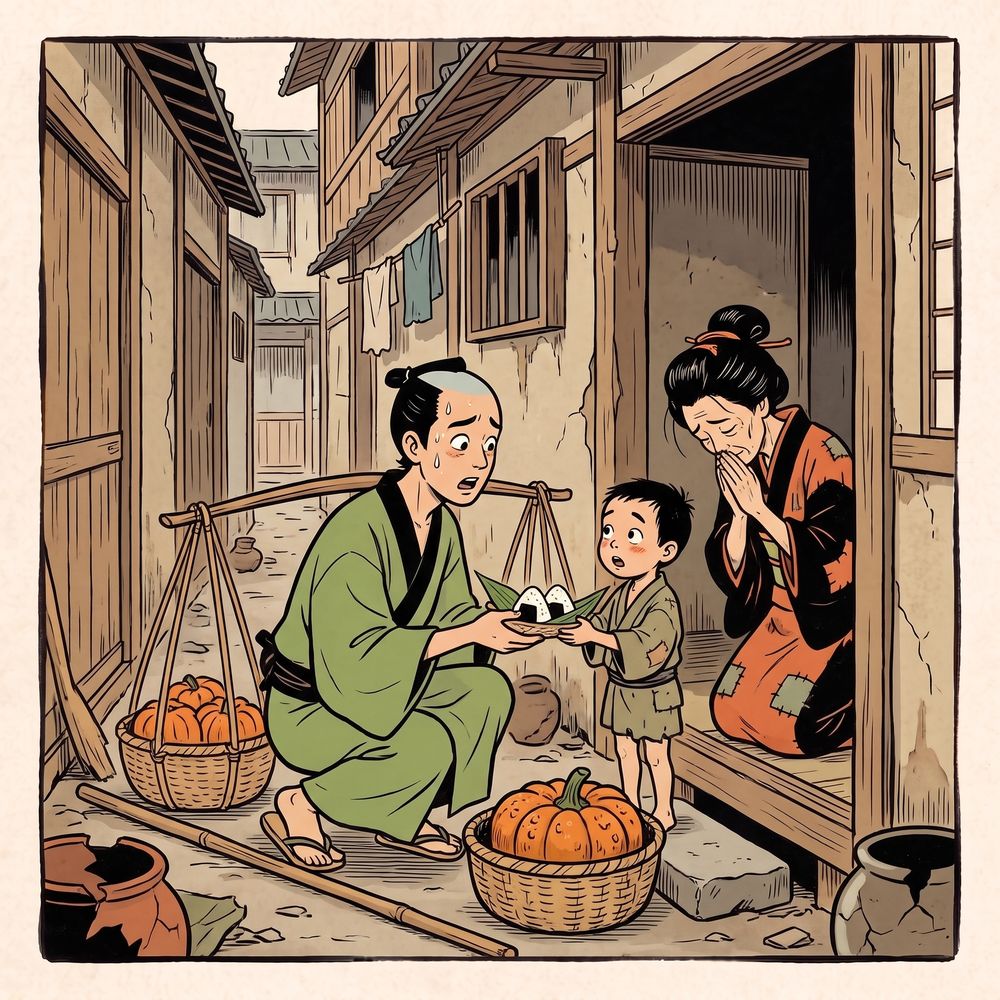
Only two are left. Toward evening, thinking back on old times as he walks along the path through the Yoshiwara rice fields, Tokusaburo enters a back-alley tenement called Seiganji-dana. There he is called over by a refined, worn-looking woman. Her husband was once a samurai, she says, and is now away peddling on the road and has not written. Learning that her child has not eaten for days, Tokusaburo gives the boy his own lunch, hands the woman all of the day’s takings, and goes home.
When he comes back empty-handed, his uncle doubts his story at first. But when the two of them go to Seiganji-dana together, the tenement is in an uproar. The heartless landlord had seized the money Tokusaburo left, claiming it for overdue rent, and the woman, unable to face him, had hanged herself.
Enraged, Tokusaburo storms into the landlord’s house and beats him, and the tenants join in. The woman was found in time and survives. The affair reaches the authorities: the landlord is severely punished, and Tokusaburo is praised for helping the family and forgiven by his parents. The mother and child are taken in at a tenement owned by the uncle.
The sage the punchline, contains spoilers
Tap to reveal the punchline
Tokusaburo is forgiven, and the story ends happily.
There is no fixed sage (the punchline), such as a pun. As befits a ninjo-banashi, the story ends when the plot is resolved. The word seidan in the title refers to a story about a magistrate’s judgment, since the authorities hand down a ruling at the end. When only the first half is performed, the focus is on the hardships of selling pumpkins and the help of the townspeople, and it becomes a story with many laughs.
Just the first half, or the whole story
Performed in full, the story is long, so it is often split into a first and second half. In the yose (variety theaters), a performer may stop around the scene where Tokusaburo practices his peddler’s cry by the Yoshiwara rice fields and it turns into a hauta (short popular song). Where to stop differs from performer to performer.
| Stopping after the first half | Performing it through to the end | |
|---|---|---|
| Content | Being disowned, the attempt to jump from Azuma Bridge, the uncle’s house, the clumsy pumpkin peddling and the help of the townspeople | The mother and child of Seiganji-dana, the landlord’s cruelty, the hanging, the authorities’ judgment and the end of the disownment |
| Appeal | Laughs from the young master’s naivety and the helpful meddling of Edo townspeople | Tokusaburo’s change of heart and kindness coming back around |
| Where to hear it | Can fit into a performer’s time slot at the yose | Mostly at solo shows and rakugo events where there is time to spare |
Key scenes original dialogue written for this site
Azuma Bridge
- TokusaburoNamu Amida Butsu...
- UncleHey, hold it, hold it. What do you think you’re doing at your age... Why, it’s Toku!
- TokusaburoU-Uncle... Nobody will have anything to do with me anymore, wherever I go.
- UncleAfter all the carousing you did, what did you expect? If you’re ready to die, take that same resolve and try working, starting tomorrow.
The peddler’s cry
- UncleListen. When you get out on the street, call out in a loud voice, “Pumpkins! Pumpkins for sale!”
- Tokusaburo...Pump... kins...
- (Still shouldering the pole, he staggers and his legs get tangled.)
- TokusaburoIt’s no good. My shoulders feel like they’re tearing off, and my voice is stuck at the back of my throat...
Seiganji-dana
- WomanExcuse me, pumpkin seller. Could I have one of the small ones?
- TokusaburoCertainly. And if you don’t mind, could I eat my lunch here? ...Why, little one, you’re staring at my lunch.
- WomanI’m ashamed to say it, but this child hasn’t eaten anything since the day before yesterday...
- TokusaburoThen you eat it, little one. And ma’am, this is what I took in today. Please keep it.
This is not a transcription of any storyteller's performance. The plot follows the classic version. All lines were written for this site.
Notable performers
- Kokontei Shinsho V1890–1973EdoOne of the performers whose recordings survive. He named the young master Tokusaburo.
- Kokontei Shincho III1938–2001EdoOne of the performers whose recordings survive.
- Sanyutei Enso VI1940–2022EdoOne of the performers whose recordings survive.