Visit a yose
Enmoku, Endai, Hanashi, Neta: Words for a Rakugo Story
This site affectionately calls itself a “neta-cho,” but Japanese has several words for a rakugo piece, each used in different situations. Here we sort out the formal terms and the casual ones heard backstage and in the audience.
The terms at a glance
- Enmoku (演目): a piece on the program, the word used for each item performed in a printed lineup or program. It is the most common and the most formal term.
- Endai (演題): a word that puts the emphasis on the title of the story itself. It is used in phrases like “Today's endai is Shibahama.”
- Hanashi (噺): the rakugo story itself. It is also used to describe types of stories, as in ninjo-banashi (human-drama stories) and kuruwa-banashi (stories set in the pleasure quarters).
- Neta (ネタ): a casual word that has long been used backstage. It appears in phrases like mochi-neta (a performer's repertoire) and neta-oroshi (performing a story for the first time).
- Isseki (一席): the counter for rakugo stories, roughly “one piece.” It is used in phrases like isseki ukagaimasu (“let me tell you a story”) and niseki-me (the second story).
Enmoku and endai
Both words refer to a piece, but enmoku means “one item in the program,” while endai means “the title given to that item.” Flyers and programs for rakugo shows list story names under the heading enmoku, while endai is often used in written introductions and similar texts.
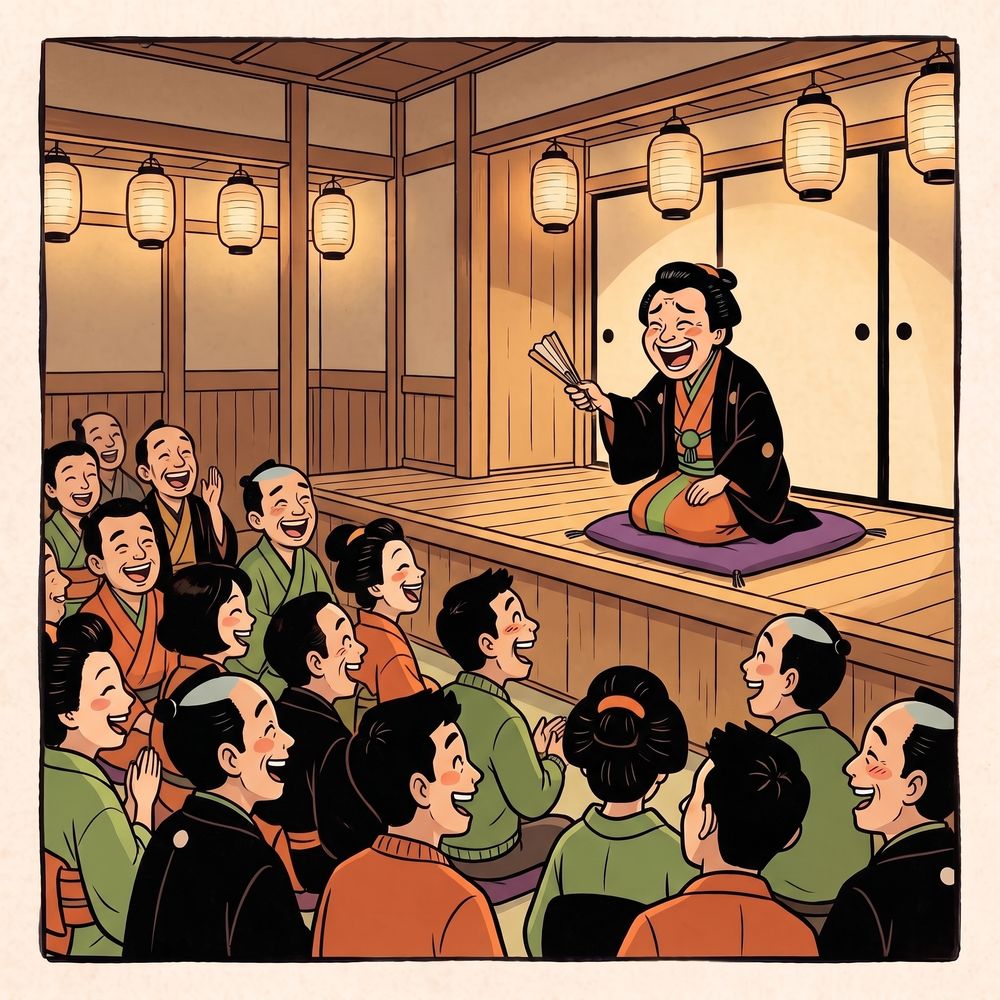
At a yose, performers are said to often decide which story to tell on the spot rather than in advance, reading the mood of the audience that day and taking into account the stories told by those who went on before them. That is why some yose post the day's enmoku after the show is over.
The character 噺
The character 噺 (hanashi) combines the “mouth” radical 口 with 新, meaning “new.” It is a kokuji, a kanji created in Japan, and is said to express the idea of telling something new by mouth. Rakugo storytellers are called hanashika (噺家) because of this character.
On this site, we use enmoku in lists of pieces and in headings, and hanashi when talking about what happens in a story.
Neta and the neta-cho
The word neta is said to be backstage slang made by reversing tane (種), meaning “seed.” It started as insider jargon among performers and craftspeople, and today it is widely used, as in sushi-neta (sushi toppings) and hanashi no neta (something to talk about).
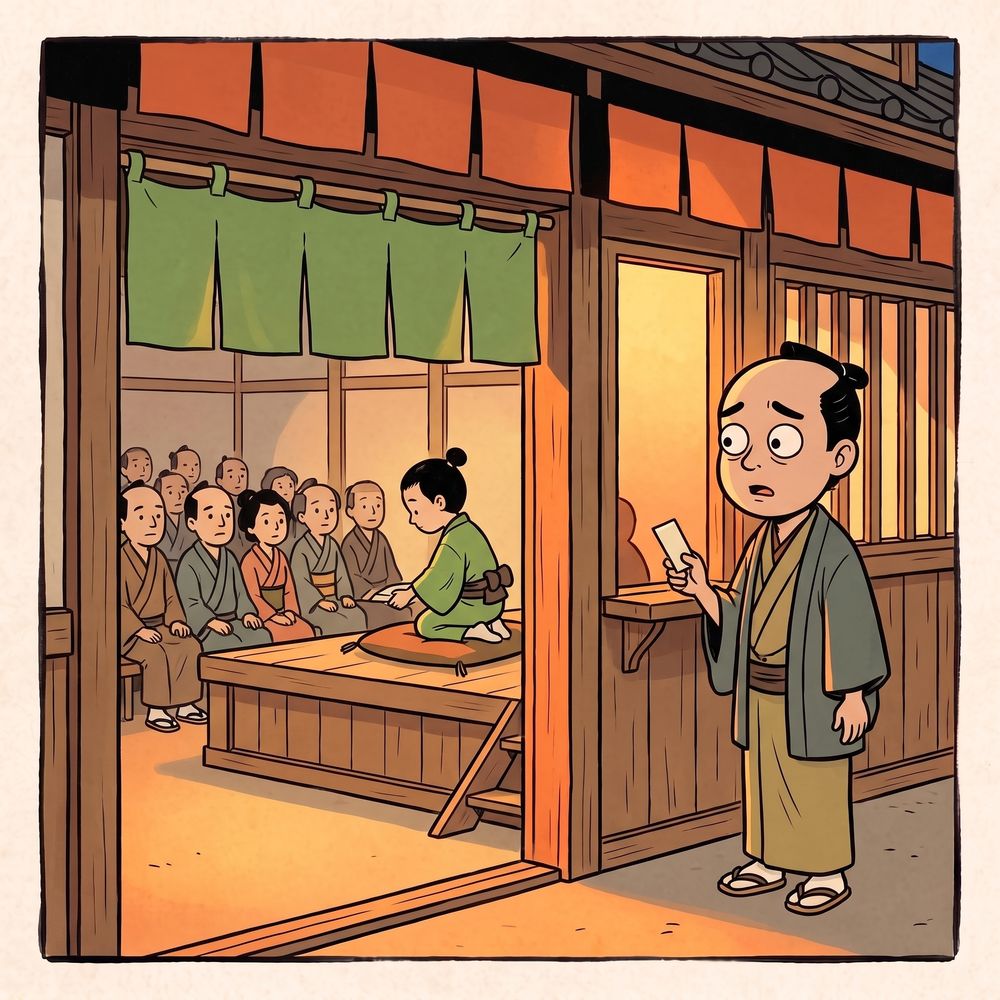
In the gakuya (dressing room) of a yose, there is a notebook called the neta-cho, in which a zenza (apprentice) records the performers who took the stage that day and the enmoku they performed. Performers who go on later check it and choose their stories so that the same story, or one with a similar plot, is not repeated. Having similar stories in a row is called neta ga tsuku, and avoiding it is part of the yose code. The word is sometimes also written 根多帳.
The name of this site comes from this backstage neta-cho.